 Podit
Podit
📚 Cellular Respiration and Energy Metabolism: A Comprehensive Study Guide
Source Information: This study material is compiled from a lecture audio transcript and copy-pasted text provided by the user.
💡 Introduction to Cellular Energy
All living organisms require a continuous supply of energy to perform vital activities such as growth, movement, thought, and maintaining cellular functions. This energy is ultimately derived from the sun, captured by producers, and transferred through food to other organisms. Every cell within an organism is responsible for producing and utilizing its own energy.
📚 What is Cellular Respiration?
Cellular respiration is the fundamental biological process by which cells break down food molecules to release chemical energy, primarily in the form of Adenosine Triphosphate (ATP). It is crucial to distinguish cellular respiration from breathing:
- ✅ Breathing: The physical process of gas exchange (inhaling oxygen, exhaling carbon dioxide).
- ✅ Cellular Respiration: The biochemical process occurring inside cells to produce energy from nutrients.
Types of Cellular Respiration
There are two main types of cellular respiration, categorized by their requirement for oxygen:
- Aerobic Respiration: Requires oxygen (O₂) to completely break down organic molecules.
- Anaerobic Respiration & Fermentation: Occurs without the use of oxygen.
⚡ Aerobic Respiration: The Oxygen-Dependent Pathway
Aerobic respiration is highly efficient and occurs in some prokaryotes and all eukaryotes.
- Location: In prokaryotes, it occurs in the cytoplasm and cell membrane folds. In eukaryotes, it begins in the cytoplasm and is completed in the mitochondria.
- Overall Equation (using glucose as fuel): C₆H₁₂O₆ + 6 O₂ → 6 CO₂ + 6 H₂O + ATP + Heat (Glucose + Oxygen → Carbon Dioxide + Water + Energy + Heat)
Aerobic respiration proceeds through three main stages:
1️⃣ Glycolysis: The Initial Sugar Split
Glycolysis, meaning "splitting of sugar," is the first stage of cellular respiration and is common to aerobic, anaerobic respiration, and fermentation.
- Location: Occurs in the cytoplasm of the cell.
- Process:
- A six-carbon glucose molecule is broken down into two molecules of three-carbon pyruvate.
- This process involves 10 enzyme-catalyzed reactions.
- Energy Investment & Yield:
- The cell initially invests 2 ATP molecules to phosphorylate and activate glucose.
- Later, 4 ATP molecules are produced, along with 2 NADH molecules.
- Net Gain: ✅ 2 ATP and ✅ 2 NADH per glucose molecule.
- Oxygen Requirement: Glycolysis is an anaerobic process, meaning it does not require oxygen.
- Significance: The NADH produced carries electrons and protons, which will be used in later stages for further ATP synthesis.
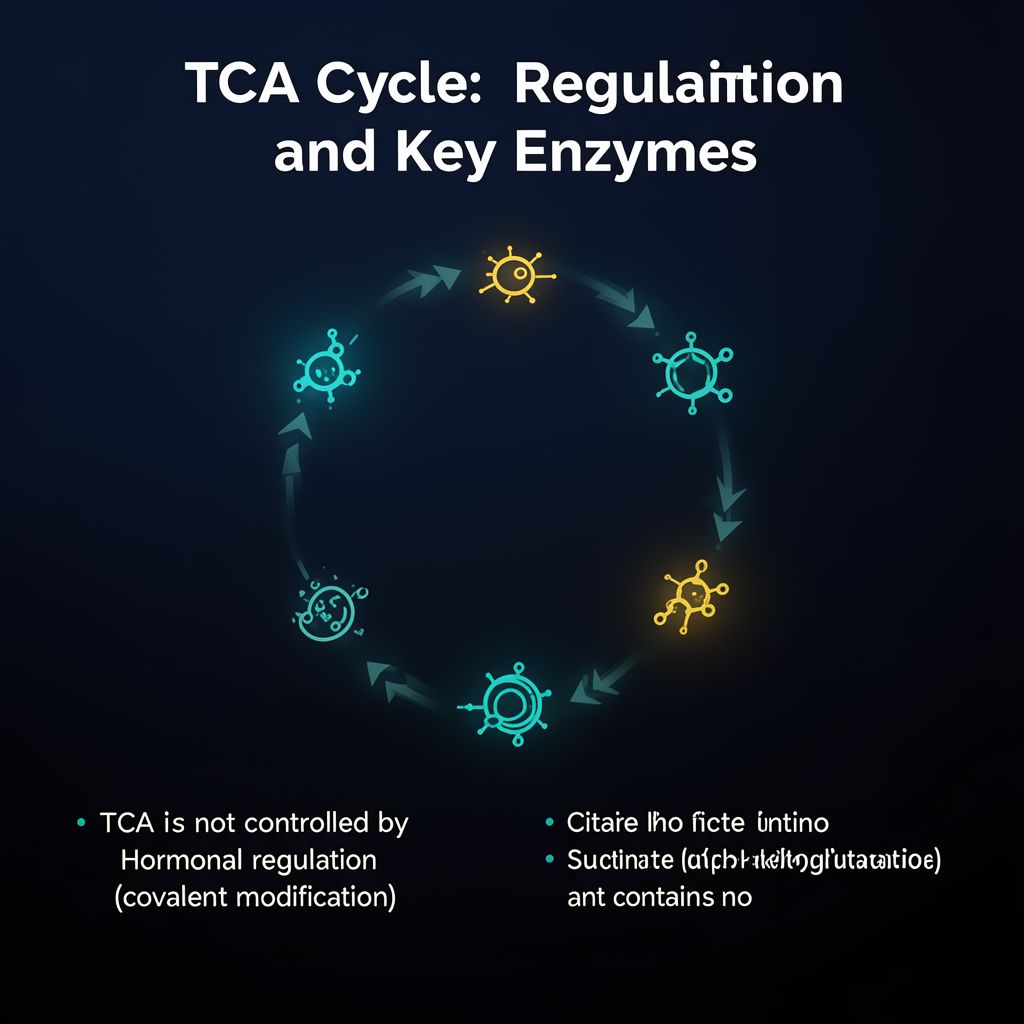
2️⃣ The Citric Acid Cycle (Krebs Cycle): Completing Glucose Breakdown
After glycolysis, if oxygen is present, pyruvate moves into the mitochondria in eukaryotes.
- Pyruvate Oxidation (Link Reaction): Before the Citric Acid Cycle begins, each pyruvate molecule undergoes a conversion:
- It is converted into a two-carbon compound called Acetyl-CoA.
- During this conversion, one molecule of CO₂ is released, and one NADH molecule is formed per pyruvate.
- Location: The Citric Acid Cycle takes place in the mitochondrial matrix.
- Process:
- Each Acetyl-CoA (2 carbons) combines with a four-carbon compound (oxaloacetate) to form a six-carbon molecule (citrate).
- This six-carbon molecule then undergoes a series of reactions, gradually releasing CO₂ and regenerating the four-carbon compound to continue the cycle.
- Energy Yield (per glucose molecule, as the cycle runs twice):
- ✅ 4 CO₂ (released)
- ✅ 6 NADH
- ✅ 2 FADH₂
- ✅ 2 ATP (produced by substrate-level phosphorylation)
- Electron Carriers: NADH (Nicotinamide Adenine Dinucleotide) and FADH₂ (Flavin Adenine Dinucleotide) are crucial electron carriers. They transport high-energy electrons to the final stage of aerobic respiration. NAD⁺ and FAD are their oxidized forms.
- Oxygen Requirement: This cycle is an aerobic process, as its products (NADH, FADH2) require oxygen for their regeneration in the ETC.
3️⃣ Oxidative Phosphorylation: The ATP Powerhouse
This stage generates the vast majority of ATP in aerobic respiration.
- Location:
- In eukaryotes: On the cristae (folded inner membranes) of the mitochondria.
- In prokaryotes: On the inner surface of the plasma membrane.
- Components: Involves the Electron Transport Chain (ETC) and chemiosmosis.
- Process:
- NADH and FADH₂ deliver their high-energy electrons to the ETC.
- As electrons move through a series of protein complexes in the ETC, they lose energy.
- This energy is used to pump protons (H⁺) from the mitochondrial matrix into the intermembrane space, creating a proton gradient.
- Oxygen's Role: At the end of the ETC, oxygen acts as the final electron acceptor. It combines with electrons and protons to form water (H₂O), allowing the electron flow to continue.
- ATP Synthesis: Protons flow back into the mitochondrial matrix through an enzyme called ATP synthase. This flow drives the synthesis of a large amount of ATP (chemiosmosis).
- ATP Yield: Accounts for almost 90% of the ATP generated by cellular respiration, typically yielding around 28-34 ATP molecules per glucose.
- By-products: Water (H₂O) and some heat are released.
🌿 Anaerobic Pathways: Fermentation
When oxygen is scarce or absent, cells can still produce ATP through anaerobic processes like fermentation.
- Purpose: Fermentation allows for the continuous production of ATP through glycolysis by regenerating NAD⁺ from NADH. This is crucial because glycolysis requires NAD⁺ to proceed.
- Location: Occurs in the cytoplasm.
- Key Feature: Does not use oxygen or an electron transport chain.
There are two main types of fermentation:
1️⃣ Alcohol Fermentation
- Process: Pyruvate is converted into ethyl alcohol in two steps:
- ✅ CO₂ Release: Pyruvate releases carbon dioxide (CO₂) and is converted into acetaldehyde.
- ✅ NADH Reduction: Acetaldehyde is then reduced by NADH to form ethyl alcohol. This step regenerates NAD⁺, allowing glycolysis to continue.
- Organisms: Many bacteria and yeast (a type of fungus) perform alcohol fermentation.
- Applications: Humans have utilized yeast for thousands of years in brewing (beer), winemaking, and baking (CO₂ bubbles make bread rise).
2️⃣ Lactic Acid Fermentation
- Process: Pyruvate (pyruvic acid) produced during glycolysis is directly converted into lactic acid.
- ✅ NADH Reduction: NADH reduces pyruvate to lactic acid, regenerating NAD⁺.
- Organisms: Carried out by certain bacteria (e.g., Lactobacillus species in yogurt) and by human muscle cells.
- Context: In human muscle cells, lactic acid fermentation occurs when oxygen supply is insufficient, typically during intense exercise. The buildup of lactic acid can contribute to muscle fatigue.
🍎 Nutrient Entry into Cellular Respiration
Cells can break down carbohydrates, lipids, and proteins to produce ATP, but they enter the aerobic respiration pathway at different stages due to their chemical structures.
- Carbohydrates (e.g., Glucose): Enter at the glycolysis stage.
- Lipids (Fats):
- Fatty acids: Converted into Acetyl-CoA and enter the Krebs cycle.
- Glycerol: Enters through intermediate steps of glycolysis.
- Proteins (Amino Acids): After removing the amino group (NH₂):
- Two-carbon amino acids: Enter via Acetyl-CoA.
- Three-carbon amino acids: Enter via pyruvate.
- Four or more carbon amino acids: Enter directly into the Krebs cycle.
- By-products: While carbohydrates, lipids, and proteins all yield CO₂, H₂O, ATP, and heat, the breakdown of amino acids also produces nitrogen-containing waste products.
📈 Energy Metabolism and Nutritional Balance
The primary goal of eating is to provide energy for metabolic processes. Metabolism is the sum of all chemical reactions in living organisms, divided into two types:
- Anabolism: 🏗️ Synthesis of complex molecules from simpler ones (e.g., photosynthesis).
- Catabolism: 📉 Breakdown of large molecules into smaller ones (e.g., digestion, cellular respiration).
Energy Values of Macronutrients
The energy content of food is measured in calories (kcal). Different macronutrients provide varying amounts of energy:
- Fats: Approximately 9.0 kcal/g (37.7 kJ/g). They have many C-H bonds, yielding more ATP.
- Carbohydrates: Approximately 4.0 kcal/g (16.7 kJ/g).
- Proteins: Approximately 4.0 kcal/g (16.7 kJ/g).
⚠️ Importance of Balance
Maintaining a balance between energy intake and expenditure is crucial for health.
- Consequences of Imbalance: Eating too little or too much can lead to growth problems or metabolic diseases like obesity.
- Obesity: Excessive fat storage that can cause serious health issues (diabetes, heart disease).
- Prevention: Balanced eating, regular physical activity, and ensuring energy intake does not exceed energy burned.