
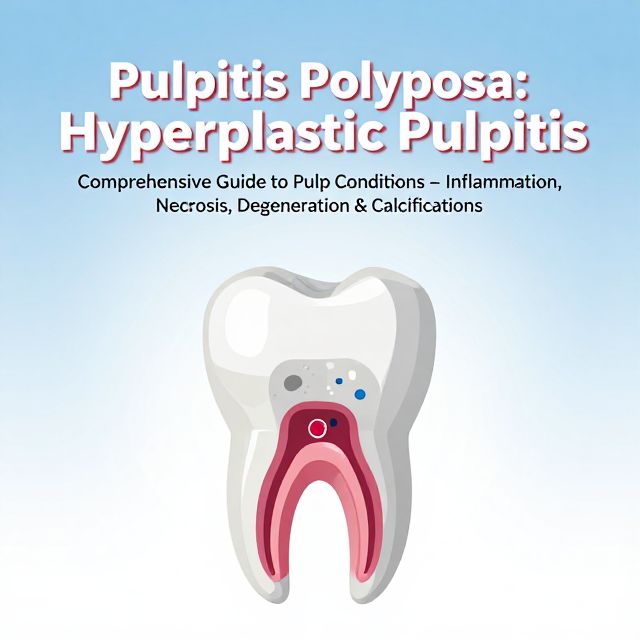
Understanding Pulpitis Polypoza, Necrosis, and Calcifications - kapak
Sağlık#dental health#pulpitis#pulp necrosis#pulp gangrene

Understanding Pulpitis Polypoza, Necrosis, and Calcifications

Explore chronic hyperplastic pulpitis, pulp necrosis, gangrene, and various pulp calcifications, including their causes, clinical signs, and treatment approaches.

berroshFebruary 14, 2026 ~18 dk toplam
01

Flash Kartlar

25 kart

Karta tıklayarak çevir. ← → ile gez, ⎵ ile çevir.

1 / 25
Tüm kartları metin olarak gör
  1. 1. What is another name for Pulpitis Polypoza?

    Pulpitis Polypoza is also known as Chronic Hyperplastic Pulpitis. This condition involves the proliferation of granulation tissue from the pulp into a carious cavity, often becoming covered by oral squamous epithelium. It is typically seen in young pulp with extensive carious exposures.

  2. 2. Describe the primary characteristic of Pulpitis Polypoza.

    Pulpitis Polypoza is characterized by the formation of granulation tissue that proliferates from the exposed pulp into a carious cavity. This tissue often becomes covered by oral squamous epithelium, presenting as a bud-shaped mass. It is a response of a young, resilient pulp to prolonged, mild irritation.

  3. 3. What specific conditions are necessary for a pulp polyp to develop?

    For a pulp polyp to develop, three specific conditions are necessary: an open and wide cavity, a resilient and young pulp, and prolonged, mild irritation. These factors allow the pulp tissue to proliferate and form the characteristic granulation tissue mass.

  4. 4. How does a patient typically experience pain with Pulpitis Polypoza?

    Patients with Pulpitis Polypoza usually experience no pain upon contact with the polyp itself, due to a sparse distribution of nerve fibers. However, pain is commonly experienced during chewing, which is caused by pressure on the bud-shaped tissue mass within the carious cavity.

  5. 5. What are the radiographic findings associated with Pulpitis Polypoza?

    Radiographically, teeth affected by Pulpitis Polypoza typically show normal appearances of the periodontal ligament space and lamina dura. The condition primarily involves the pulp tissue within the crown, and its effects on the surrounding bone are usually minimal or absent.

  6. 6. How is Pulpitis Polypoza differentiated from a gingival polyp?

    The crucial differential diagnosis for Pulpitis Polypoza is distinguishing it from a gingival polyp. A pulp polyp originates from the pulp tissue within the tooth, while a gingival polyp originates from the gingival tissue surrounding the tooth. Clinical examination helps identify the source of the tissue mass.

  7. 7. What are the treatment options for Pulpitis Polypoza?

    Treatment for Pulpitis Polypoza involves the surgical removal or cauterization of the polyp under anesthesia. Following this, the tooth typically requires either an amputation of the coronal pulp or a complete root canal therapy, depending on the extent of pulp involvement and the tooth's restorability.

  8. 8. Define Pulpa Necrosis and list its potential causes.

    Pulpa Necrosis signifies the death of pulp tissue. This condition can result from various factors, including acute or chronic inflammation, traumatic injury to the tooth, or an abrupt interruption of blood circulation to the pulp. It may also manifest in advanced stages of pulp degeneration.

  9. 9. Describe the two primary types of Pulpa Necrosis.

    The two primary types of Pulpa Necrosis are coagulation necrosis and liquefaction necrosis. Coagulation necrosis occurs when blood supply is reduced or cut off, leading to a soft, cheese-like mass. Liquefaction necrosis involves proteolytic enzymes softening and liquefying tissues, often with a discharge of blood and exudate.

  10. 10. What clinical symptoms are typically absent in total pulp necrosis if periodontal tissues are unaffected?

    In cases of total pulp necrosis where the periodontal tissues remain unaffected, there is typically no pain or sensitivity to percussion or palpation. This is because the nerve fibers within the pulp are no longer vital. Vitality tests will also yield negative results.

  11. 11. How can color changes indicate pulp necrosis or gangrene?

    Color changes can be indicative of pulp necrosis or gangrene. Trauma-induced necrosis may lead to a yellow-brown discoloration of the tooth due to the hemolysis of red blood cells. Gangrene, on the other hand, often presents with a characteristic gray hue in the affected tooth.

  12. 12. What radiographic findings might be observed in teeth with long-standing gangrene?

    Radiographically, teeth with long-standing gangrene may exhibit wider pulp dimensions compared to adjacent teeth, which is a consequence of arrested dentin formation and decalcification of the root canal walls. Additionally, a widening of the apical periodontal membrane is frequently observed due to periapical inflammation.

  13. 13. What is Pulpa Gangrene and how does it differ from simple necrosis?

    Pulpa Gangrene describes a scenario where infected vital pulp dies due to inflammatory processes, or when previously non-vital pulp subsequently becomes infected. It differs from simple necrosis by the presence of microorganisms that completely break down the tissue, leading to putrefaction and the release of foul-smelling products.

  14. 14. Explain the process of putrefaction in gangrenous pulp.

    In gangrenous pulp, microorganisms completely break down the tissue. The decomposition of proteins by anaerobic bacteria is termed putrefaction. This process releases various foul-smelling intermediate and final products, such as indole, skatole, putrescine, cadaverine, hydrogen sulfide, and ammonia, which create the characteristic unpleasant odor.

  15. 15. What are the key treatment steps for necrosis and gangrene?

    The key treatment steps for pulp necrosis and gangrene involve biomechanical enlargement of the root canal system and the application of calcium hydroxide. Biomechanical preparation aims to remove infected tissue and debris, while calcium hydroxide acts as an intracanal medicament to disinfect and promote healing.

  16. 16. What are Pulp New Formations, and what factors influence them?

    Pulp New Formations refer to various changes pulp tissue undergoes, such as atrophic degeneration, fibrosis, and calcifications. These changes are influenced by factors like attrition, abrasion, trauma, and caries. They represent the pulp's response to chronic irritation or aging processes.

  17. 17. Define Atrophy and Fibrosis in the context of pulp degenerative changes.

    Atrophy refers to a reduction in the size of pulp cells, indicating a decrease in cellular activity and volume. Fibrosis, on the other hand, involves an increase in mature collagen fibers within the pulp and a decrease in both the number and size of pulp cells. This can lead to odontoblasts appearing flattened or cuboidal.

  18. 18. How does accelerated aging affect the pulp canal lumen?

    Accelerated aging, often triggered by excessive stimuli like severe attrition, can significantly affect the pulp canal lumen. It promotes increased dentin formation, which narrows the canal lumen. Additionally, it can lead to periapical cementum deposition, further contributing to the reduction in canal space.

  19. 19. What are the three main types of Pulp Calcifications?

    The three main types of Pulp Calcifications are dystrophic calcification, diffuse calcification, and denticles (also known as pulp stones). These calcifications represent different forms of mineral deposition within the pulp tissue, each with distinct characteristics and clinical implications.

  20. 20. Describe Dystrophic Calcification in the pulp.

    Dystrophic calcification refers to the deposits of calcium salts within dead or degenerated pulp tissue. It is a common type of calcification that occurs in areas where cells have undergone necrosis or degeneration, serving as a marker of past injury or chronic inflammation.

  21. 21. What characterizes Diffuse Calcification in the pulp?

    Diffuse calcification in the pulp is characterized by numerous small, irregular calcium deposits scattered throughout the pulp tissue. Unlike denticles, these calcifications do not form distinct, organized structures but rather appear as amorphous mineral deposits.

  22. 22. What are Denticles, and what are their three classifications based on location?

    Denticles, also known as pulp stones, are large, concentric clusters of calcium found within the pulp. Based on their location, they are classified as free denticles (floating in the pulp), embedded denticles (surrounded by dentin), or attached denticles (adhering to the dentin wall).

  23. 23. Differentiate between True Denticles and False Denticles.

    True denticles contain tubular orthodentin, resembling normal dentin structure. False denticles, however, are composed of concentric layers of non-dentin calcified material, lacking the organized tubular structure of true dentin. This distinction is based on their histological composition.

  24. 24. What is the clinical importance of pulp calcifications, particularly regarding root canal treatment?

    Pulp calcifications carry significant clinical importance because they can obstruct the entry to the root canal, making canal localization and subsequent root canal treatment challenging. This is especially true when calcifications extend to the physiological foramen, complicating instrumentation and cleaning.

  25. 25. List some meticulous techniques essential for root canal treatment in calcified canals.

    When performing root canal treatment on calcified canals, meticulous techniques are essential. These include slow and careful use of instruments, irrigation with sodium hypochlorite, application of chelating agents, use of ultrasonic instruments to remove coronal calcification, coronal flaring, and utilization of nickel-titanium rotary instruments.

02

Bilgini Test Et

15 soru

Çoktan seçmeli sorularla öğrendiklerini ölç. Cevap + açıklama.

Soru 1 / 15Skor: 0

Which condition is also known as Chronic Hyperplastic Pulpitis and involves the proliferation of granulation tissue into a carious cavity?

03

Detaylı Özet

8 dk okuma

Tüm konuyu derinlemesine, başlık başlık.

This study material has been compiled from a combination of copy-pasted text and a lecture audio transcript.


Comprehensive Guide to Pulp Conditions: Inflammation, Necrosis, Degeneration, and Calcifications 🦷

This guide provides a detailed overview of various pulp conditions, including inflammatory responses like Pulpitis Polypoza, the irreversible processes of Pulp Necrosis and Gangrene, and degenerative changes such as Atrophy, Fibrosis, and Pulp Calcifications. Understanding these conditions is crucial for accurate diagnosis and effective treatment in endodontics.


1. Pulpitis Polypoza (Chronic Hyperplastic Pulpitis) 🌿

📚 Definition: Pulpitis Polypoza, also known as Chronic Hyperplastic Pulpitis, is a chronic inflammatory condition of the pulp where granulation tissue proliferates into a carious cavity, often becoming covered by oral squamous epithelium. It typically occurs in young pulp exposed by extensive carious lesions.

Key Characteristics:

  • Granulation Tissue: The polyp initially consists primarily of granulation tissue, appearing as a growth extending from the pulp chamber.
  • Epithelialization: The surface of the proliferating tissue is often covered by oral squamous epithelium.
  • Pain Sensation: Due to a sparse distribution of nerve fibers, the polyp is usually painless upon contact.
  • Bleeding: It tends to bleed easily when touched due to its rich vascular network.
  • Pain on Chewing: Pain is typically experienced only during chewing, due to pressure on the tissue.

💡 Conditions for Development: For a pulp polyp to develop, specific conditions must be present:

  1. Open and Wide Cavity: Provides space for tissue proliferation.
  2. Resilient and Young Pulp: Possesses a strong regenerative capacity.
  3. Prolonged, Mild Irritation: Stimulates chronic inflammatory response without causing rapid necrosis.

📊 Radiographic Features:

  • The periodontal ligament (PDL) space and lamina dura usually appear normal.
  • In young patients, long-term mild irritation can stimulate periapical bone formation (pulpo-periapical osteosclerosis), often seen as a dense bone area around the apices of lower molars with large carious lesions.

⚠️ Differential Diagnosis: It is crucial to differentiate Pulpitis Polypoza from a gingival polyp, which originates from the gingival tissue rather than the pulp.

🩹 Treatment: Treatment involves the removal of the polyp under local anesthesia. This can be achieved through:

  • Excision or Cauterization: Surgical removal or burning away of the polyp.
  • Subsequent Procedures: This is followed by either pulpotomy (amputation) or root canal therapy, depending on the extent of pulp involvement and the tooth's restorability.

2. Pulp Necrosis 💀

📚 Definition: Pulp necrosis refers to the death of pulp tissue. It can result from acute or chronic inflammation, traumatic injury, or an abrupt interruption of blood circulation. It may also occur in advanced stages of pulp degeneration.

Types of Necrosis: Pulp necrosis can be partial or total, depending on the extent of tissue involvement. Two main types are recognized:

  1. Coagulation Necrosis:

    • Mechanism: Occurs when blood supply is reduced or completely cut off.
    • Appearance: The tissue transforms into a soft, cheese-like mass (caseation), composed of proteins, fats, and water.
  2. Liquefaction Necrosis:

    • Mechanism: Proteolytic enzymes soften and liquefy the tissues.
    • Clinical Sign: Often presents with a discharge of blood and exudate from the cavity.

3. Pulp Gangrene 🦠

📚 Definition: Pulp gangrene describes a condition where infected vital pulp dies due to inflammatory processes, or when previously non-vital pulp subsequently becomes infected.

🔬 Chemistry of Gangrene: In gangrenous pulp, microorganisms completely break down the tissue. Proteins, carbohydrates, and fats undergo a series of chemical decompositions.

  • Putrefaction: The decomposition of proteins by anaerobic bacteria.
  • Foul Odor: This process releases various foul-smelling intermediate and final products, which are responsible for the characteristic unpleasant odor often detected when the dental cavity is accessed. These include:
    • Intermediate Proteolytic Products: Indole, skatole (from tryptophan deamination), putrescine, cadaverine (from tryptophan decarboxylation), and indican.
    • Final Products: Hydrogen sulfide, ammonia, water, and fatty acids.
    • Bacterial Toxins: Exotoxins (secreted by bacteria) and endotoxins (released upon bacterial breakdown).

🩺 Clinical Signs:

  • Pain: In cases of total pulp necrosis where periodontal tissues are unaffected, there is typically no pain or sensitivity to percussion or palpation.
  • Vitality Tests: Vitality tests will yield negative results. However, in multi-rooted teeth, one root might remain vital, potentially requiring anesthesia during treatment.
  • Color Change:
    • Trauma-induced necrosis: May lead to a yellow-brown discoloration due to hemolysis of red blood cells.
    • Gangrene: Often presents with a gray discoloration of the tooth. (Note: Some necrotic teeth may retain normal color).

📊 Radiographic Features:

  • Pulp Dimensions: Teeth with long-standing gangrene may exhibit wider pulp dimensions compared to adjacent or symmetrical teeth. This is due to arrested dentin formation and decalcification of the root canal.
  • Periodontal Ligament: Widening of the apical periodontal membrane is frequently observed.

🩹 Treatment: Root canal therapy for gangrenous teeth requires:

  • Biomechanical Enlargement: Thorough shaping and cleaning of the root canal system.
  • Calcium Hydroxide: Application of calcium hydroxide is often necessary as an intracanal medicament.

4. Pulp Degenerative Changes: Atrophy and Fibrosis 📉

Pulp tissue undergoes various degenerative changes influenced by factors such as attrition, abrasion, erosion, trauma, operative procedures, and caries. These changes include atrophic degeneration and fibrosis.

  1. Atrophy:

    • Definition: Refers to a reduction in the size of cells or an organ due to a decrease in the size of its constituent specialized cells.
    • Pulp Manifestation: In the pulp, this means a decrease in the size of pulp cells.
  2. Fibrosis:

    • Definition: Characterized by an increase in mature collagen fibers per unit area.
    • Pulp Manifestation: While collagen fibers increase, there is a decrease in both the number and size of pulp cells. Odontoblasts may appear flattened or cuboidal, resembling shrunken particles within a dense fibrous matrix.

📈 Accelerated Aging and its Consequences:

  • Induced Aging: Excessive stimuli (e.g., severe attrition/abrasion) can accelerate the aging process, leading to:
    • Dentin Formation: Increased dentin formation, narrowing the canal lumen.
    • Cementum Formation: Periapical cementum formation in the apical foramen and apical canal, further narrowing the canal.
  • Pulp Changes with Age (or accelerated aging):
    • Progressive reduction in pulp chamber size.
    • Accumulation of calcified salts, progressing from the root pulp towards the coronal pulp.
    • Decrease in blood vessels and associated arteriosclerotic changes in the coronal pulp.
    • Fibrotic transformation of connective tissue, affecting blood vessels and nerves.
    • Loss of myelinated and unmyelinated axons, leading to decreased sensitivity.
  • Physiological Implications:
    • Decreased Dentin Permeability: Reduces the effect of irritants, protecting the pulp.
    • Reduced Repair Potential: The pulp's ability to protect and repair itself against irritants diminishes.

5. Pulp Calcifications (Pulp Stones / Denticles) 💎

📚 Definition: Pulp calcifications are common mineralized masses found within the pulp tissue. They can occur in a single tooth, multiple teeth, primary or permanent teeth, and even in unerupted or sound teeth. They can develop at any age and in any part of the pulp tissue.

Types of Pulp Calcifications:

  1. Dystrophic Calcification:

    • Formation: Accumulation of calcium salts within dead or degenerated tissue.
    • Mechanism: Local alkalinity in damaged tissues attracts these salts. Can occur in young pulps affected by circulatory disturbances, blood clots, or around single degenerated cells.
  2. Diffuse Calcification:

    • Appearance: Characterized by numerous small and irregular calcium deposits scattered throughout the pulp.
  3. Denticles / Pulp Stones:

    • Appearance: Large, concentric clusters of calcium deposits.
    • Classification by Localization:
      • Free: Found freely within the pulp chamber.
      • Embedded: Surrounded by dentin.
      • Attached: Adhering to the dentin wall.
    • Classification by Structure:
      • True Denticle: Contains tubular orthodentin, resembling normal dentin. Formed during odontogenesis through epithelio-mesenchymal interactions, typically near the furcation or root sheath.
      • False Denticle: Composed of concentric layers of calcified material that does not resemble dentin.
      • Diffuse Calcifications: Small, irregular calcified deposits within the pulp tissue.
    • Formation: Pulp stones can form at any time and location within the pulp from the calcification of isolated pulp structures. Their size can range from microscopic particles to masses large enough to fill the entire pulp chamber.
    • Composition: Can consist of normal dentin (ortho-dentin), non-tubular (fibrous) dentin, or irregular calcified material.
    • Etiology: Delayed eruption can predispose to pulp calcification.

⚙️ Mechanisms of Pulp Calcification:

  1. Calcification of Tissue Components:
    • An initial calcification (e.g., collagen fibril, ground substance, or necrotic cell debris) acts as a nucleus for the concentric lamellar or radial deposition of other calcified material.
    • This process can be triggered by an imbalance between promoters and inhibitors of calcification, or local damage to inhibitors.
    • Accumulation of calcium salts in areas of hyaline degeneration, where electrolyte balance is disturbed, preventing calcium from remaining in solution.
  2. Epithelio-Mesenchymal Interactions: Primarily involved in the formation of true denticles during tooth development.

🔬 Tissues Forming Calcifications:

  • Orthodentin (Tubular Dentin): Found in both denticles and pulp stones. In true denticles, odontoblasts line the periphery, but their height decreases, and they eventually die as the denticle grows.
  • Regular Calcified Material: Can be found in the peripheral layers of both pulp stones and denticles.
  • Irregular Calcified Material: Often found at the center of pulp stones, sometimes in lamellar formations on their surface, and even on the surface of denticles. These can grow to considerable sizes by mineral addition to adjacent matrix fibrils.

6. Clinical Significance and Treatment of Calcified Canals ⚠️

💡 Clinical Importance of Pulp Calcifications:

  • Dental Neuralgia: Some studies suggest pulp calcifications can contribute to dental neuralgia.
  • Obstruction: Calcifications in the pulp chamber can obstruct the entry to the root canal, making canal localization difficult.
  • Root Canal Treatment (RCT) Challenges: Calcifications in the root pulp can prevent complete instrumentation and obturation up to the physiological foramen, increasing the risk of treatment failure.

🩹 Considerations for RCT in Calcified Canals: Performing root canal treatment on teeth with calcified canals requires meticulous technique:

  1. Slow and Gentle Instrumentation: Canal instruments should be used slowly and without excessive force to avoid iatrogenic errors.
  2. Irrigation and Lubrication: Irrigation with sodium hypochlorite (NaOCl) is essential, along with canal lubrication, to dissolve organic tissue between calcified material.
  3. Chelating Agents: Use of chelating agents (e.g., EDTA) helps to soften and remove calcified material.
  4. Ultrasonic Instruments: Ultrasonic instruments can be used to remove calcified material at the canal entrance within the pulp chamber.
  5. Coronal Flaring: Performing coronal flaring using a crown-down technique can facilitate easier access into the canal.
  6. Ni-Ti Rotary Instruments: Nickel-titanium (Ni-Ti) rotary instruments can be helpful in the preparation of calcified canals due to their flexibility and cutting efficiency.

Kendi çalışma materyalini oluştur

PDF, YouTube videosu veya herhangi bir konuyu dakikalar içinde podcast, özet, flash kart ve quiz'e dönüştür. 1.000.000+ kullanıcı tercih ediyor.

Sıradaki Konular

Tümünü keşfet
Periodontal Diseases: Pathogenesis and Radiographic Assessment

Periodontal Diseases: Pathogenesis and Radiographic Assessment

This summary provides an academic overview of periodontal diseases, covering their pathogenesis, clinical manifestations, radiographic assessment, associated dental and systemic conditions, and differential diagnosis.

7 dk Özet
Essential Vitamins: A Deep Dive into Vitamin A and D

Essential Vitamins: A Deep Dive into Vitamin A and D

Explore the forms, sources, metabolism, functions, and health implications of Vitamin A and Vitamin D, crucial for vision, bone health, and immune function.

Özet 15
Vitamin D Deficiency and Calcium Disorders

Vitamin D Deficiency and Calcium Disorders

An in-depth look into Vitamin D metabolism, deficiency, and various calcium disorders including hypoparathyroidism and associated genetic syndromes.

Özet 25 15
The Digestive System: An Academic Overview

The Digestive System: An Academic Overview

An academic summary of the human digestive system, detailing its organs, processes, and functions, from mechanical breakdown to nutrient absorption and waste elimination.

4 dk Özet 25 15
Data Analysis for Mobile Medical Services

Data Analysis for Mobile Medical Services

This audio summary explores data analysis in mobile medical services, covering supply chain optimization, inventory management, scenario planning, and future strategies using analytical tools and technologies.

6 dk Özet 25 15
Gingival Defense Mechanisms and Gingivitis

Gingival Defense Mechanisms and Gingivitis

This summary explores the complex defense mechanisms of gingival tissues against mechanical forces and microbial colonization, detailing Gingival Crevicular Fluid, Junctional Epithelium, Polymorphonuclear Leukocytes, and Saliva, followed by an in-depth analysis of gingivitis, its stages, clinical features, and classification.

11 dk Özet 25 15
The Physiology of Pain: Mechanisms and Modulation

The Physiology of Pain: Mechanisms and Modulation

This summary explores the complex physiology of pain, covering its definition, classification, nociceptive pathways, spinal cord processing, ascending signals, cortical matrix, modulation mechanisms, and various chronic pain states.

8 dk Özet 25 15
Key Concepts in Neuropsychiatry and Clinical Psychology

Key Concepts in Neuropsychiatry and Clinical Psychology

An academic summary covering fundamental neurobiological, psychological, pharmacological, and ethical principles relevant to mental health and neurological disorders.

15 dk 25