Podit
Podit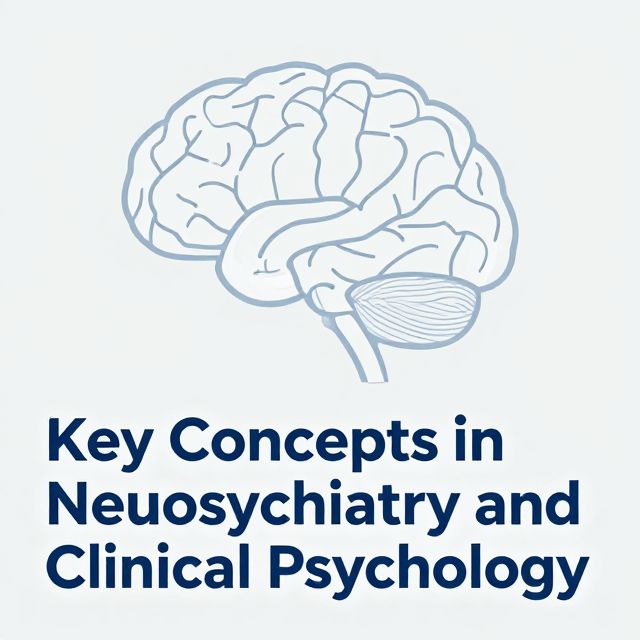
Sesli Özet
16 dakikaKonuyu otobüste, koşarken, yolda dinleyerek öğren.
Sesli Özet
Key Concepts in Neuropsychiatry and Clinical Psychology
Flash Kartlar
25 kartKarta tıklayarak çevir. ← → ile gez, ⎵ ile çevir.
Tüm kartları metin olarak gör
1. What is the primary distinction between Parkinson's and Huntington's diseases?
The primary distinction between Parkinson's and Huntington's diseases involves the assessment of motor symptoms. Parkinson's typically presents with bradykinesia, rigidity, and resting tremor, while Huntington's is characterized by chorea (involuntary, jerky movements) and dystonia. Both are neurodegenerative but affect different motor pathways and present with distinct motor profiles.
2. Describe the characteristics of the NMDA receptor.
The NMDA receptor is a type of glutamate receptor that is both ligand-gated and ionotropic. This means it requires the binding of a ligand (like glutamate) and a change in membrane potential (depolarization) to open its ion channel. It plays a crucial role in synaptic plasticity, learning, and memory.
3. When does postnatal psychosis typically manifest?
Postnatal psychosis typically manifests within two weeks postpartum. It is a severe mental illness characterized by rapid onset of psychotic symptoms such as hallucinations, delusions, and mood lability, requiring urgent medical attention and treatment.
4. What condition is suggested by brainstem features after arm exertion with a 30 mmHg blood pressure difference between arms?
This clinical presentation suggests occlusion of the subclavian artery, a condition known as subclavian steal syndrome. The blood pressure difference indicates reduced flow to one arm, and exertion can 'steal' blood from the vertebral artery, leading to brainstem symptoms due to transient vertebrobasilar insufficiency.
5. What is a potential interaction when tramadol is co-administered with escitalopram?
When tramadol is co-administered with escitalopram, it may induce fever. Both medications can increase serotonin levels, and their combined use can elevate the risk of serotonin syndrome, which includes symptoms like fever, agitation, and hyperreflexia.
6. Which antidepressant demonstrates non-linear kinetics above therapeutic doses?
Venlafaxine demonstrates non-linear kinetics above therapeutic doses. This means that as the dose increases beyond a certain point, the drug's elimination does not increase proportionally, leading to a disproportionate rise in plasma concentrations and an increased risk of side effects.
7. What is the approximate half-life of citalopram?
The half-life of citalopram is approximately 36 hours, with a reported range of 24 to 48 hours. This relatively long half-life allows for once-daily dosing and contributes to its steady-state concentration in the body.
8. Which depot antipsychotic has the longest half-life, and how long does it extend?
The depot antipsychotic with the longest half-life is paliperidone palmitate, extending up to 40 days. This extended half-life allows for less frequent injections, improving adherence and reducing the burden of daily medication for patients with chronic psychotic disorders.
9. Describe the mechanism of action of Vortioxetine.
Vortioxetine's mechanism of action involves being a 5HT1A full agonist and a 5HT1B partial agonist. Additionally, it acts as an antagonist at 5HT1D, 5HT3, and 5HT7 receptors. This multimodal serotonergic activity contributes to its antidepressant and anxiolytic effects.
10. Which CNS neurotransmitter cannot be detected at birth?
Dopamine is the CNS neurotransmitter that cannot be detected at birth. Its development and maturation occur postnatally, playing a critical role in motor control, reward, and executive functions as the brain develops.
11. What MRI changes are typically observed in the brain from puberty to adulthood?
MRI changes from puberty to adulthood typically show reduced grey matter and increased white matter. This reflects a process of synaptic pruning and myelination, where less-used neural connections are eliminated, and remaining connections are strengthened, leading to more efficient brain processing.
12. Which brain pathway and specific nucleus are involved in the reward system?
The mesolimbic pathway, specifically involving the nucleus accumbens, is centrally involved in the brain's reward system. This pathway, originating in the ventral tegmental area (VTA) and projecting to the nucleus accumbens, mediates feelings of pleasure and motivation, often implicated in addiction.
13. What are the post-mortem findings in suicide patients regarding serotonin levels?
Post-mortem findings in suicide patients include reduced 5HIAA CSF levels, which is a metabolite of serotonin, indicating lower serotonin turnover. Additionally, there is an increased density of serotonin receptors, with reduced 5HT1A but increased 5HT2 levels, suggesting compensatory changes in the serotonergic system.
14. Which benzodiazepine does not require dose adjustment with HIV treatment due to its metabolism?
Lorazepam is a benzodiazepine that does not require dose adjustment with HIV treatment. This is because it is metabolized via glucuronidation, a pathway that is generally less affected by the cytochrome P450 enzyme inhibitors often used in HIV antiretroviral therapy, unlike other benzodiazepines.
15. What is the risk associated with homozygous APOE4 and late-onset Alzheimer's disease?
Homozygous APOE4 is associated with a 10 to 15 times increased risk of late-onset Alzheimer's disease, typically above 55 years of age. The APOE4 allele is a major genetic risk factor, influencing amyloid-beta clearance and increasing susceptibility to neurodegeneration.
16. Name three genetic factors found in schizophrenia.
Three genetic factors found in schizophrenia include Dysbindin, Neuregulin-1, and DISC1 (Disrupted in Schizophrenia 1). Other factors mentioned are COMT, d-amino-oxidase, and ZNF804A, highlighting the complex polygenic nature of the disorder.
17. What are the primary mechanisms of action for Psilocybin and MDMA?
Psilocybin acts primarily via 5-HT2A agonism, leading to its hallucinogenic effects. MDMA (ecstasy) primarily affects serotonin vesicles, causing a massive release of serotonin, dopamine, and norepinephrine, and inhibiting their reuptake, resulting in its empathogenic and stimulant properties.
18. What are the risks associated with sodium valproate during pregnancy?
Sodium valproate is associated with an increased risk of autistic spectrum disorder and congenital malformations. The risk for malformations is 1 to 10%, and for developmental delays, it is 31 to 40%, making it a significant concern for use in women of childbearing potential.
19. Which brain structure is found to be atrophied in autistic spectrum disorder?
The cerebellar vermis is a brain structure found to be atrophied in autistic spectrum disorder. The cerebellum plays a role in motor control, balance, and cognitive functions, and its structural abnormalities are implicated in the neurodevelopmental differences seen in ASD.
20. List three mechanisms involved in epigenetic changes.
Three mechanisms involved in epigenetic changes are DNA methylation, histone modification, and non-coding RNA. Other mechanisms include DNA acetylation and chromatin remodeling. These processes alter gene expression without changing the underlying DNA sequence.
21. What are the distinguishing features of sleep stage 2?
Sleep stage 2 is characterized by the presence of K-complexes and sleep spindles. K-complexes are large, slow waves, while sleep spindles are bursts of rapid, rhythmic brain activity. These features indicate a deeper stage of sleep than stage 1, but lighter than stages 3 and 4.
22. What is hypsarrhythmia characteristic of?
Hypsarrhythmia is characteristic of infantile spasms, also known as West Syndrome. It is a chaotic and disorganized pattern of high-amplitude, irregular slow waves and spikes seen on an electroencephalogram (EEG), indicative of severe brain dysfunction in infants.
23. What is the primary function of microglia in the brain?
The primary function of microglia in the brain is phagocytosis. They act as the brain's resident immune cells, scavenging dead cells, cellular debris, and pathogens, playing a crucial role in neuroinflammation, brain development, and maintaining brain homeostasis.
24. What is the greatest risk factor for completed suicide?
The greatest risk factor for completed suicide is male gender. While women attempt suicide more often, men are statistically more likely to die by suicide, often due to using more lethal means and potentially underreporting suicidal ideation.
25. According to Bowlby, what does monotropy refer to?
According to Bowlby, monotropy refers to attachment to one primary attachment figure, usually the caregiver. This concept suggests that infants have an innate tendency to form a strong, unique bond with a single individual, which is crucial for their healthy emotional and social development.