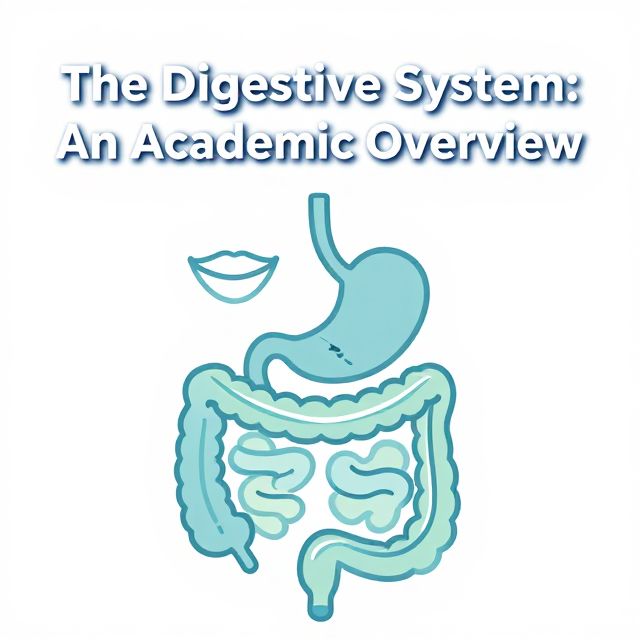
The Digestive System: An Academic Overview - kapak
Sağlık#digestive system#human anatomy#physiology#digestion

The Digestive System: An Academic Overview

An academic summary of the human digestive system, detailing its organs, processes, and functions, from mechanical breakdown to nutrient absorption and waste elimination.

ltddh0uqApril 11, 2026 ~19 dk toplam
01

Sesli Özet

5 dakika

Konuyu otobüste, koşarken, yolda dinleyerek öğren.

Sesli Özet

The Digestive System: An Academic Overview

0:004:49
02

Flash Kartlar

25 kart

Karta tıklayarak çevir. ← → ile gez, ⎵ ile çevir.

1 / 25
Tüm kartları metin olarak gör
  1. 1. What is the primary role of the digestive system?

    The digestive system is a complex biological apparatus responsible for breaking down ingested food into absorbable nutrients. It also eliminates indigestible waste products, ensuring the body receives necessary energy and building blocks for growth, repair, and maintenance. This process involves both mechanical and chemical processing of food.

  2. 2. What is another name for the alimentary canal, and what is its basic structure?

    The alimentary canal is also known as the gastrointestinal (GI) tract. It is a continuous muscular tube that extends from the mouth to the anus. Its primary function is to transport food and progressively break it down through various stages of digestion.

  3. 3. Where does digestion primarily begin, and what processes occur there?

    Digestion commences in the mouth. Here, mechanical mastication (chewing) breaks down food into smaller pieces. Chemical digestion also begins with salivary amylase, an enzyme that starts the breakdown of carbohydrates.

  4. 4. Describe the role of peristalsis in the digestive system.

    Peristalsis is a wave-like muscular contraction that propels the bolus of food through the pharynx and esophagus. This involuntary action ensures that food moves efficiently towards the stomach, regardless of gravity. It is a crucial mechanism for food transport in the alimentary canal.

  5. 5. What are the main functions of the stomach in digestion?

    In the stomach, food is mechanically churned and mixed with gastric juices. These juices contain hydrochloric acid (HCl) and pepsin, which initiate protein digestion. The acidic environment also sterilizes ingested food, and the partially digested food is transformed into chyme.

  6. 6. What is chyme, and where does it go after leaving the stomach?

    Chyme is the partially digested food that results from the stomach's mechanical and chemical processing. After leaving the stomach, the chyme is released into the small intestine. This transition marks the next major stage of nutrient breakdown and absorption.

  7. 7. Identify the three main sections of the small intestine.

    The three main sections of the small intestine are the duodenum, jejunum, and ileum. Each section plays a specific role in the continued digestion and absorption of nutrients. The duodenum receives chyme from the stomach, while the jejunum and ileum are primarily involved in absorption.

  8. 8. Why is the small intestine considered the primary site for nutrient absorption?

    The small intestine is the primary site for nutrient absorption due to its specialized structure. It has a vast surface area created by villi and microvilli, which maximize absorption efficiency. Here, digestive enzymes from the pancreas and bile from the liver further break down carbohydrates, proteins, and fats into absorbable monomers.

  9. 9. What are the main roles of the large intestine?

    The large intestine, which includes the cecum, colon, and rectum, has several main roles. These include water absorption from undigested material, maintaining electrolyte balance, and the formation of feces. Beneficial bacteria residing in the colon also contribute to the synthesis of certain vitamins.

  10. 10. Name the four main accessory organs of the digestive system.

    The four main accessory organs of the digestive system are the salivary glands, liver, gallbladder, and pancreas. These organs are not part of the alimentary canal but produce and secrete substances essential for chemical digestion. They play crucial roles in breaking down food into absorbable nutrients.

  11. 11. What is the function of saliva, and which enzymes does it contain?

    Saliva, produced by the salivary glands, serves to lubricate food, making it easier to swallow. It also contains enzymes such as salivary amylase, which initiates carbohydrate digestion, and lingual lipase, which begins fat digestion. These enzymes start the chemical breakdown of food in the mouth.

  12. 12. Describe the role of the liver in digestion.

    The liver, the largest internal organ, performs numerous metabolic functions, including the production of bile. Bile is a digestive fluid crucial for fat digestion. It emulsifies fats in the small intestine, breaking them into smaller droplets to increase their surface area for enzymatic action.

  13. 13. What is the specific function of the gallbladder?

    The gallbladder's specific function is to store and concentrate bile produced by the liver. It releases this concentrated bile into the duodenum as needed, particularly after a meal containing fats. This ensures efficient fat emulsification and digestion.

  14. 14. Explain the exocrine function of the pancreas.

    The exocrine function of the pancreas involves producing pancreatic juice. This juice is a rich mixture of digestive enzymes and bicarbonate. These enzymes are essential for breaking down carbohydrates, fats, and proteins in the small intestine, while bicarbonate neutralizes acidic chyme.

  15. 15. Name three types of pancreatic enzymes and what they digest.

    Three types of pancreatic enzymes are amylase, lipase, and proteases (e.g., trypsin and chymotrypsin). Pancreatic amylase digests carbohydrates, pancreatic lipase digests fats, and proteases digest proteins. These enzymes are crucial for the complete breakdown of macromolecules in the small intestine.

  16. 16. Why is bicarbonate important in pancreatic juice?

    Bicarbonate in pancreatic juice is crucial because it neutralizes the acidic chyme that enters the small intestine from the stomach. This neutralization creates an optimal pH environment (alkaline) for the pancreatic enzymes to function effectively. Without it, the enzymes would be denatured and unable to digest nutrients.

  17. 17. How do villi and microvilli contribute to the efficiency of nutrient absorption?

    Villi and microvilli are tiny, finger-like projections found in the small intestine. They significantly increase the surface area available for absorption. This vast surface area allows for maximum contact between digested nutrients and the absorptive cells, greatly enhancing the efficiency of nutrient uptake into the bloodstream or lymphatic system.

  18. 18. What is the final product of carbohydrate digestion, and where is it absorbed?

    The final product of carbohydrate digestion is monosaccharides (simple sugars). These monosaccharides are absorbed primarily in the small intestine. Once absorbed, they typically enter the bloodstream to be transported to cells for energy.

  19. 19. What are proteins broken down into during digestion, and where does this primarily occur?

    Proteins are broken down into amino acids during digestion. This process begins in the stomach with pepsin and continues extensively in the small intestine with pancreatic proteases like trypsin and chymotrypsin. The amino acids are then absorbed into the bloodstream.

  20. 20. What are fats broken down into during digestion, and how are they absorbed?

    Fats are broken down into fatty acids and glycerol during digestion. This process is aided by bile emulsification and pancreatic lipase. These smaller molecules are then absorbed into the lymphatic system, primarily in the small intestine, before eventually entering the bloodstream.

  21. 21. What is the role of beneficial bacteria in the large intestine?

    Beneficial bacteria residing in the colon (part of the large intestine) play a significant role in digestion. They contribute to the synthesis of certain vitamins, such as Vitamin K and some B vitamins. These bacteria also help in breaking down some undigested food components, though not for nutrient absorption by the host.

  22. 22. How does the digestive system contribute to overall bodily homeostasis?

    The digestive system contributes to overall bodily homeostasis by providing the necessary energy and raw materials for cellular function, growth, and repair. By meticulously processing food to extract vital nutrients and eliminate waste, it ensures the body maintains a stable internal environment essential for life.

  23. 23. What is the term for the wave-like muscular contractions that move food through the digestive tract?

    The term for the wave-like muscular contractions that move food through the digestive tract is peristalsis. This involuntary action is essential for propelling food from the esophagus to the stomach and through the intestines, ensuring continuous movement and processing of ingested material.

  24. 24. Which digestive organ produces hydrochloric acid and pepsin?

    The stomach is the digestive organ that produces hydrochloric acid (HCl) and pepsin. HCl creates an acidic environment for protein digestion and sterilizes food, while pepsin is an enzyme that initiates the breakdown of proteins into smaller peptides.

  25. 25. What is the primary function of bile in digestion?

    The primary function of bile in digestion is to emulsify fats in the small intestine. This means breaking large fat globules into smaller droplets, increasing their surface area. This increased surface area allows pancreatic lipase to more efficiently digest fats into fatty acids and glycerol.

03

Bilgini Test Et

15 soru

Çoktan seçmeli sorularla öğrendiklerini ölç. Cevap + açıklama.

Soru 1 / 15Skor: 0

What is the primary role of the digestive system as described in the text?

04

Detaylı Özet

4 dk okuma

Tüm konuyu derinlemesine, başlık başlık.

This content is based on a YouTube video.

The Digestive System: A Comprehensive Study Guide 🍎

The digestive system is a vital and intricate biological apparatus responsible for transforming the food we eat into usable energy and nutrients. It meticulously breaks down ingested food into absorbable components and efficiently eliminates indigestible waste products. Understanding its structure and function is fundamental to comprehending human physiology and maintaining overall health. This guide will explore the key components and processes involved in digestion.

1. The Alimentary Canal: The Pathway of Digestion 🛣️

The alimentary canal, also known as the gastrointestinal (GI) tract, is a continuous muscular tube that extends from the mouth to the anus. Its primary role is to transport food and progressively break it down through a series of mechanical and chemical processes.

1.1. Journey Through the GI Tract:

  • Mouth 🦷
    • Mechanical Digestion: Food is physically broken down by chewing (mastication).
    • Chemical Digestion: Saliva, produced by salivary glands, contains salivary amylase, which begins the breakdown of carbohydrates.
    • The chewed food, mixed with saliva, forms a soft mass called a bolus.
  • Pharynx and Esophagus ➡️
    • The bolus passes from the mouth through the pharynx and then into the esophagus.
    • Peristalsis: A wave-like muscular contraction propels the bolus down the esophagus towards the stomach.
  • Stomach 🧪
    • Mechanical Digestion: The stomach muscles churn and mix the food.
    • Chemical Digestion: Gastric juices, containing hydrochloric acid (HCl) and pepsin, are secreted.
      • HCl creates an acidic environment, which helps sterilize ingested food and activates pepsin.
      • Pepsin initiates the digestion of proteins.
    • The partially digested food, now a semi-liquid mixture, is called chyme.
  • Small Intestine 📈
    • Composed of three sections: the duodenum, jejunum, and ileum.
    • This is the primary site for nutrient absorption.
    • Digestive enzymes from the pancreas and bile from the liver (stored in the gallbladder) further break down carbohydrates, proteins, and fats into their constituent monomers.
    • Villi and Microvilli: The inner lining of the small intestine has numerous folds, villi, and microvilli, which vastly increase its surface area, maximizing absorption efficiency.
  • Large Intestine 💧
    • Includes the cecum, colon, and rectum.
    • Main Functions:
      1. Absorption of water.
      2. Maintenance of electrolyte balance.
      3. Formation of feces.
    • Beneficial bacteria residing in the colon contribute to the synthesis of certain vitamins.
  • Rectum and Anus 🚽
    • Feces are stored in the rectum before being eliminated from the body through the anus.

2. Accessory Organs and Chemical Digestion ✨

Beyond the alimentary canal, several accessory organs play crucial roles by producing and secreting substances essential for chemical digestion.

2.1. Key Accessory Organs:

  • Salivary Glands:
    • Located in the mouth.
    • Produce saliva, which lubricates food and contains enzymes:
      • Amylase: Initiates carbohydrate digestion.
      • Lingual Lipase: Initiates fat digestion.
  • Liver:
    • The largest internal organ.
    • Produces bile, a digestive fluid.
    • Bile Function: Emulsifies fats in the small intestine, breaking them into smaller droplets. This increases the surface area for enzymatic action, making fat digestion more efficient.
  • Gallbladder:
    • Stores and concentrates bile produced by the liver.
    • Releases bile into the duodenum as needed.
  • Pancreas:
    • A vital gland with both exocrine and endocrine functions.
    • Exocrine Function (Digestive Role): Produces pancreatic juice, a rich mixture of digestive enzymes and bicarbonate.
      • Pancreatic Enzymes:
        • Amylase: Further breaks down carbohydrates.
        • Lipase: Digests fats.
        • Proteases (e.g., trypsin, chymotrypsin): Complete the breakdown of proteins.
      • Bicarbonate: Neutralizes the acidic chyme entering from the stomach, creating an optimal pH environment for pancreatic enzymes to function effectively.

2.2. The Essence of Chemical Digestion 💡

Chemical digestion, facilitated by these enzymes and fluids, breaks down complex macromolecules into simpler, absorbable molecules:

  • Carbohydrates are broken down into monosaccharides (simple sugars).
  • Proteins are broken down into amino acids.
  • Fats are broken down into fatty acids and glycerol.

These smaller molecules are then absorbed into the bloodstream or lymphatic system, ready to be transported throughout the body for energy, growth, and repair.

Conclusion: The Importance of Digestive Function ✅

In summary, the digestive system is a highly coordinated network of organs that meticulously processes food to extract vital nutrients and eliminate waste. From the initial mechanical and chemical breakdown in the mouth to the final absorption in the small intestine and waste elimination, each component plays a specific and indispensable role. The alimentary canal provides the pathway, while accessory organs supply the necessary enzymes and fluids for efficient chemical digestion. This complex physiological process is fundamental to sustaining life, providing the energy and raw materials required for cellular function, growth, and overall bodily homeostasis. A thorough understanding of the digestive system is therefore critical for appreciating the intricate mechanisms that underpin human health and well-being. 💖
Kendi çalışma materyalini oluştur

PDF, YouTube videosu veya herhangi bir konuyu dakikalar içinde podcast, özet, flash kart ve quiz'e dönüştür. 1.000.000+ kullanıcı tercih ediyor.

Sıradaki Konular

Tümünü keşfet
Anatomy and Physiology of the Oral Cavity

Anatomy and Physiology of the Oral Cavity

Explore the detailed anatomy and physiology of the oral cavity, including teeth, gingivae, lips, cheeks, palate, and tongue, along with their vascular and neural supplies.

14 dk Özet 25 15
Understanding the Respiratory System: Alveoli, Pleura, and Lung Health

Understanding the Respiratory System: Alveoli, Pleura, and Lung Health

Explore the intricate details of the human respiratory system, focusing on alveolar function, pleural membranes, breathing mechanics, and common lung diseases.

5 dk Özet
Understanding Energy Metabolism and Food Values

Understanding Energy Metabolism and Food Values

Explore the fundamentals of energy metabolism, how food energy is calculated, and methods for assessing energy intake and expenditure in the human body.

9 dk Özet 25 15
Essential Vitamins: A Deep Dive into Vitamin A and D

Essential Vitamins: A Deep Dive into Vitamin A and D

Explore the forms, sources, metabolism, functions, and health implications of Vitamin A and Vitamin D, crucial for vision, bone health, and immune function.

Özet 15
Bone Tissue and Joint Anatomy: A Comprehensive Overview

Bone Tissue and Joint Anatomy: A Comprehensive Overview

This summary provides an academic overview of bone tissue composition, types, cellular components, formation, degradation, associated diseases, and the anatomical classification and structure of joints.

12 dk Özet 25 15
Understanding Body Functions and Disease Mechanisms

Understanding Body Functions and Disease Mechanisms

Explore the intricate processes of human digestion, the robust immune system, and the complexities of various diseases including bacterial, viral, parasitic, fungal infections, cancer, and psychological illnesses.

Özet 25 15
Essential Nutrients and Cellular Processes

Essential Nutrients and Cellular Processes

Explore the vital roles of vitamins and minerals in human health, the causes of their deficiencies, and the fundamental processes of cell death, including necrosis and programmed apoptosis.

10 dk Özet 25 15
Neurological Disorders and Blood Tissue Fundamentals

Neurological Disorders and Blood Tissue Fundamentals

Explore key neurological disorders like Alzheimer's, ALS, and Parkinson's, then delve into the composition, production, and vital functions of blood tissue, including erythrocytes and anemia.

10 dk Özet 25 15