 Podit
Podit
This study material compiles information from a copy-pasted text and a lecture audio transcript, focusing on essential nutrients (vitamins and minerals) and fundamental cellular processes (cell death). The content has been organized for clarity and ease of understanding, presenting a comprehensive overview of these critical biological topics.
Essential Nutrients and Cellular Processes: A Study Guide
📚 1. Introduction to Vitamins
Vitamins are organic substances indispensable for cellular metabolism, growth, development, and overall healthy living, even in minute quantities. They primarily function as coenzymes, assisting numerous enzymes in catalyzing vital biochemical reactions within cells. Consequently, a deficiency in specific vitamins can impede crucial metabolic pathways.
📊 2. Widespread Vitamin and Mineral Deficiencies: Underlying Causes
Despite their critical importance, vitamin and mineral deficiencies are prevalent globally. Several factors contribute to this widespread issue:
-
Food Processing and Storage 🏭
- Modern food processing often leads to significant nutrient loss.
- Unhealthy additives like salt, oil, and other chemicals are frequently introduced.
- Example: Potato chips lack the fiber and Vitamin C of raw potatoes but are high in sodium and oil. Frozen vegetables can lose up to half their Vitamin B6. Fruits harvested prematurely or under poor conditions may have reduced Vitamin C content.
-
Modern Agricultural Methods 🚜
- Contemporary farming practices deplete soil of essential minerals and trace elements.
- Industrial pollution and acid rain exacerbate this problem.
- Foods grown in nutrient-poor soil will naturally have reduced mineral content, even if the plants appear healthy.
-
Poor Dietary Choices 🍔
- Typical industrialized diets are often high in meat, refined cereals, whole milk products, and processed foods.
- This leads to excessive intake of sodium, fat, and cholesterol.
- Conversely, these diets are often low in fiber, essential fatty acids, and crucial micronutrients.
-
Environmental Pollution 🏙️
- Urban pollution increases the body's demand for micronutrients, particularly antioxidants.
- Example: High intake of Vitamins E and C can protect against liver damage from air pollution. Selenium and zinc-dependent enzymes help reduce toxicity from heavy metals and xenobiotics. Vitamin C is vital for protecting the digestive system from food carcinogens.
-
Substance Use and Medications 💊
- Alcohol, tobacco, caffeine, and various drugs can significantly lower the bioavailability of micronutrients.
- Examples:
- Thiazide diuretics deplete potassium and magnesium.
- Contraceptives disrupt folate and Vitamin B6 metabolism, increasing their requirement.
- Smoking depletes Vitamins C and B12.
- Alcohol consumption leads to loss of iron, zinc, magnesium, and B vitamins.
🧪 3. Classification of Vitamins
Vitamins are categorized based on their solubility:
-
Water-Soluble Vitamins 💧
- Includes B1 (Thiamine), B2 (Riboflavin), Niacin (Nicotinamide), B6 (Pyridoxine), B12 (Cyanocobalamin), and Vitamin C (Ascorbic acid).
- These cannot be stored in the body and must be consumed regularly.
-
Fat-Soluble Vitamins 🥑
- Includes Vitamins A, D, E (Tocopherol), and K.
- Require cholesterol for their synthesis and can be stored in fat tissues, released as needed.
🍎 4. Key Vitamins and Their Functions
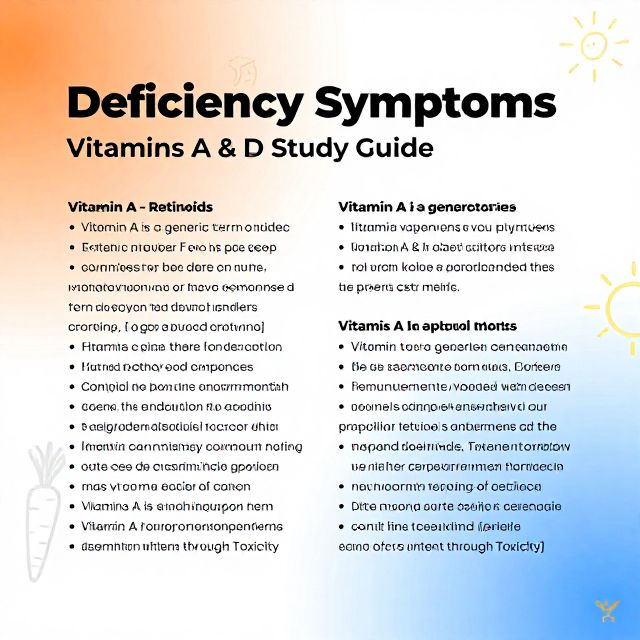
4.1. Vitamin A (Retinol)
- Functions: Increases resistance to infections, promotes cell renewal.
- Sources: Green vegetables, tomatoes, cereals, vegetable oils, carrots, cabbage, honey, nuts. Animal sources (retinol) include liver. Carotenoids (beta-carotene) in plants convert to Vitamin A.
- Deficiency: Visual problems, hypertension, brittle nails, dry skin, weakness, increased susceptibility to infections.
- ⚠️ Important Note: High doses of Vitamin A (retinol) are teratogenic and can cause birth defects in early pregnancy. Pregnant women should avoid excessive supplementation and high-retinol foods like liver. Carotenoids are safe as they do not lead to Vitamin A toxicity.
4.2. Vitamin B1 (Thiamine)
- Functions: Maintains the nervous system, regulates blood circulation, crucial for energy metabolism (as Thiamine Pyrophosphate - TPP), neurotransmitter function, collagen synthesis.
- Sources: Cheese, eggs, fish, cereals.
- Deficiency: Problems with nervous, digestive, and circulatory systems; exhaustion. Body reserves are low (approx. 30 mg), requiring regular intake.
- Toxicity: Generally non-toxic, but doses >200 mg may cause somnolence. Injected thiamine can rarely cause severe allergic reactions.
4.3. Vitamin B6 (Pyridoxine)
- Functions: Blood cell production, strengthens heart, regulates kidney function, lowers cholesterol, boosts immune system, involved in over 100 metabolic reactions (e.g., protein synthesis, amino acid metabolism, collagen synthesis), maintains blood sugar levels.
- Sources: Eggs, chicken, carrots, green leafy vegetables.
- Deficiency: Kidney stones, nervous system diseases, anemia, weakness.
- Note: Dietary pyridoxine converts to active pyridoxal 5 phosphate (PLP), requiring zinc and riboflavin. Body stores are low (150 mg), necessitating regular intake.
4.4. Vitamin B12 (Cyanocobalamin)
- Functions: Aids cell renewal, strengthens nervous system, facilitates protein utilization, essential for child development.
- Sources: Offal, cheese, milk.
- Deficiency: Chronic deficiency linked to progressive nervous system disorders (e.g., Alzheimer's), somnolence, increased illness, loss of appetite in children, developmental delays.
4.5. Vitamin C (Ascorbic Acid)
- Functions: Regulates blood circulation, aids cell renewal, strengthens gums.
- Sources: Green pepper, strawberries, parsley, green vegetables, tomatoes, red cabbage, citrus fruits.
- Deficiency: Muscle weakness, rheumatism, circulatory problems, tooth decay, cellulitis, and most notably, scurvy.
4.6. Vitamin D
- Functions: Develops and strengthens the skeletal system, directs calcium into bones, regulates blood and tissue calcium levels, essential for bone density.
- Sources: Sun exposure (synthesized in skin as D3/cholecalciferol), green vegetables, fish, olive oil, eggs, liver. D2 (ergocalciferol) is a synthetic form used in supplements.
- Deficiency: Rickets in children, growth problems, tooth decay, gum diseases, bone deformation in old age.
- 💡 Insight: Vitamin D is unique as its active form is a hormone. 10-15 minutes of sun exposure a few times a week is often sufficient for healthy adults.
- ⚠️ Risk Factors for Deficiency: Vegetarians (D3 is animal-sourced), geriatric population (less efficient skin synthesis), infants (cannot fully activate stored forms), people in northern latitudes during winter, and those using sunscreens with SPF >15 (blocks 99% synthesis).
- Toxicity: Chronic intake >100 mg/day can cause hypercalcemia in children and soft tissue calcification. Chronic intake >1000 mg/day can lead to renal calcification.
4.7. Vitamin E (Tocopherol)
- Functions: Natural antioxidant, protects against cancer, aids cell renewal, delays aging, necessary for reproductive functions. Alpha-tocopherol is the most active form.
- Sources: Vegetable oils, cereals, almond, walnut, sunflower seeds, green leafy vegetables.
- Toxicity: Generally not toxic for healthy individuals at 400-800 mg/day.
- ⚠️ Caution: Patients on anticoagulant therapy should be careful with high doses as Vitamin E can enhance anticoagulant effects and reduce Vitamin K-dependent coagulation factors. Diabetics should also be cautious as it may increase insulin effectiveness, potentially leading to hypoglycemia.
4.8. Vitamin K
- Functions: Essential for blood coagulation (prevents excessive blood loss), protects against cancer (antioxidant), aids cell renewal, strengthens bone structure. Important cofactor in protein production (e.g., osteocalcin for calcium metabolism and Vitamin D regulation).
- Sources: Cauliflower, cabbage, Brussels sprouts. K1 (phylloquinone) from plants, K2 (menaquinone) from intestinal bacteria, K3 (menadione) is synthetic.
- Deficiency: Weakened immune system, prolonged wound healing, premature aging.
- Toxicity: Phylloquinone toxicity has not been reported even at high doses (e.g., 4000 mg/day).
🪨 5. Essential Minerals: Magnesium and Zinc
5.1. Magnesium (Mg)
- Discovery: 1808 by Sir Humphrey Davy. One of 11 vital minerals.
- Importance: Body cannot produce it; must be obtained from food. Cofactor for hundreds of enzymes.
- Storage: Approx. 20-28g in body; 60% in bones/teeth, 40% in body fluids (more in brain and heart).
- Depletion: Modern agriculture, potassium fertilizers, acid rain reduce soil Mg.
- Increased Need: Stress, pregnancy, lactation, heavy sweating, laxative/diuretic use, certain lifestyles (diet, sports, alcohol, smoking).
- Functions: Relaxes nervous system and muscles ("Anti-stress mineral"), aids utilization of Vitamin C, calcium, phosphorus, sodium, potassium. Improves arterial flexibility, prevents heart attacks, lowers blood pressure.
- Absorption: Easily absorbed (40-60% from plants).
5.2. Zinc (Zn)
- Functions: Active in cellular functions (signal transmission, transcription, replication), effective in non-specific and acquired immunity.
- Recommended Intake: 10 mg elemental zinc/day, often not met globally.
- Sources: Meat and animal products (oyster, liver, beef, poultry) are richer than vegetables/herbal products. 100g almonds provide 24% of daily requirement.
- Deficiency: Negative effect on immune system; supplementation can restore immune function, decrease infections, and increase survival. Effective against common cold.
- ⚠️ Toxicity: High doses over long periods (adults and children) can induce anemia, growth retardation, copper deficiency, and immunosuppression. Use supplements cautiously.
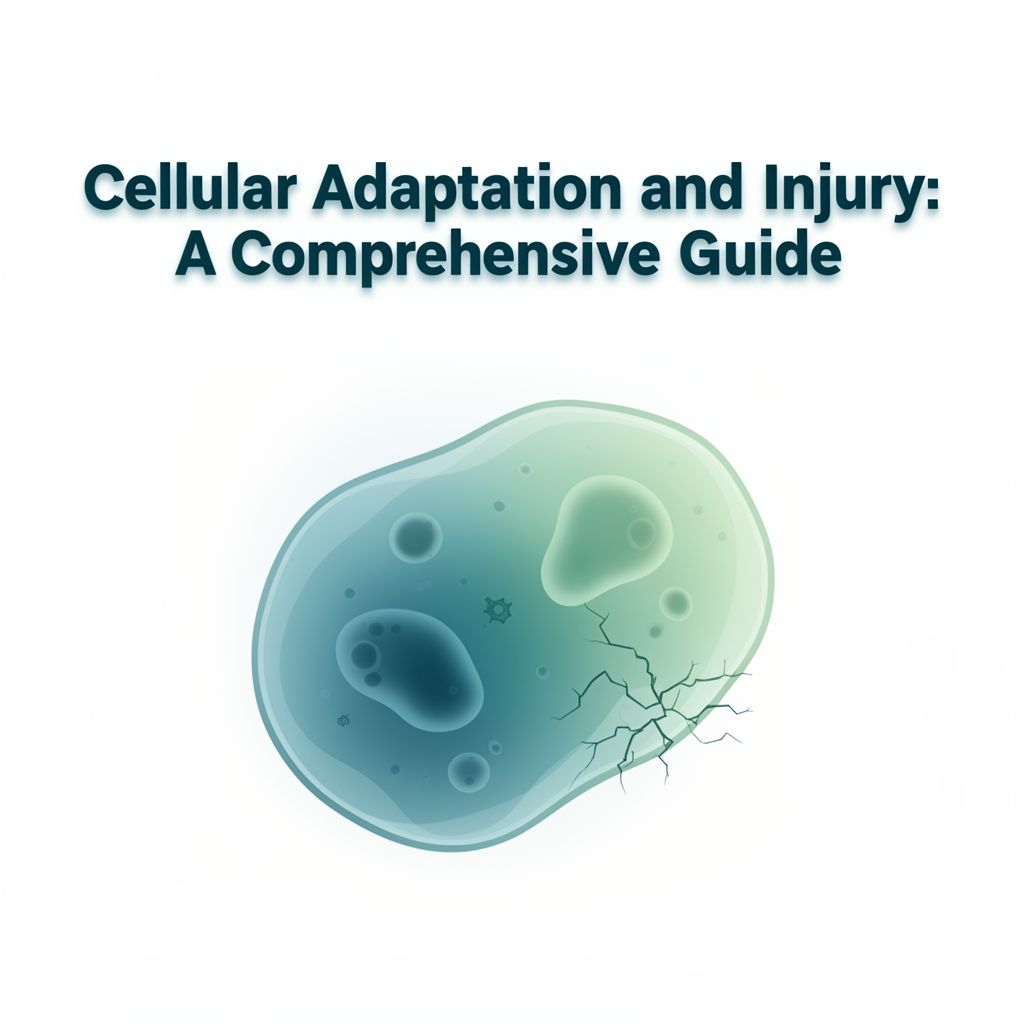
🧬 6. Cell Death: Necrosis vs. Apoptosis
Every cell undergoes a life cycle culminating in death. In multicellular organisms, there are two primary forms of cell death:
6.1. Necrosis (Cell Death Due to Damage)
- Definition: Pathological cell death caused by external damage.
- Causes: Infection, high temperatures, radiation, physical/chemical reactions, mechanical damage, lack of oxygen, toxic substances.
- Mechanism: Cell disintegrates, and its contents leak out.
- Outcome: Leads to inflammation in surrounding tissues.
6.2. Apoptosis (Programmed Cell Death)
- Definition: Orderly, genetically controlled cell disappearance for non-physiological reasons.
- Mechanism:
- Cells separate from neighbors.
- Cell membrane loses regular form, endoplasmic reticulum widens.
- Organelles gather but do not swell.
- Nucleus shrinks, membrane undulates and disintegrates.
- Intracellular calcium increases, activating endonuclease, fragmenting DNA (180-200 base pairs).
- Cell membrane "buds," forming small apoptotic particles; cell contents do not leak out.
- Neighboring epithelial cells and macrophages phagocytose these apoptotic bodies, digesting them in lysosomes.
- Outcome: No inflammation occurs.
- Reasons for Apoptosis:
- Developmental Completion: Essential for embryonic development (e.g., removing membranes between fingers).
- Organism Survival: Maintains integrity of mature cells, regulates cell numbers, eliminates damaged or potentially harmful cells.
- Examples: Elimination of 5 x 10^11 blood cells daily in bone marrow, endometrial cell lysis, removal of damaged cells.