Vitamin D Deficiency and Calcium Disorders - kapak
Sağlık#vitamin d#calcium disorders#hypoparathyroidism#digeorge syndrome

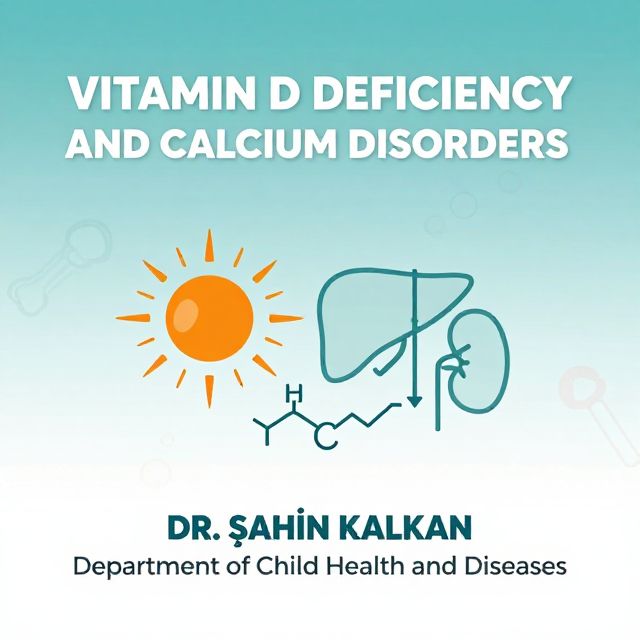
Vitamin D Deficiency and Calcium Disorders

An in-depth look into Vitamin D metabolism, deficiency, and various calcium disorders including hypoparathyroidism and associated genetic syndromes.

amerApril 12, 2026 ~15 dk toplam
01

Flash Kartlar

25 kart

Karta tıklayarak çevir. ← → ile gez, ⎵ ile çevir.

1 / 25
Tüm kartları metin olarak gör
  1. 1. What is the primary focus of this content?

    The primary focus of this content is Vitamin D deficiency and various calcium disorders. Understanding these mechanisms is crucial for diagnosing and managing conditions affecting bone health and overall physiological function.

  2. 2. What is the initial step in Vitamin D3 synthesis in the human body?

    The initial step in Vitamin D3 synthesis begins when ultraviolet B (UVB) radiation from sunlight strikes the skin. This exposure triggers the conversion of 7-dehydrocholesterol into Vitamin D3.

  3. 3. Where does the first hydroxylation of Vitamin D3 occur, and what enzyme is involved?

    The first hydroxylation of Vitamin D3 occurs in the liver. It is catalyzed by the enzyme 25-hydroxylase, which transforms Vitamin D3 into 25-hydroxy Vitamin D3.

  4. 4. Where does the second hydroxylation of Vitamin D3 take place, and what is the final active form called?

    The second hydroxylation of Vitamin D3 takes place in the kidneys. It is mediated by 1-alpha-hydroxylase, producing 1,25-dihydroxy Vitamin D3, which is the active form of Vitamin D, also known as calcitriol.

  5. 5. What is the critical role of active Vitamin D (calcitriol) in the body?

    Active Vitamin D, or calcitriol, plays a critical role in maintaining calcium and phosphate balance in the body. It helps regulate the absorption of these minerals from the gut and their levels in the blood, which is essential for bone health and various physiological processes.

  6. 6. What are the typical laboratory findings observed in a patient with Vitamin D deficiency?

    In Vitamin D deficiency, laboratory findings typically include a decrease in serum calcium levels. There is also an increase in parathyroid hormone (PTH) as the body attempts to compensate for low calcium, and a decrease in phosphate levels.

  7. 7. Describe two common approaches for treating Vitamin D deficiency.

    One common treatment approach for Vitamin D deficiency involves a single, high dose of Vitamin D, typically ranging from 300,000 to 600,000 international units (IU). Alternatively, a daily regimen of 2000 IU can be administered for three months to restore adequate levels.

  8. 8. What are the recommended daily Vitamin D doses for infants and children for prevention?

    For prevention, infants from birth to one year of age are recommended a daily dose of 400 IU of Vitamin D. For children over one year, the recommended daily dose increases to 600 IU to support healthy development and bone growth.

  9. 9. What is considered the optimal target level for Vitamin D in the blood?

    The optimal target level for Vitamin D in the blood is generally considered to be between 40 and 100 nanograms per milliliter (ng/mL). Maintaining levels within this range is important for overall health and calcium regulation.

  10. 10. When does late neonatal hypocalcemia typically manifest in neonates?

    Late neonatal hypocalcemia typically manifests in neonates between 12 and 72 hours of life. This condition is a form of hypoparathyroidism that can affect newborns shortly after birth.

  11. 11. List three risk factors that make infants more susceptible to late neonatal hypocalcemia.

    Infants are more susceptible to late neonatal hypocalcemia if they are premature, have experienced asphyxia during birth, or are born to diabetic mothers. The type of feeding also plays a significant role in determining serum calcium levels in these vulnerable populations.

  12. 12. What genetic syndrome is often associated with aplasia or hypoplasia of the parathyroid glands, leading to hypoparathyroidism?

    DiGeorge syndrome, also known as velocardiofacial syndrome, is often associated with aplasia or hypoplasia of the parathyroid glands. This condition is primarily linked to a deletion on chromosome 22q11.2 and frequently results in hypoparathyroidism.

  13. 13. What is the primary genetic cause of DiGeorge syndrome?

    The primary genetic cause of DiGeorge syndrome is a deletion on chromosome 22q11.2. This chromosomal anomaly leads to defects in the development of several tissues and organs, including the parathyroid glands.

  14. 14. What percentage of patients with DiGeorge syndrome experience neonatal hypocalcemia?

    Neonatal hypocalcemia occurs in approximately 60% of patients affected by DiGeorge syndrome. This high incidence highlights the significant impact of the syndrome on calcium regulation due to parathyroid gland issues.

  15. 15. Name three non-parathyroid anomalies associated with DiGeorge syndrome.

    DiGeorge syndrome is characterized by defects of the third and fourth pharyngeal pouches, leading to various anomalies. These include conotruncal defects of the heart (25% of cases), velopharyngeal insufficiency (32%), and renal anomalies (35%).

  16. 16. Besides the 22q11.2 deletion, what other genetic deletion can be associated with DiGeorge-like symptoms?

    In a small number of patients, DiGeorge-like symptoms have been reported with a deletion of chromosome 10p13. This indicates that while 22q11.2 is the primary cause, other genetic factors can contribute to similar clinical presentations.

  17. 17. What is MEN Type 1, and what are its characteristic features?

    MEN Type 1 (Multiple Endocrine Neoplasia Type 1) is an autosomal dominant disorder. It is characterized by hyperplasia or neoplasia of the endocrine pancreas, anterior pituitary, and parathyroid glands, leading to overproduction of various hormones.

  18. 18. On which chromosome is the gene responsible for MEN Type 1 located?

    The gene responsible for MEN Type 1 is located on chromosome 11q13. This specific genetic locus is crucial for understanding the inheritance and molecular basis of this complex endocrine disorder.

  19. 19. What are the three main distinguishing features of MEN Type IIA?

    MEN Type IIA is distinguished by medullary thyroid carcinoma, pheochromocytoma, and primary hyperparathyroidism. It can also be associated with cutaneous lichen amyloidosis and Hirschsprung disease, making it a multi-system disorder.

  20. 20. How does MEN Type IIB differ from MEN Type IIA in terms of endocrine involvement?

    MEN Type IIB differs from MEN Type IIA because it presents with medullary thyroid carcinoma and pheochromocytoma, but notably does not involve hyperparathyroidism. Instead, it is characterized by multiple neuromas and a distinctive Marfan-like habitus.

  21. 21. What is Idiopathic Hypercalcemia of Infancy, and what are its typical lab findings?

    Idiopathic Hypercalcemia of Infancy manifests as failure to thrive and hypercalcemia during the first year of life, often followed by spontaneous remission. In these cases, serum levels of phosphorus and PTH are typically normal, distinguishing it from other causes of hypercalcemia.

  22. 22. Describe the characteristic facial features of Williams Syndrome.

    Williams Syndrome is characterized by distinctive 'elfin facies.' These features include a small mandible, a prominent maxilla, and an upturned nose, contributing to a unique facial appearance often recognized in affected individuals.

  23. 23. What kind of personality is often associated with Williams Syndrome patients?

    Patients with Williams Syndrome often exhibit a gregarious, or 'cocktail party,' personality. They are typically very friendly, outgoing, and verbally expressive, which is a notable behavioral characteristic of the syndrome.

  24. 24. Name three common cardiac lesions found in patients with Williams Syndrome.

    Common cardiac lesions in Williams Syndrome include supravalvular aortic stenosis, peripheral pulmonic stenosis, and aortic hypoplasia. Other cardiac issues like coronary artery stenosis and atrial or ventricular septal defects can also occur.

  25. 25. What is 7-dehydrocholesterol's role in Vitamin D synthesis?

    7-dehydrocholesterol is the precursor molecule in the skin that is converted into Vitamin D3 upon exposure to ultraviolet B (UVB) radiation from sunlight. It is the starting point for the body's natural production of Vitamin D.

02

Bilgini Test Et

15 soru

Çoktan seçmeli sorularla öğrendiklerini ölç. Cevap + açıklama.

Soru 1 / 15Skor: 0

What is the initial substance converted into Vitamin D3 upon exposure to UVB radiation?

03

Detaylı Özet

5 dk okuma

Tüm konuyu derinlemesine, başlık başlık.

📚 Vitamin D Deficiency and Calcium Disorders: A Comprehensive Study Guide

Source Information: This study material has been compiled from a lecture audio transcript and supplementary copy-pasted text provided by the user.


🎯 Introduction to Vitamin D and Calcium Homeostasis

Vitamin D plays a pivotal role in maintaining calcium and phosphate balance within the body, which is essential for bone health and numerous physiological functions. This guide will explore the intricate processes of Vitamin D synthesis and activation, discuss the clinical implications of its deficiency, and delve into various calcium disorders, including hypoparathyroidism and related genetic syndromes. Understanding these mechanisms is crucial for the diagnosis and management of conditions affecting mineral metabolism.


1. ☀️ Vitamin D Metabolism: Synthesis and Activation

Vitamin D3 (cholecalciferol) synthesis is a multi-step process initiated by exposure to ultraviolet B (UVB) radiation.

1.1. Vitamin D3 Synthesis Pathway

  1. Skin Exposure to UVB: 7-dehydrocholesterol, a precursor molecule present in the skin, absorbs UVB radiation.
  2. Conversion in Skin: This absorption converts 7-dehydrocholesterol into Vitamin D3.
  3. First Hydroxylation (Liver): Vitamin D3 travels to the liver, where it undergoes its first hydroxylation step. The enzyme 25-hydroxylase converts Vitamin D3 into 25-hydroxy Vitamin D3 (calcidiol). This is the main circulating form and the one measured in blood tests to assess Vitamin D status.
  4. Second Hydroxylation (Kidney): 25-hydroxy Vitamin D3 is then transported to the kidneys. Here, the enzyme 1α-hydroxylase performs the second hydroxylation, transforming it into 1,25-dihydroxy Vitamin D3 (calcitriol).
  5. Active Form: 1,25-dihydroxy Vitamin D3 is the biologically active form of Vitamin D, responsible for regulating calcium and phosphate levels.

2. 📉 Vitamin D Deficiency: Diagnosis and Management

Vitamin D deficiency can lead to significant disruptions in calcium and phosphate homeostasis.

2.1. Laboratory Findings in Deficiency

When Vitamin D is deficient, the body attempts to compensate, leading to characteristic laboratory findings:

  • Calcium (Ca) decrease: Serum calcium levels typically fall.
  • Parathyroid Hormone (PTH) increase: The parathyroid glands release more PTH in response to low calcium, trying to raise calcium levels.
  • Phosphate decrease: Serum phosphate levels often decrease due to PTH action and impaired intestinal absorption.

2.2. Treatment Protocols

Treatment aims to replenish Vitamin D stores and normalize calcium levels.

  • High-Dose Single Administration: A common approach is a single, high dose of 300,000-600,000 IU (International Units) of Vitamin D.
  • Daily Regimen: Alternatively, a daily dose of 2000 IU can be administered for approximately three months.

2.3. Prevention Guidelines

Prevention is crucial, especially in pediatric populations:

  • Infants (0 days - 1 year): Recommended daily intake of 400 IU/day.
  • Children (> 1 year): Recommended daily intake of 600 IU/day.

2.4. Target Vitamin D Levels

💡 The optimal target level for 25-hydroxy Vitamin D in the blood is generally considered to be between 40-100 ng/mL.


3. 🦴 Calcium Disorders: Hypoparathyroidism

Hypoparathyroidism, particularly late neonatal hypocalcemia, is a condition characterized by insufficient parathyroid hormone production, leading to low serum calcium.

3.1. Etiology and Risk Factors

Hypoparathyroidism can manifest in specific populations and contexts:

  • Neonates: Commonly observed between 12 and 72 hours of life.
  • Premature Infants: Increased susceptibility due to immature parathyroid function.
  • Infants with Asphyxia: Birth complications can impact calcium regulation.
  • Infants of Diabetic Mothers: Maternal diabetes can affect fetal parathyroid development and calcium balance.
  • Type of Feeding: The type of infant feeding can also influence serum calcium levels.

4. 🧬 Genetic Syndromes Affecting Calcium Homeostasis

Several genetic syndromes can lead to hypoparathyroidism or other calcium dysregulation issues.

4.1. DiGeorge/Velocardiofacial Syndrome

Genetic Basis: This syndrome is primarily linked to a deletion on chromosome 22q11.2. A small number of cases are associated with a deletion on chromosome 10p13. ✅ Pathology: Characterized by aplasia or hypoplasia of the parathyroid glands, often due to defects in the development of the 3rd and 4th pharyngeal pouches. ✅ Clinical Manifestations: * Neonatal Hypocalcemia: Occurs in approximately 60% of affected patients. * Cardiac Defects: Conotruncal defects of the heart (e.g., Tetralogy of Fallot) in 25%. * Palatal Abnormalities: Velopharyngeal insufficiency (32%), cleft palate (9%). * Renal Anomalies: Present in 35%. * Immunodeficiency: Aplasia of the thymus with severe immunodeficiency (1%). * Associations: Also reported in infants of diabetic mothers and those born to mothers treated with retinoic acid early in pregnancy.

4.2. Multiple Endocrine Neoplasia (MEN) Syndromes

These are genetic disorders characterized by tumors or hyperplasia in multiple endocrine glands.

4.2.1. MEN Type 1 (Wermer Syndrome)

Inheritance: An autosomal dominant disorder. ✅ Genetic Basis: The gene for MEN Type 1 is located on chromosome 11q13. ✅ Key Features: Hyperplasia or neoplasia of: * Endocrine Pancreas: Secretes gastrin, insulin, pancreatic polypeptide, and occasionally glucagon. * Anterior Pituitary: Usually secretes prolactin. * Parathyroid Glands: Leading to primary hyperparathyroidism (often hypercalcemia).

4.2.2. MEN Type IIA (Sipple Syndrome)

Inheritance: A rare genetic disorder. ✅ Key Features: Characterized by a triad of: * Medullary Thyroid Carcinoma (MTC) * Pheochromocytoma (tumor of the adrenal medulla) * Primary HyperparathyroidismAssociated Conditions: Can also be associated with cutaneous lichen amyloidosis and Hirschsprung disease.

4.2.3. MEN Type IIB

Key Features: Shares some features with MEN IIA but with distinct differences: * Medullary Thyroid Carcinoma (MTC) * Pheochromocytoma * NO Hyperparathyroidism (distinguishing feature from MEN IIA). * Multiple Neuromas: Presence of benign nerve sheath tumors. * Characteristic Phenotype: Includes a Marfan-like habitus (tall, slender build with long limbs).

4.3. Idiopathic Hypercalcemia of Infancy

Manifestation: Presents as failure to thrive and hypercalcemia during the first year of life. ✅ Prognosis: Often followed by spontaneous remission. ✅ Laboratory Findings: Serum levels of phosphorus and PTH are typically normal, differentiating it from other causes of hypercalcemia.

4.4. Williams Syndrome

Key Feature: Infantile hypercalcemia is a common finding. ✅ Distinctive Phenotype: * Facial Features: "Elfin facies" (small mandible, prominent maxilla, upturned nose). * Growth & Feeding: Feeding difficulties and slow growth. * Personality: Gregarious "cocktail party" personality. * Renovascular Disorders: Issues affecting kidney blood vessels. * Cardiac Lesions: Common and significant, including supravalvular aortic stenosis, peripheral pulmonic stenosis, aortic hypoplasia, coronary artery stenosis, and atrial or ventricular septal defects.


💡 Conclusion

Understanding the intricate pathways of Vitamin D metabolism and the various genetic and acquired conditions that disrupt calcium homeostasis is fundamental for healthcare professionals. From the synthesis of active Vitamin D to the complex manifestations of syndromes like DiGeorge and MEN, each component plays a critical role in maintaining overall health. Early diagnosis and appropriate management are key to preventing long-term complications associated with these disorders.
Kendi çalışma materyalini oluştur

PDF, YouTube videosu veya herhangi bir konuyu dakikalar içinde podcast, özet, flash kart ve quiz'e dönüştür. 1.000.000+ kullanıcı tercih ediyor.

Sıradaki Konular

Tümünü keşfet
Essential Vitamins: A Deep Dive into Vitamin A and D

Essential Vitamins: A Deep Dive into Vitamin A and D

Explore the forms, sources, metabolism, functions, and health implications of Vitamin A and Vitamin D, crucial for vision, bone health, and immune function.

Özet 15
Essential Nutrients and Cellular Processes

Essential Nutrients and Cellular Processes

Explore the vital roles of vitamins and minerals in human health, the causes of their deficiencies, and the fundamental processes of cell death, including necrosis and programmed apoptosis.

10 dk Özet 25 15
Hypothalamic and Pituitary Hormones in Pharmacology

Hypothalamic and Pituitary Hormones in Pharmacology

This podcast provides a detailed educational overview of hypothalamic and pituitary hormones, their physiological roles, and their pharmacological applications.

Özet 23 15
The Digestive System: An Academic Overview

The Digestive System: An Academic Overview

An academic summary of the human digestive system, detailing its organs, processes, and functions, from mechanical breakdown to nutrient absorption and waste elimination.

4 dk Özet 25 15
Data Analysis for Mobile Medical Services

Data Analysis for Mobile Medical Services

This audio summary explores data analysis in mobile medical services, covering supply chain optimization, inventory management, scenario planning, and future strategies using analytical tools and technologies.

6 dk Özet 25 15
Gingival Defense Mechanisms and Gingivitis

Gingival Defense Mechanisms and Gingivitis

This summary explores the complex defense mechanisms of gingival tissues against mechanical forces and microbial colonization, detailing Gingival Crevicular Fluid, Junctional Epithelium, Polymorphonuclear Leukocytes, and Saliva, followed by an in-depth analysis of gingivitis, its stages, clinical features, and classification.

11 dk Özet 25 15
The Physiology of Pain: Mechanisms and Modulation

The Physiology of Pain: Mechanisms and Modulation

This summary explores the complex physiology of pain, covering its definition, classification, nociceptive pathways, spinal cord processing, ascending signals, cortical matrix, modulation mechanisms, and various chronic pain states.

8 dk Özet 25 15
Key Concepts in Neuropsychiatry and Clinical Psychology

Key Concepts in Neuropsychiatry and Clinical Psychology

An academic summary covering fundamental neurobiological, psychological, pharmacological, and ethical principles relevant to mental health and neurological disorders.

15 dk 25