
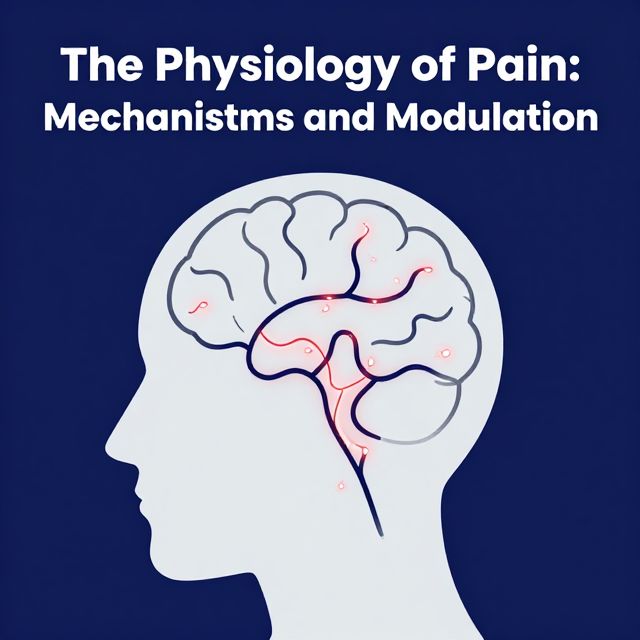
The Physiology of Pain: Mechanisms and Modulation - kapak
Sağlık#pain physiology#nociception#acute pain#chronic pain

The Physiology of Pain: Mechanisms and Modulation

This summary explores the complex physiology of pain, covering its definition, classification, nociceptive pathways, spinal cord processing, ascending signals, cortical matrix, modulation mechanisms, and various chronic pain states.

aleyblgnMarch 29, 2026 ~25 dk toplam
01

Sesli Özet

8 dakika

Konuyu otobüste, koşarken, yolda dinleyerek öğren.

Sesli Özet

The Physiology of Pain: Mechanisms and Modulation

0:008:07
02

Flash Kartlar

25 kart

Karta tıklayarak çevir. ← → ile gez, ⎵ ile çevir.

1 / 25
Tüm kartları metin olarak gör
  1. 1. What is the definition of pain according to the text?

    Pain is defined as an unpleasant sensory and emotional experience associated with actual or potential tissue damage. It serves as a protective physiological response, alerting an individual to potential harm and prompting withdrawal or avoidance behaviors. This definition highlights both the physical and psychological components of pain.

  2. 2. Differentiate between acute and chronic pain.

    Acute pain is characterized by sudden onset, a sharp quality, and a protective physiological role, typically resolving with healing. In contrast, chronic pain is slow, often described as burning or aching, and is considered pathological. It persists even after the initial healing process and frequently proves difficult to treat, leading to significant suffering.

  3. 3. Explain the concept of nociception.

    Nociception refers to the unconscious response to a harmful stimulus. It involves a pathway from the site of injury to a nociceptor, through the spinal cord, thalamus, and cortex, ultimately leading to pain perception. This process is the sensory nervous system's response to potentially damaging stimuli.

  4. 4. What are nociceptors and what is their primary function?

    Nociceptors are free nerve endings that detect harmful stimuli, including extreme temperatures, mechanical damage, and chemical irritants. They exhibit minimal adaptation, meaning they continue to signal pain as long as the stimulus is present. Their primary function is to initiate the signaling pathway that leads to the perception of pain, acting as the body's alarm system.

  5. 5. Describe the characteristics and function of A-delta fibers.

    A-delta fibers are myelinated nociceptor fibers, which facilitates fast conduction of signals. They transmit sharp pain sensations, primarily in response to mechanical and thermal stimuli. These fibers are crucial for immediate, localized pain perception, allowing for rapid protective reflexes.

  6. 6. Describe the characteristics and function of C fibers.

    C fibers are unmyelinated nociceptor fibers, resulting in slower conduction of signals compared to A-delta fibers. They convey burning or aching pain from mechanical, thermal, and chemical stimuli. These fibers are associated with dull, prolonged, and poorly localized pain sensations, contributing to the emotional and affective components of pain.

  7. 7. Name three key neurotransmitters involved in pain signaling mentioned in the text.

    The three key neurotransmitters involved in pain signaling mentioned are glutamate, substance P, and calcitonin gene-related peptide (CGRP). These are released in spinal cord synapses and at the injury site, increasing nociceptor activation and facilitating the transmission of pain signals to the brain.

  8. 8. How do nociceptors respond to temperature stimuli?

    Nociceptors respond to specific temperature thresholds. For heat, they are activated at approximately 43 degrees Celsius, while for cold, they respond around 25 degrees Celsius. This specificity ensures that only potentially harmful temperature changes trigger a pain response, protecting the body from thermal damage.

  9. 9. What is peripheral sensitization and what substances are involved?

    Peripheral sensitization is a process where tissue injury leads to an increased sensitivity of nociceptors and a lower activation threshold. Substances like bradykinin, prostaglandins, and other inflammatory mediators are released at the injury site. These chemicals directly activate or sensitize nociceptors, contributing to heightened pain perception in the injured area.

  10. 10. Define hyperalgesia and allodynia.

    Hyperalgesia is an increased response to a stimulus that is normally painful, meaning the pain felt is disproportionately severe. Allodynia is a condition where a non-painful stimulus, such as light touch or gentle pressure, is perceived as painful. Both are often consequences of peripheral sensitization, indicating an abnormal processing of sensory input.

  11. 11. What are silent nociceptors and when do they become active?

    Silent nociceptors are a type of nociceptor that are normally inactive under physiological conditions and do not respond to typical noxious stimuli. They become activated during inflammation or tissue injury, amplifying pain signals and expanding the area of perceived pain. Their activation contributes significantly to the persistent pain experienced during inflammatory states.

  12. 12. Where does the first synapse of pain processing occur in the spinal cord?

    The first synapse of pain processing in the spinal cord occurs in the posterior horn. Both A-delta and C fibers project to this region, where they synapse with second-order neurons. This initial synaptic connection is critical for relaying pain signals from the periphery to the central nervous system.

  13. 13. Differentiate between nociceptive specific neurons and wide dynamic range neurons in the spinal cord.

    Nociceptive specific neurons in the spinal cord respond only to painful stimuli, providing a direct and dedicated pathway for noxious input. In contrast, wide dynamic range neurons integrate both painful and non-painful stimuli. This allows them to respond to a broad range of intensities, from light touch to noxious input, contributing to a more complex processing of sensory information.

  14. 14. Explain the wind-up phenomenon and its relation to central sensitization.

    The wind-up phenomenon is characterized by an increasing response of spinal cord neurons to repeated C fiber stimulation, even if the stimulus intensity remains constant. This persistent and amplified neuronal activity leads to central sensitization. Central sensitization involves increased neuron excitability and amplified pain perception, where repeated nociceptive input causes long-lasting changes in spinal cord neurons, making them more responsive to subsequent stimuli.

  15. 15. What is the primary function of the lateral sensory-discriminative pathway in pain transmission?

    The lateral sensory-discriminative pathway, also known as the neospinothalamic tract, is primarily carried by A-delta fibers. Its function is responsible for the precise localization, intensity, and quality of sharp pain. This pathway allows the brain to accurately identify the source and characteristics of acute pain, facilitating appropriate protective responses.

  16. 16. What aspects of pain do the medial affective-motivational pathways contribute to?

    The medial affective-motivational pathways, predominantly involving C fibers, contribute to the emotional response, motivation, and behavioral aspects of pain. They are associated with dull, aching, and poorly localized pain. These pathways influence how pain affects mood, attention, and overall behavior, contributing to the suffering aspect of pain.

  17. 17. Name two other ascending tracts involved in pain and their general projections.

    Two other ascending tracts involved in pain are the spinomesencephalic tract and the spinoreticular tract. The spinomesencephalic tract projects to the periaqueductal gray and superior colliculus, involved in pain modulation and orientation. The spinoreticular tract projects to the reticular formation, locus coeruleus, and raphe nuclei, contributing to motor responses and further pain modulation.

  18. 18. How does the cortical pain matrix contribute to pain perception?

    The cortical pain matrix is a complex network of brain regions, rather than a single pain center, that contributes to pain perception. It encompasses the somatosensory cortex (for sensory discrimination), limbic structures (for emotional aspects), and association cortex (for cognitive evaluation). These systems are highly integrated to provide the full appreciation of pain, including its sensory, emotional, and cognitive dimensions.

  19. 19. Briefly explain the Gate Control Theory of pain.

    The Gate Control Theory posits that non-painful input can close the 'gates' to painful input, thereby preventing pain sensation from traveling to the central nervous system. Specifically, touch fibers (A-beta fibers) can activate inhibitory interneurons in the spinal cord's dorsal horn. These interneurons then inhibit the transmission of pain signals from A-delta and C fibers, reducing pain perception.

  20. 20. How do descending influences modulate pain signals in the spinal cord?

    Descending influences from brainstem structures like the periaqueductal gray, locus coeruleus, and raphe nuclei send fibers to the spinal cord. These fibers utilize neurotransmitters such as serotonin, norepinephrine, and glutamate to activate inhibitory interneurons in the dorsal horn. This activation reduces the transmission of pain signals, effectively dampening the pain message before it reaches higher brain centers.

  21. 21. What is the role of the endogenous opioid system in pain modulation?

    The endogenous opioid system is the body's natural analgesic system, playing a crucial role in pain modulation. It involves opioid receptors located in the cortex, brainstem, and spinal cord, which are activated by natural opioid peptides such as endorphins, enkephalins, and dynorphins. Activation of this system reduces pain transmission by inhibiting neurotransmitter release and hyperpolarizing neurons, providing natural pain relief.

  22. 22. Differentiate between chronic nociceptive pain and chronic neuropathic pain.

    Chronic nociceptive pain results from continuous activation of nociceptors, often due to ongoing tissue damage or inflammation, such as in osteoarthritis. In contrast, chronic neuropathic pain is caused by damage to the nervous system itself, exemplified by conditions like diabetic neuropathy. Neuropathic pain often persists even after the initial injury heals and involves abnormal nerve signaling.

  23. 23. What are some characteristic features of neuropathic pain?

    Neuropathic pain is characterized by several distinct features, including spontaneous pain (pain without an obvious stimulus), hyperalgesia (increased pain response to painful stimuli), and allodynia (pain from non-painful stimuli). It often persists long after the initial injury has healed and can be accompanied by sensations like burning, tingling, or electric shocks. Summation, where repeated weak stimuli cause increasing pain intensity, is also common.

  24. 24. Explain maladaptive peripheral sensitization.

    Maladaptive peripheral sensitization involves pathological changes in nociceptors themselves, leading to their increased excitability. These changes can include an increase in sodium channels, a lower activation threshold, and spontaneous firing of the nociceptors. This results in persistent and amplified pain signals from the periphery, contributing to chronic pain conditions even in the absence of ongoing tissue damage.

  25. 25. Explain maladaptive central sensitization.

    Maladaptive central sensitization involves pathological changes within the central nervous system, specifically in the spinal cord and brain. These changes result in increased neuron activity, a reduced pain threshold, and abnormal pain perception, where even non-painful stimuli can elicit pain. It leads to an amplified and prolonged pain response, making the nervous system hypersensitive to pain signals.

03

Bilgini Test Et

15 soru

Çoktan seçmeli sorularla öğrendiklerini ölç. Cevap + açıklama.

Soru 1 / 15Skor: 0

What is the primary definition of pain according to the provided text?

04

Detaylı Özet

7 dk okuma

Tüm konuyu derinlemesine, başlık başlık.

📚 Pain Physiology: A Comprehensive Study Guide

This study material has been compiled and organized from various sources, including copy-pasted text and a lecture audio transcript.


🎯 Introduction to Pain Physiology

Pain is a complex and vital physiological phenomenon, serving as a protective mechanism that alerts the body to potential or actual tissue damage. Understanding its mechanisms, from initial detection to central processing and modulation, is crucial in medicine and healthcare. This guide explores the definition, classification, pathways, and modulation of pain, along with specific chronic and specialized pain conditions.


1. 📚 Definition and Classification of Pain

Pain is more than just a physical sensation; it's a multifaceted experience.

  • Definition of Pain:
    • An unpleasant sensory and emotional experience 🧠.
    • Associated with actual or potential tissue damage ⚠️.
    • Serves as a protective physiological response ✅.
  • Nociception: Refers to the unconscious physiological process of detecting harmful stimuli. It involves a pathway:
    1. Injury
    2. Nociceptor (detects harm)
    3. Spinal Cord
    4. Thalamus
    5. Cortex
    6. Pain Perception (conscious experience)

1.1. Classification of Pain

Pain is broadly categorized into two main types based on its duration and characteristics:

  • Acute Pain:
    • Onset: Sudden.
    • Nature: Fast, sharp, well-localized.
    • Function: Protective physiological response.
    • Duration: Disappears as healing occurs.
    • Example: Touching a hot stove, a sprained ankle.
  • Chronic Pain:
    • Onset: Slow, persistent.
    • Nature: Burning or aching, often poorly localized.
    • Function: Pathological, persists after healing.
    • Duration: Can cause severe suffering and is often difficult to treat.
    • Example: Chronic back pain, fibromyalgia.

2. 🔬 Nociceptors: The Pain Detectors

Nociceptors are specialized sensory receptors that detect harmful stimuli.

  • Characteristics:
    • They are free nerve endings located throughout the body.
    • Detect harmful stimuli (noxious stimuli).
    • Show little adaptation, meaning they continue to fire as long as the stimulus is present.
  • Activation Mechanisms:
    • Extreme Temperature:
      • Heat threshold ≈ 43°C (e.g., detected by TRPV1 receptors).
      • Cold threshold ≈ 25°C (e.g., detected by TRPM8 receptors).
    • Mechanical Damage:
      • Require strong stimulation (e.g., pinch, strong pressure, tissue injury).
      • Do NOT respond to light touch.
    • Chemical Stimuli:
      • C fiber nociceptors respond to chemicals from external irritants, tissue injury, and inflammatory mediators.

2.1. Nociceptor Fibers

Two main types of nerve fibers transmit nociceptive signals:

| Feature | Aδ Fibers | C Fibers | | :----------- | :-------------------------------------- | :------------------------------------------- | | Speed | Fast | Slow | | Pain Type| Sharp, pricking, well-localized | Burning, aching, dull, poorly localized | | Myelination| Myelinated (faster conduction) | Unmyelinated (slower conduction) | | Stimulus | Mechanical / Thermal | Mechanical / Thermal / Chemical |

2.2. Neurotransmitters in Pain

Several neurotransmitters play a crucial role in pain signaling:

  • Major Neurotransmitters:
    • Glutamate: Primary excitatory neurotransmitter.
    • Substance P: Neuropeptide involved in pain transmission.
    • CGRP (Calcitonin Gene-Related Peptide): Potent vasodilator and pain modulator.
  • Release: These are released in spinal cord synapses and at the injury site, increasing nociceptor activation and enhancing pain signals.

3. 📈 Sensitization of Peripheral Receptors

Tissue injury can lead to increased sensitivity of nociceptors, a process called peripheral sensitization.

  • Mechanism: Tissue injury causes the release of inflammatory mediators (e.g., bradykinin, prostaglandins). These substances:
    • Increase nociceptor sensitivity ✅.
    • Lower their activation threshold (making them fire more easily) 💡.
  • Consequences of Sensitization:
    • Hyperalgesia: An increased response to a stimulus that is normally painful.
      • Example: Sunburned skin feels much more painful to touch than normal skin.
    • Allodynia: Pain caused by a stimulus that does not normally provoke pain.
      • Example: Light touch on sunburned skin causes pain.
    • Silent Nociceptors: These are normally inactive but become activated during inflammation, increasing pain signals and expanding the painful area.

4. 🧠 Pain Processing in the Spinal Cord

The spinal cord acts as the first major relay station for pain signals.

  • First Synapse: Occurs in the posterior (dorsal) horn of the spinal cord.
    • Aδ and C fibers primarily synapse in the superficial layers (Lamina I and II).
    • Aβ fibers (touch/pressure) project to deeper layers.
  • Spinal Cord Neurons:
    • Nociceptive Specific (NS) Neurons: Respond only to painful stimuli.
    • Wide Dynamic Range (WDR) Neurons: Respond to both painful and non-painful stimuli, integrating sensory information.
  • Signal Transmission:
    1. Nociceptor activation.
    2. Signal enters the dorsal horn.
    3. Synapse with a second-order neuron.
    4. Neurotransmitter release (excitatory: Glutamate, Substance P, CGRP).
    5. Signal ascends to the brain.
  • Wind-Up Phenomenon: Repeated C fiber stimulation can lead to an increasing response in WDR neurons, amplifying the pain signal. This contributes to central sensitization.
  • Central Sensitization: Repeated nociceptive input causes:
    • Increased neuron excitability.
    • Amplified pain perception.
    • Prolonged hyperalgesia.
    • Can be protective but often maladaptive in chronic pain.

5. ⬆️ Ascending Nociceptive Pathways

Pain signals travel from the spinal cord to the brain via several ascending pathways, which can be broadly categorized:

  • 1. Lateral Sensory-Discriminative Pathway (Neospinothalamic Tract):
    • Function: Responsible for the location, intensity, and quality of pain.
    • Characteristics: Fast conduction, transmits sharp, well-localized pain.
    • Fibers: Mainly carried by Aδ fibers.
    • Projection: Primarily to the somatosensory cortex.
  • 2. Medial Affective-Motivational Pathways:
    • Function: Responsible for the emotional response, motivation, and behavior associated with pain.
    • Characteristics: Produces dull, aching, poorly localized pain.
    • Fibers: Mainly carried by C fibers.
    • Projection: To limbic structures (e.g., amygdala, anterior cingulate cortex).
  • Other Tracts:
    • Spinomesencephalic Tract: Projects to the Periaqueductal Gray (PAG) and superior colliculus, involved in pain modulation and orientation to injury.
    • Spinoreticular Tract: Projects to the reticular formation, locus coeruleus, and raphe nuclei, influencing motor responses and pain modulation.
    • Projections to Hypothalamus & Limbic System: Influence stress hormone release, emotional responses, and autonomic functions.

6. 🧠 Cortical Pain Matrix

There is no single "pain center" in the brain. Instead, pain perception involves a complex network of interconnected brain regions known as the Cortical Pain Matrix.

  • Key Areas:
    • Somatosensory Cortex: Processes sensory aspects (location, intensity).
    • Limbic Structures: Involved in emotional and affective components (e.g., amygdala, insula, anterior cingulate cortex).
    • Association Cortex: Integrates cognitive aspects of pain.
  • These systems are highly integrated and necessary for the full appreciation of pain.

7. ⚖️ Pain Modulation

Pain perception is not static; it can be significantly modified (inhibited or facilitated) by various mechanisms.

  • Types of Pain Modulation:
    • Gate Control Mechanism
    • Descending Inhibition
    • Endogenous Opioid System

7.1. Pain Modulation in the Spinal Cord (Gate Control Theory)

  • Mechanism: Pain signals can be reduced by non-noxious sensory input.
    • Touch fibers (Aβ fibers) activate inhibitory interneurons in the dorsal horn.
    • These interneurons then inhibit the transmission of pain signals from Aδ and C fibers to second-order neurons.
    • Result: Reduced pain perception.
    • Example: Rubbing an injured area to alleviate pain.

7.2. Descending Influences from the Brainstem

The brain can actively suppress pain signals.

  • Brainstem Structures:
    • Periaqueductal Gray (PAG)
    • Locus Coeruleus
    • Raphe Nuclei
  • These structures send descending fibers to the spinal cord, releasing neurotransmitters like serotonin, norepinephrine, and glutamate.
  • These neurotransmitters activate inhibitory interneurons in the spinal cord, leading to a reduction in pain signal transmission.

7.3. Endogenous Opioid System

The body possesses its own natural analgesic system.

  • Opioid Receptors: Found in the cortex, brainstem, and spinal cord, they reduce pain transmission.
  • Natural Opioid Peptides:
    • Endorphins
    • Enkephalins
    • Dynorphins
  • These peptides bind to opioid receptors (μ, δ, κ), producing strong analgesic effects.

8. ⚠️ Chronic and Specialized Pain Conditions

8.1. Chronic Pain Categories

  • Chronic Nociceptive Pain:
    • Cause: Continuous activation of nociceptors due to ongoing tissue damage.
    • Example: Osteoarthritis, inflammatory bowel disease.
  • Chronic Neuropathic Pain:
    • Cause: Damage to the nervous system itself (peripheral or central).
    • Features: Spontaneous pain, hyperalgesia, allodynia, persistent pain even after injury heals.
    • Example: Diabetic neuropathy, post-herpetic neuralgia.

8.2. Mechanisms of Chronic Pain

  • Summation: Repeated weak stimuli can lead to increasing pain intensity, common in neuropathic pain.
  • Maladaptive Peripheral Sensitization: Nociceptors undergo changes (e.g., increased Na⁺ channels, lower activation threshold, spontaneous firing), leading to persistent pain signals.
  • Maladaptive Central Sensitization: Changes in the spinal cord (increased neuron activity, reduced pain threshold, abnormal pain perception) cause non-painful stimuli to be perceived as painful.
  • Glial Signaling: Glial cells (astrocytes, microglia) in the nervous system participate in pain mechanisms by modulating synaptic activity and influencing pain transmission.

8.3. Deep and Visceral Pain

  • Origin: Internal organs.
  • Causes: Ischemia, chemical irritation, muscle spasm, organ distention.
  • Transmission: Usually by C fibers, often perceived as dull and aching.

8.4. Referred Pain

  • Definition: Pain felt in a location distant from its actual source.
  • Mechanism (Convergence-Projection Theory): Visceral and somatic (skin/muscle) nerve fibers converge on the same second-order neurons in the spinal cord. The brain misinterprets the visceral pain as originating from the more common somatic area.
  • Example: Heart attack pain radiating to the left arm or jaw.

8.5. Phantom Pain

  • Definition: Pain perceived in a limb or organ that has been amputated or removed.
  • Possible Mechanisms:
    • Brain reorganization (cortical remapping).
    • Changes in the thalamus.
    • Nerve damage at the amputation site.
    • The brain's continued representation of the missing body part.
Kendi çalışma materyalini oluştur

PDF, YouTube videosu veya herhangi bir konuyu dakikalar içinde podcast, özet, flash kart ve quiz'e dönüştür. 1.000.000+ kullanıcı tercih ediyor.

Sıradaki Konular

Tümünü keşfet
Understanding Complex Regional Pain Syndrome

Understanding Complex Regional Pain Syndrome

An in-depth look at Reflex Sympathetic Dystrophy Syndrome (CRPS), covering its definition, types, symptoms, diagnosis, and treatment goals.

Özet 24 10
Essential Vitamins: A Deep Dive into Vitamin A and D

Essential Vitamins: A Deep Dive into Vitamin A and D

Explore the forms, sources, metabolism, functions, and health implications of Vitamin A and Vitamin D, crucial for vision, bone health, and immune function.

Özet 15
Vitamin D Deficiency and Calcium Disorders

Vitamin D Deficiency and Calcium Disorders

An in-depth look into Vitamin D metabolism, deficiency, and various calcium disorders including hypoparathyroidism and associated genetic syndromes.

Özet 25 15
The Digestive System: An Academic Overview

The Digestive System: An Academic Overview

An academic summary of the human digestive system, detailing its organs, processes, and functions, from mechanical breakdown to nutrient absorption and waste elimination.

4 dk Özet 25 15
Data Analysis for Mobile Medical Services

Data Analysis for Mobile Medical Services

This audio summary explores data analysis in mobile medical services, covering supply chain optimization, inventory management, scenario planning, and future strategies using analytical tools and technologies.

6 dk Özet 25 15
Gingival Defense Mechanisms and Gingivitis

Gingival Defense Mechanisms and Gingivitis

This summary explores the complex defense mechanisms of gingival tissues against mechanical forces and microbial colonization, detailing Gingival Crevicular Fluid, Junctional Epithelium, Polymorphonuclear Leukocytes, and Saliva, followed by an in-depth analysis of gingivitis, its stages, clinical features, and classification.

11 dk Özet 25 15
Key Concepts in Neuropsychiatry and Clinical Psychology

Key Concepts in Neuropsychiatry and Clinical Psychology

An academic summary covering fundamental neurobiological, psychological, pharmacological, and ethical principles relevant to mental health and neurological disorders.

15 dk 25
Antibacterial Agents: Action and Resistance

Antibacterial Agents: Action and Resistance

Explore the mechanisms of action and resistance of various antibacterial agents, including beta-lactams, glycopeptides, polymyxins, and protein synthesis inhibitors.

Özet 25 15