 Podit
Podit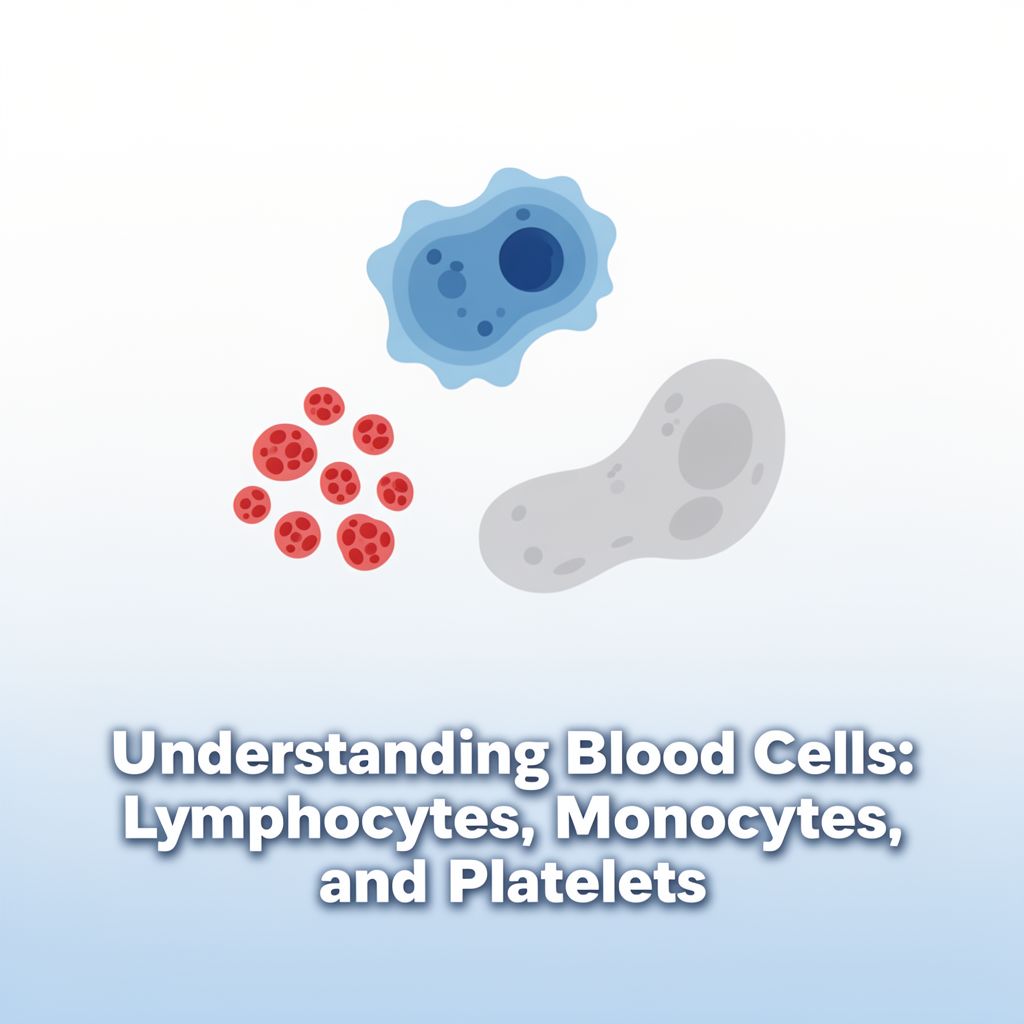
📚 Blood Cells: A Comprehensive Study Guide
Source Information: This study material is compiled from copy-pasted text (originally pages 32-40 of an unspecified document) and an audio lecture transcript.
Introduction to Key Blood Cells 🩸
Blood is a vital tissue, and the cells it contains play crucial roles in numerous life-sustaining processes, from immunity to blood clotting. This guide provides an in-depth look at the structure, functions, and critical roles of lymphocytes, monocytes, and platelets within the human body.
I. Leukocytes (White Blood Cells) 🛡️
Leukocytes are essential components of the immune system, acting as the body's primary defense against pathogens and involved in inflammatory responses.
A. Lymphocytes
Lymphocytes are central to immunity and are implicated in many diseases.
- Role in Immunity: They are key players in the body's adaptive immune response. ✅
- Associated Disorders:
- Lymphomas: A group of disorders characterized by the neoplastic (abnormal) proliferation of lymphocytes or their failure to undergo apoptosis (programmed cell death). ⚠️
- Although often slow-growing, all lymphomas are considered malignant due to their potential for widespread dissemination throughout the body.
B. Monocytes
Monocytes are precursor cells that differentiate into various phagocytic cells throughout the body.
- Precursor Function: Monocytes are the precursor cells for:
- Macrophages
- Osteoclasts
- Microglia
- Other cells of the mononuclear phagocyte system found in the connective tissue of nearly all organs.
- Characteristics:
- Size: Circulating monocytes have diameters of 12-15 μm. 📏
- Nucleus: They possess large nuclei, typically distinctly indented or C-shaped.
- Chromatin: The chromatin is less condensed than in lymphocytes and usually stains lighter than that of large lymphocytes.
- Origin and Supplementation:
- Cells of the mononuclear phagocyte system originate in developing organs from monocytes formed in the embryonic yolk sac.
- They are continuously supplemented throughout life by monocytes derived from the bone marrow.
- Key Functions:
- All monocyte-derived cells are antigen-presenting cells (APCs). 💡
- They play important roles in both immune defense and tissue repair.
- Role in Inflammation:
- Extravasation: The accumulation of immigrating monocytes (extravasation) occurs in the early phase of inflammation following tissue injury.
- Acute Inflammation: This phase is usually short-lived, as macrophages either undergo apoptosis or leave the site.
- Chronic Inflammation: This typically involves the continuous recruitment of monocytes. The prolonged presence of macrophages can lead to excessive tissue damage, a hallmark of chronic inflammation. 📈
II. Platelets (Thrombocytes)
Platelets are critical for blood clotting and wound healing, preventing blood loss from the microvasculature.
- Characteristics:
- Structure: Very small, non-nucleated, membrane-bound cell fragments. 🔬
- Size: Only 2-4 μm in diameter.
- Origin: They originate by separating from the ends of cytoplasmic processes extending from giant polyploid bone marrow cells called megakaryocytes.
- Appearance: In a blood smear, platelets are often found as aggregates.
- Functions:
- Promote blood clotting (hemostasis). ✅
- Help repair minor tears or leaks in the walls of small blood vessels. ✅
- Prevent blood loss from the microvasculature. ✅
- Normal Counts & Lifespan:
- Normal Range: 150,000 to 400,000/μL of blood. 📊
- Lifespan: Circulating platelets have a life span of approximately 10 days. ⏳
A. Role in Controlling Blood Loss (Hemostasis) and Wound Healing
The process of hemostasis and wound healing involving platelets can be summarized in five key steps:
- Primary Aggregation:
- Disruptions in the microvascular endothelium (which are common) allow the platelet glycocalyx to adhere to collagen in the vascular basal lamina or wall.
- This forms a platelet plug, serving as the first step to stop bleeding. 1️⃣
- Secondary Aggregation:
- Platelets within the plug release a specific adhesive glycoprotein and ADP (adenosine diphosphate).
- These substances induce further platelet aggregation, increasing the size of the platelet plug. 2️⃣
- Blood Coagulation:
- During platelet aggregation, a cascade of plasma proteins is initiated.
- This cascade is promoted by:
- Fibrinogen from plasma
- Von Willebrand factor and other proteins released from the damaged endothelium
- Platelet factor 4 from platelet granules
- This interaction gives rise to a fibrin polymer, which forms a three-dimensional network of fibers.
- This network traps red blood cells and more platelets, forming a blood clot (or thrombus). 3️⃣
- 💡 Insight: Platelet factor 4 acts as a chemokine for monocytes, neutrophils, and fibroblasts. Fibroblast proliferation is stimulated by platelet-derived growth factor, aiding in tissue repair.
- Clot Retraction:
- The clot initially bulges into the blood vessel lumen.
- However, it soon contracts slightly due to the activity of platelet-derived actin and myosin. 4️⃣
- Clot Removal:
- Protected by the clot, the endothelium and surrounding tunic are restored by new tissue growth.
- The clot is then removed, primarily dissolved by the proteolytic enzyme plasmin.
- Plasmin is continuously formed through the local action of plasminogen activators (from the endothelium) on plasminogen (from plasma). 5️⃣
These complex processes are fundamental to the body's ability to stop blood loss and initiate tissue repair.