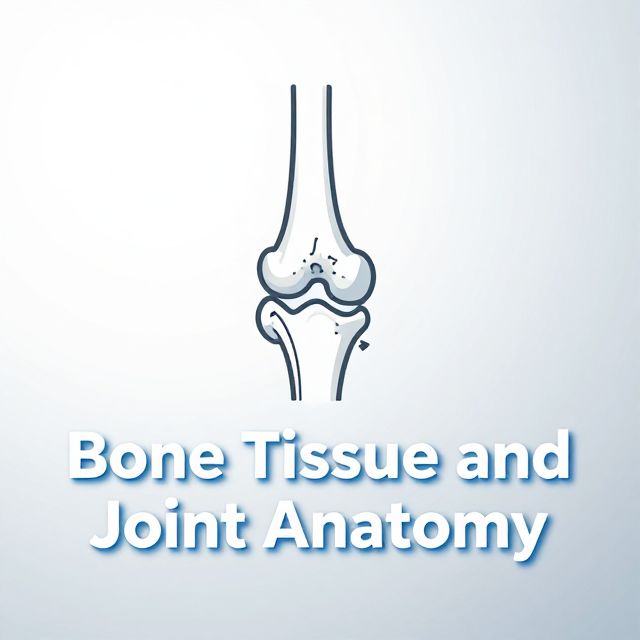
Bone Tissue and Joint Anatomy - kapak
Bilim#bone tissue#osteology#bone cells#ossification

Bone Tissue and Joint Anatomy

An academic summary detailing the composition, structure, cellular components, development, and pathologies of bone tissue, alongside an overview of joint types and synovial joint anatomy.

tipfakyorduMarch 9, 2026 ~33 dk toplam
01

Sesli Özet

14 dakika

Konuyu otobüste, koşarken, yolda dinleyerek öğren.

Sesli Özet

Bone Tissue and Joint Anatomy

0:0014:03
02

Flash Kartlar

25 kart

Karta tıklayarak çevir. ← → ile gez, ⎵ ile çevir.

1 / 25
Tüm kartları metin olarak gör
  1. 1. What are the two primary forms of bone tissue?

    Bone tissue exists in two primary forms: spongy (cancellous) bone and compact bone. Spongy bone is found in the metaphysis and epiphysis of short and long bones, characterized by trabeculae. Compact bone forms the external aspects of all bones and is highly organized with systems of canals and osteons.

  2. 2. What constitutes the inorganic component of bone tissue and its approximate percentage?

    The inorganic component makes up approximately 65% of bone mass. It primarily consists of calcium phosphate in the form of pin-shaped hydroxyapatite crystals. Other inorganic constituents include water, bicarbonate, citrate, magnesium, sodium, and potassium, providing rigidity and strength to the bone.

  3. 3. What is the main organic component of bone tissue and its approximate percentage?

    The organic component comprises about 35% of bone mass. It is predominantly made up of fibers and ground substance. Type I collagen accounts for 95% of this organic matrix, while the ground substance contains glycosaminoglycans and proteoglycans, providing flexibility and tensile strength to the bone.

  4. 4. Describe the structural characteristics of spongy bone.

    Spongy bone, also known as cancellous bone, is found in the metaphysis and epiphysis of short and long bones, as well as in squamous bones. It is characterized by not highly organized bone trabeculae or spiculae, parallel lamellae, and bone marrow situated between the trabeculae. Cells within spongy bone acquire nutrients from the vessels of the bone marrow through cytoplasmic extensions.

  5. 5. Explain the organization of compact bone, specifically mentioning its canal systems.

    Compact bone forms the external aspects of all bones and is highly organized. It contains a system of canals, osteons, and other lamellar structures. Haversian canals run parallel to the longitudinal axis of the bone, while Volkmann canals connect the Haversian canals, allowing vessels and nerves to reach them. These systems are crucial for nutrient delivery and waste removal.

  6. 6. Name the three categories of lamellae found in compact bone.

    The lamellae of compact bone are categorized into three types: special lamellae, which form the osteons of the Haversian system; circumferential lamellae, found as inner and outer layers; and interstitial lamellae, located between osteons and circumferential lamellae. These arrangements contribute to the bone's structural integrity and resistance to stress.

  7. 7. List the five specialized cell types that maintain the dynamic nature of bone tissue.

    The dynamic nature of bone tissue is maintained by five specialized cell types: osteoprogenitor cells, osteoblasts, osteocytes, osteoclasts, and bone-lining cells. Each cell type plays a distinct and coordinated role in bone formation, maintenance, and resorption, ensuring continuous remodeling.

  8. 8. What are osteoprogenitor cells and where are they typically located?

    Osteoprogenitor cells, also known as osteogenic cells, are mesenchymal cells committed to becoming bone cells. They are fusiform, capable of mitosis and proliferation, and differentiate into osteoblasts under physiological conditions. They are localized in the inner aspect of the periosteum, the connective tissue of Haversian and Volkmann canals, and the endosteum.

  9. 9. Describe the function and characteristics of bone-lining cells.

    Bone-lining cells are quiescent cells residing on the bone surface, similar to osteoprogenitor cells but unable to divide. They are capable of activation by appropriate signals to produce matrix. These cells possess nexuses between them, suggesting a role in communication and maintaining bone surface integrity and homeostasis.

  10. 10. What is the primary role of osteoblasts and what key substances do they produce?

    Osteoblasts differentiate from osteoprogenitor cells and are responsible for producing the organic component of the bone matrix. They produce Type I collagen, osteocalcin, osteonectin, osteopontin, sialoprotein, and osteoprotegerin. They also possess receptors for parathyroid hormone and produce osteoclast-stimulating factor, playing a crucial role in bone formation and regulation.

  11. 11. How do osteoblasts transform into osteocytes, and where do osteocytes reside?

    As osteoblasts become entrapped within the osteoid (uncalcified bone matrix) and the tissue calcifies, their activity decreases, and they transform into osteocytes. Osteocytes reside within oval or squamous-shaped lacunae, which are small cavities within the calcified bone matrix. This transformation marks a shift from matrix production to maintenance.

  12. 12. Explain how osteocytes receive nutrition and what happens to their connections with aging.

    Osteocytes receive nutrition via cytoplasmic extensions that extend through canaliculi from their lacunae. These extensions connect osteocytes via gap junctions, facilitating nutrient exchange from blood vessels. With aging, these cytoplasmic extensions shorten, leading to a loss of connections and potentially affecting nutrient supply and overall bone health.

  13. 13. What are osteoclasts, and what is their primary function in bone tissue?

    Osteoclasts are multinuclear cells originating from the fusion of monocytes. Their primary function is to degrade bone tissue, a process known as bone resorption. They reside at the surface of trabeculae or the inner aspect of compact bone, playing a critical role in controlling blood calcium levels and bone remodeling.

  14. 14. Describe the key features of a Howship lacuna and the zones within an osteoclast.

    Howship lacunae are depressions on the bone surface where osteoclasts reside and actively degrade bone. Within the osteoclast, there's a ruffled border where degradation occurs, a clear zone immediately neighboring it (rich in actin), a vesicular zone containing endo- and exocytotic vesicles, and a basal zone containing organelles and nuclei. A sealing zone isolates the degradation area.

  15. 15. How do osteoclasts degrade the inorganic component of bone matrix?

    Osteoclasts degrade the inorganic component of bone matrix by creating an acidic environment. Carbonic anhydrase within the osteoclast dissociates carbonic acid into hydrogen and bicarbonate ions. The osteoclast's proton pump then actively transports hydrogen ions into the Howship lacuna, decreasing the pH and dissolving the hydroxyapatite crystals.

  16. 16. What are the two primary mechanisms of bone development (osteogenesis)?

    Bone development, or osteogenesis, occurs through two primary mechanisms: intramembranous ossification and endochondral ossification. These processes describe how bone tissue is formed, either directly from mesenchymal tissue or by replacing a pre-existing cartilage model, respectively.

  17. 17. Briefly explain intramembranous ossification and what type of bone it forms.

    Intramembranous ossification involves the direct differentiation of mesenchymal tissue into bone tissue. Mesenchymal cells commit to becoming bone cells, differentiate into osteoprogenitor cells, then osteoblasts, which produce bone matrix. This process forms the compact parts of short and long bones, as well as flat bones like those of the skull.

  18. 18. Briefly explain endochondral ossification and what type of bone it forms.

    Endochondral ossification begins with the formation of a bone-shaped model of hyaline cartilage, which is subsequently replaced by bone tissue. This process forms the spongy parts of short and long bones. A primary ossification center forms at the diaphysis, and secondary centers appear at the epiphysis, contributing to bone lengthening.

  19. 19. What is the epiphyseal plate and what happens to it around age 20?

    The epiphyseal plate is the cartilage model located between the primary and secondary ossification centers during endochondral ossification. It is crucial for longitudinal bone growth, as chondrocytes divide and enlarge there. This plate is typically lost around age 20, as the cartilage is completely replaced by bone, marking the cessation of growth in length.

  20. 20. Name at least three substances that decrease bone degradation.

    Several substances decrease bone degradation, including calcium, Vitamin D, estrogen, calcitonin, and biphosphonates. Biphosphonates specifically reduce osteoclast number and activity, making them important in treating conditions like osteoporosis by slowing down bone loss.

  21. 21. Name at least three substances that increase bone formation.

    Substances that increase bone formation include fluoride, androgen, growth hormone, and statins. Statins, for example, are known to stimulate osteoblast differentiation, contributing to increased bone mass. These factors play a role in bone development, repair, and maintaining bone density.

  22. 22. Define osteoporosis and osteomalacia.

    Osteoporosis is a bone disease characterized by a loss of bone mass and an increase in osteoclast number, leading to fragile bones and increased fracture risk. Osteomalacia involves the softening of bone due to a defect in the mineralization of osteoid, often caused by Vitamin D insufficiency or renal-intestinal disease, impairing bone hardening.

  23. 23. What is the difference between osteopetrosis and osteosclerosis?

    Osteopetrosis results from osteoclast dysfunction, leading to abnormally dense bones because bone resorption is impaired, causing bones to be brittle. In contrast, osteosclerosis is caused by hyperactivity of osteoblasts, resulting in excessive bone formation and increased bone density, which can also lead to structural issues.

  24. 24. Describe the two layers of the periosteum and mention Sharpey fibers.

    The periosteum is an outer covering of bone, consisting of an outer fibrous layer of irregular dense connective tissue and an inner cellular layer containing osteoprogenitor cells. Sharpey fibers, which are collagen fibers originating from the outer fibrous layer, extend into the outer circumferential and interstitial lamellae, firmly anchoring tendons and ligaments to the bone tissue.

  25. 25. What is the endosteum and where is it located?

    The endosteum is a thin membrane that lines the inner aspect of compact bone, Haversian canals, and the surfaces of spongy bone trabeculae. It is composed of reticular connective tissue and also contains osteoprogenitor cells. This lining plays a crucial role in bone growth, repair, and remodeling from the inside.

03

Bilgini Test Et

15 soru

Çoktan seçmeli sorularla öğrendiklerini ölç. Cevap + açıklama.

Soru 1 / 15Skor: 0

What percentage of bone mass is constituted by the inorganic component?

04

Detaylı Özet

9 dk okuma

Tüm konuyu derinlemesine, başlık başlık.

📚 Bone Tissue and Joints: A Comprehensive Study Guide

Source Information: This study material has been compiled and organized from a combination of copy-pasted text and a lecture audio transcript.


📝 Introduction to Bone Tissue and Joints

Bone tissue, a dynamic and essential component of the skeletal system, is characterized by its unique composition, structural organization, and specialized cellular elements. It exists in two primary forms: spongy and compact bone. The formation and remodeling of bone are complex processes, involving distinct cellular lineages and ossification mechanisms. Furthermore, the skeletal system incorporates various joint types, with synovial joints exhibiting intricate structures crucial for mobility and function. This guide will delineate these fundamental aspects, from the molecular constituents of bone to the macroscopic organization of joints and associated pathologies.


🦴 Bone Tissue Composition

Bone tissue is a composite material, consisting of both inorganic and organic components.

  • Inorganic Component (Approximately 65%)

    • ✅ Primarily calcium phosphate in the form of pin-shaped hydroxyapatite crystals.
    • ✅ Also includes water, bicarbonate, citrate, magnesium, sodium, and potassium.
    • This component provides bone with its hardness and rigidity.
  • Organic Component (Approximately 35%)

    • ✅ Composed of fibers and ground substance.
    • Type I collagen constitutes 95% of the organic component, providing tensile strength and flexibility.
    • Ground substance contains glycosaminoglycans (GAGs) and proteoglycans.
    • ✅ Key glycoproteins include osteonectin, osteocalcin, osteopontin, and bone sialoprotein, which play roles in mineralization and cell adhesion.

🏗️ Bone Types Due to Structure (Secondary Bone Tissue)

Bone tissue is structurally classified into two main types:

  1. Spongy Bone (Cancellous Bone)

    • Found in the metaphysis and epiphysis of short and long bones, and in squamous bones.
    • Characterized by a network of bone trabeculae (spiculae), which are not highly organized.
    • Contains parallel lamellae.
    • Bone marrow is located between the trabeculae.
    • Bone cells acquire nutrients from vessels within the bone marrow via cytoplasmic extensions.
  2. Compact Bone

    • Forms the external aspects of all bones, providing strength and protection.

    • Highly organized, containing canals, osteons, and other lamellar structures.

    • Canal Types:

      • Haversian canals: Run parallel to the longitudinal axis of the bone.
      • Volkmann canals: Connect Haversian canals to each other and to the periosteum and bone marrow.
      • Vessels within these canals are surrounded by loose connective tissue containing nerve fibers.
    • Types of Lamellae:

      • Special Lamellae (Osteons or Haversian System): Concentric rings of bone matrix around a central Haversian canal.
      • Circumferential Lamellae:
        • Inner Circumferential Lamellae: Line the inner surface of the compact bone.
        • Outer Circumferential Lamellae: Located just beneath the periosteum.
      • Interstitial Lamellae: Irregular fragments of old osteons found between intact osteons and circumferential lamellae.

🔬 Cellular Components and Bone Dynamics

Bone tissue is maintained by a dynamic interplay of specialized cells:

  1. Osteoprogenitor Cells (Osteogenic Cells)

    • 📚 Mesenchymal cells committed to becoming bone cells.
    • Fusiform (spindle-shaped) like fibroblasts.
    • Capable of mitosis and proliferation.
    • Differentiate into osteoblasts under physiological conditions (e.g., osteon degeneration-regeneration) or pathological conditions (e.g., bone fracture).
    • Can differentiate into chondrogenic cells at low oxygen levels.
    • Contain few rough endoplasmic reticulum (GER), underdeveloped Golgi complex, and abundant free ribosomes.
    • Localization: Inner aspect of the periosteum, connective tissue of Haversian and Volkmann canals, and endosteum.
  2. Bone-Lining Cells

    • An intermediate cell type between osteoprogenitor cells and osteoblasts.
    • Similar properties to osteoprogenitor cells but cannot divide.
    • Silent cells residing on the bone surface.
    • Activate by appropriate signals to produce matrix.
    • Possess gap junctions (nexuses) between them.
  3. Osteoblasts

    • Differentiate from osteoprogenitor cells, influenced by Bone Morphogenetic Protein (BMP) and Transforming Growth Factor-beta (TGF-β).
    • Align in a single row, are polarized, and cuboidal or oval-shaped depending on activity.
    • Possess gap junctions (nexuses) with each other and with osteocytes.
    • Function: Produce the organic component of the bone matrix.
    • Characterized by well-developed GER and Golgi complex, abundant secretory granules (e.g., alkaline phosphatase, pyrophosphatase), and a euchromatic nucleus.
    • Products: Type I collagen, osteocalcin (mineralization), osteonectin (mineralization), osteopontin (forms sealing zone for osteoclasts), sialoprotein (binder to extracellular matrix), osteoprotegerin, M-CSF (macrophage-colony stimulating factor), RANKL (ligand for receptor activation of nuclear factor kappa B), receptor for parathyroid hormone, and osteoclast-stimulating factor.
    • Differentiation into Osteocyte: When osteoblasts become entrapped within the uncalcified bone matrix (osteoid) they produced, and the tissue calcifies, their activity decreases, and they transform into osteocytes.
  4. Osteocytes

    • 📚 Mature bone cells residing within oval/squamous-shaped lacunae.
    • Randomly oriented in primary bone, but oriented between neighboring lamellae in secondary bone.
    • Canaliculi extend from lacunae, containing cytoplasmic extensions that connect osteocytes via gap junctions.
    • Possess a heterochromatic nucleus and are poor in organelles compared to osteoblasts (decreased GER and Golgi).
    • Nutrition is provided via cytoplasmic extensions.
    • Cytoplasmic extensions shorten and connections are lost during aging.
    • ⚠️ If osteocytes die, the surrounding matrix degenerates and is resorbed by osteoclasts.
  5. Osteoclasts

    • 📚 Large, multinuclear cells originating from the fusion of monocytes.
    • Function: Degrade bone tissue (bone resorption).
    • Reside at the surface of trabeculae or the inner aspect of compact bone, often in depressions called Howship lacunae.
    • Control blood calcium levels.
    • Acidophilic cytoplasm, cytoplasmic extensions at the bone tissue aspect.
    • Rich in mitochondria and possess a well-developed Golgi.
    • Contain lysosomal enzymes (e.g., collagenase, acid phosphatase).
    • Howship Lacuna Structure:
      • Ruffled border: Area where degradation takes place.
      • Clear zone: Immediately neighbors the ruffled border, free of organelles but rich in actin.
      • Vesicular zone: Contains endo- and exocytotic vesicles.
      • Basal zone: Farthest from the Howship lacuna, containing organelles and nuclei.
      • Sealing zone: Formed by the binding of osteopontin (from bone) and actin (from osteoclast) via integrins, creating a sealed compartment for degradation.
    • Bone Degradation Mechanism:
      1. Osteoclasts possess carbonic anhydrase, which produces carbonic acid.
      2. Carbonic acid dissociates into hydrogen (H+) and bicarbonate (HCO3-) ions.
      3. A proton pump in the osteoclast membrane actively pumps H+ ions into the sealed compartment, decreasing the pH.
      4. The acidic environment degrades the inorganic component of the matrix.
      5. Lysosomal enzymes degrade the organic components.
      6. Tissue fragments are endocytosed, further degraded, and then expelled into the nearest capillary.

🛡️ Bone Sheaths

Bone is covered by two protective sheaths:

  1. Periosteum

    • Outer covering of bone.
    • Outer fibrous layer: Composed of irregular dense connective tissue.
    • Inner cellular layer: Contains osteoprogenitor cells.
    • In mature bone, Sharpey fibers (collagen fibers) originate from the outer fibrous layer and extend into the outer circumferential and outer interstitial lamellae, anchoring the periosteum to the bone. These fibers are abundant at tendon-ligament attachments.
  2. Endosteum

    • Lines the inner aspect of compact bone, Haversian canals, and the surfaces of spongy bone trabeculae.
    • Composed of reticular connective tissue.
    • Contains osteoprogenitor cells.

📈 Osteogenesis (Bone Development)

Bone development occurs through two primary mechanisms:

  1. Intramembranous Ossification

    • 📚 Direct differentiation of mesenchymal tissue into bone tissue.
    • Forms the compact parts of short and long bones (e.g., flat bones of the skull).
    • Process:
      1. Mesenchymal cells differentiate into osteoprogenitor cells, then into osteoblasts.
      2. Osteoblasts produce bone matrix (osteoid).
      3. Capillaries carry calcium and phosphorus into the osteoid, leading to calcification.
      4. Primary bone is formed, which is then organized into secondary bone tissue.
      5. Initially, a bony collar forms at the periphery of the diaphysis, inhibiting chondrocyte nourishment and causing degeneration.
      6. Osteoclasts pierce the bony collar to create nutritive pores.
      7. Periosteal vessels and osteoprogenitor cells migrate into the bone-forming area.
      8. Bone trabeculae with cores of calcified cartilage matrix are initially formed.
      9. Migrated mesenchymal and hematopoietic elements differentiate into bone marrow.
  2. Endochondral Ossification

    • 📚 Bone tissue replaces a pre-existing hyaline cartilage model.
    • Forms the spongy parts of short and long bones.
    • Process:
      1. A hyaline cartilage model forms at the interface of the epiphysis and metaphysis.
      2. Ions carried by vessels provide calcification of the matrix, forming the Primary Ossification Center at the diaphysis.
      3. As ossification proceeds, Secondary Ossification Centers appear at the epiphysis, with progenitor cells reaching this region.
      4. The cartilage model between the primary and secondary ossification centers is called the Epiphyseal Plate.
      5. Chondrocytes divide by mitosis, providing continuous lengthening of the cartilage model.
      6. The bony collar thickens and lengthens, progressively surrounding the cartilage, blocking nutrition, and promoting further bone formation.
      7. The epiphyseal plate is typically lost around age 20, marking the cessation of longitudinal growth.
  • Bone Thickening (Appositional Growth):
    • Occurs via appositional growth.
    • Osteoprogenitor cells of the periosteum differentiate into osteoblasts.
    • Newly formed bone tissue is added to the former one at the subperiosteal zone.
    • The inner aspect of the bone tissue is eroded to enlarge the bone marrow cavity.

📊 Bone Regulation and Diseases

Bone development and remodeling are controlled by various factors and hormones.

  • Substances Decreasing Bone Degradation:

    • Calcium, Vitamin D, Estrogen, Calcitonin.
    • Biphosphonates: Decrease osteoclast number and activity.
  • Substances Increasing Bone Formation:

    • Fluoride, Androgen, Growth Hormone.
    • Statins: Stimulate differentiation into osteoblasts.
  • Bone Diseases:

    • Osteoporosis: Loss of bone mass, increase in osteoclast number.
    • Osteomalacia: Softening of bone due to defective mineralization of osteoid. Seen in Vitamin D insufficiency, renal-intestinal disease.
    • Rickets: Mineralization defect at the epiphyseal plate (in children).
    • Osteopetrosis: Dysfunction of osteoclasts, leading to abnormally dense but brittle bones.
    • Osteosclerosis: Hyperactivity of osteoblasts, leading to increased bone density.

🤸 Joint Types

Joints are articulations between bones, classified by their structure and degree of movement.

  1. Synarthrosis (Limited to No Movement)

    • Fibrous: Bones joined by fibrous connective tissue.
      • Examples: Tooth-alveolar (gomphosis), radioulnar (syndesmosis), tibiofibular (syndesmosis).
    • Cartilaginous (Synchondrosis, Symphysis): Bones joined by cartilage.
      • Examples: Vertebral (symphysis), sternocostal (synchondrosis), symphysis pubis (symphysis).
    • Synostosis: Bones fused by bone tissue (e.g., adult skull sutures).
  2. Synovial Joint (Diarthrosis - Freely Movable)

    • Characterized by a joint capsule and a synovial cavity.
    • Joint Capsule:
      • Fibrous capsule: Dense connective tissue, continuous with the periosteum.
      • Synovium: Lines the inner aspect of the fibrous capsule, but does not line the joint cartilage.
    • Synovium:
      • Rich in vessels and cells.
      • Synovial Lining Layer (Intima):
        • Type A Synoviocytes: Macrophage-like cells, prominent Golgi, many lysosomes; "garbage-degrader" cells.
        • Type B Synoviocytes: Fibroblast-like cells, prominent GER, some processes, vacuoles; synthesize matrix and synovial fluid.
        • Type C Synoviocytes: Intermediate type cells (GER, Golgi, vacuoles).
      • Subsynovial Tissue (Stroma): Connective tissue beneath the intima.
    • Synovial Fluid:
      • Similar to blood transudate and interstitial tissue fluid (water and solutes).
      • Contains hyaluronic acid and lubrisin (a glycoprotein), both produced by Type B synoviocytes.
      • Also contains some lymphocytes and monocytes.
      • Functions:
        • Decreasing friction between articular cartilages.
        • Nourishment of articular cartilage.
        • Metabolic waste disposal.
        • Providing joint stability.

✅ Conclusion

Bone tissue is a complex and dynamic biological material, fundamentally composed of inorganic mineral crystals and an organic matrix rich in Type I collagen. Its structural forms, spongy and compact bone, are adapted for distinct mechanical roles. The continuous remodeling of bone is orchestrated by a specialized array of cells—osteoprogenitors, osteoblasts, osteocytes, and osteoclasts—each contributing to bone formation, maintenance, and resorption. Bone development proceeds through both intramembranous and endochondral ossification, processes meticulously regulated by various factors and hormones. Furthermore, the skeletal system's functionality is enhanced by diverse joint types, with synovial joints providing mobility through their intricate capsule, synovium, and lubricating synovial fluid. Understanding these components and processes is crucial for comprehending skeletal health, disease, and therapeutic interventions.
Kendi çalışma materyalini oluştur

PDF, YouTube videosu veya herhangi bir konuyu dakikalar içinde podcast, özet, flash kart ve quiz'e dönüştür. 1.000.000+ kullanıcı tercih ediyor.

Sıradaki Konular

Tümünü keşfet
Bone Tissue and Joint Anatomy: A Comprehensive Overview

Bone Tissue and Joint Anatomy: A Comprehensive Overview

This summary provides an academic overview of bone tissue composition, types, cellular components, formation, degradation, associated diseases, and the anatomical classification and structure of joints.

12 dk Özet 25 15
The Musculoskeletal System: Structure, Function, and Locomotion

The Musculoskeletal System: Structure, Function, and Locomotion

Explore the intricate musculoskeletal system, its components, functions, and the mechanisms of locomotion in various organisms, with a detailed focus on the human body.

Özet 25 15 Görsel
Cartilage and Bone Structure and Growth

Cartilage and Bone Structure and Growth

This summary provides an academic overview of cartilage structure, extracellular matrix, chondrogenesis, distinct cartilage types, and the mechanisms of bone growth and thickening.

6 dk Özet 25 15
Animal Tissues and Their Functions in Vertebrates

Animal Tissues and Their Functions in Vertebrates

An educational overview of the four primary animal tissues in vertebrates: epithelial, connective, muscle, and nervous tissues, including their structure, functions, and locations.

Özet 25 15
Understanding Connective Tissues and Their Cells

Understanding Connective Tissues and Their Cells

Explore the fundamental types, structures, and cellular components of connective tissues, including their crucial roles in the body's support, protection, and immunity.

Özet 25 15
Connective Tissue Cells: Structure, Function, and Roles

Connective Tissue Cells: Structure, Function, and Roles

This summary provides an academic overview of connective tissue cells, detailing their classification, morphology, specific functions, and critical roles in tissue maintenance, repair, and immune responses.

9 dk Özet 25 15
Connective Tissue: Structure, Types, and Functions

Connective Tissue: Structure, Types, and Functions

An academic overview of connective tissue, detailing its embryonic origins, classifications into proper and specialized types, and the composition and roles of its fibrous and extracellular matrix components.

7 dk Özet 25 15
Histology of Glands and Membranes

Histology of Glands and Membranes

An academic overview of glandular classification, secretion mechanisms, and the structural and functional characteristics of various biological membranes in histology.

5 dk Özet 25 15