 Podit
Podit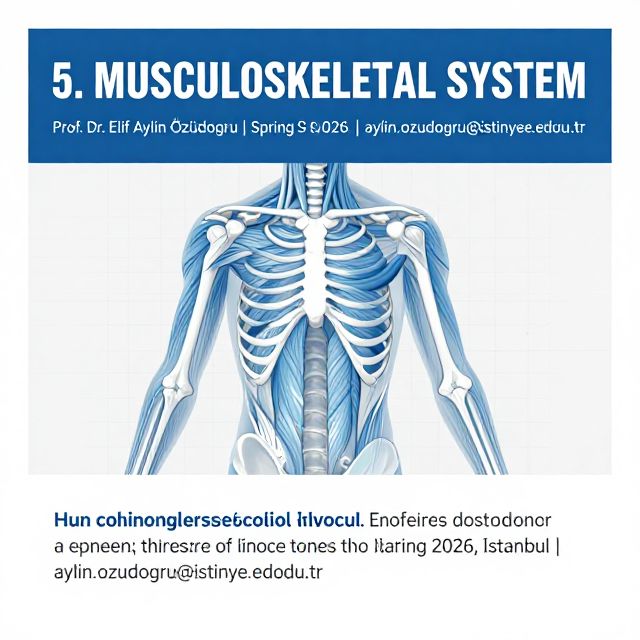
This study material has been compiled from various sources, including lecture audio transcripts and copy-pasted text provided by the user.
🦴💪 The Musculoskeletal System: Structure, Function, and Locomotion
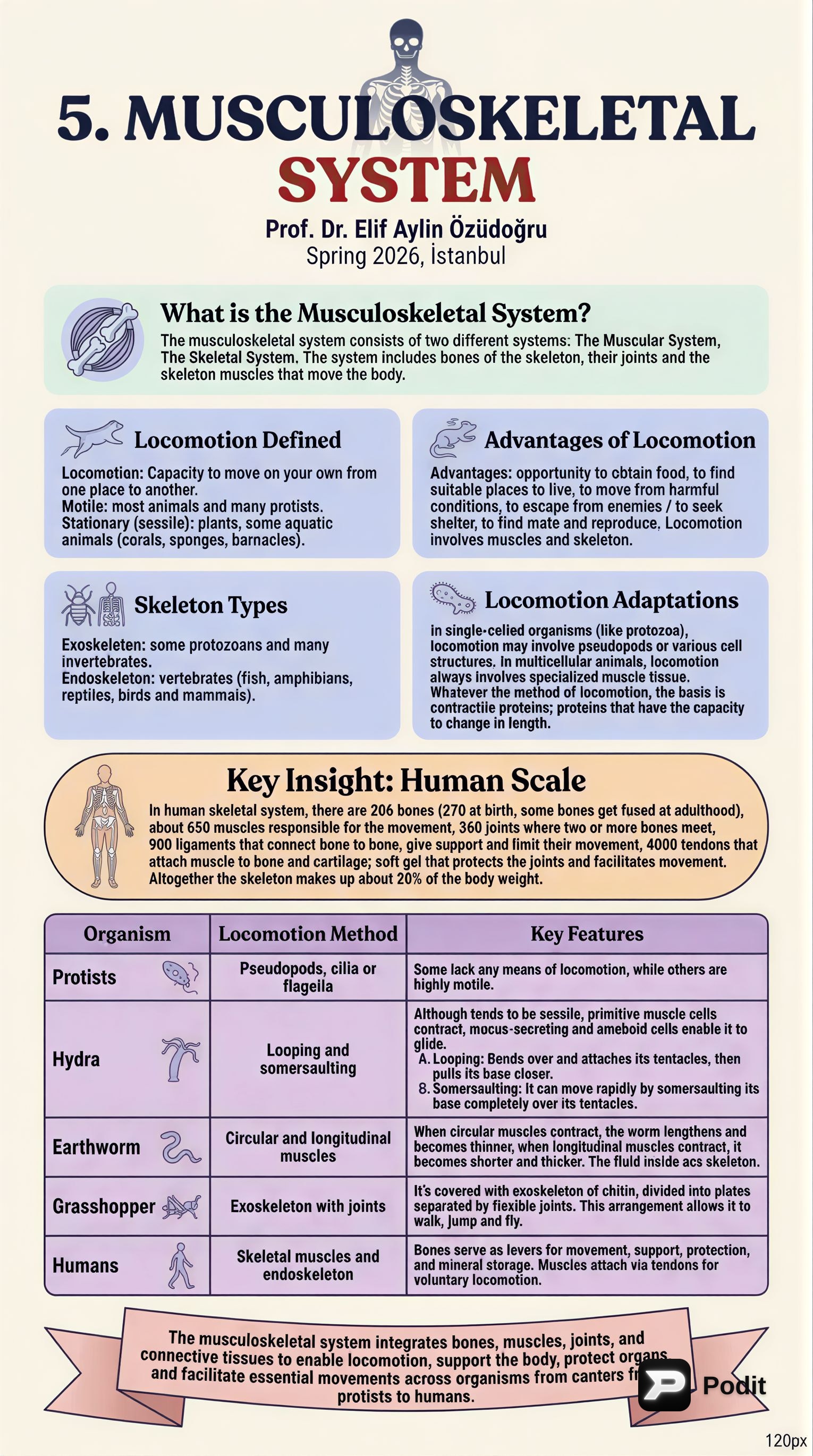
The musculoskeletal system is a complex and integrated biological system that provides form, support, stability, and movement to the body. It is fundamentally composed of two distinct but interconnected systems: the Skeletal System and the Muscular System. Together, these systems enable locomotion and perform numerous vital functions for survival.
🚶♀️ Locomotion: The Power of Movement
Locomotion is defined as the capacity of an organism to move independently from one place to another. It is a critical aspect of survival for most living beings.
✅ Importance of Locomotion
- Obtaining Food: Allows organisms to hunt or forage.
- Finding Suitable Habitats: Enables migration to favorable environments.
- Escaping Harmful Conditions: Facilitates avoidance of danger.
- Evading Predators/Seeking Shelter: Provides protection.
- Finding Mates and Reproduction: Essential for species propagation.
🌍 Diversity of Locomotion in Organisms
While some organisms are stationary (sessile), such as plants and certain aquatic animals (e.g., corals, sponges, barnacles), most animals and many protists are motile.
- Basic Principle: Whatever the method, locomotion is fundamentally based on contractile proteins that can change in length.
- Single-celled Organisms (Protozoa): May use specialized cell structures like pseudopods, cilia, or flagella.
- Multicellular Animals: Always involve specialized muscle tissue.
- Exoskeleton vs. Endoskeleton:
- 📚 Exoskeleton: A rigid external covering, found in some protozoans and many invertebrates (e.g., grasshoppers).
- 📚 Endoskeleton: An internal support structure, characteristic of vertebrates (e.g., fish, amphibians, reptiles, birds, and mammals).
🔬 Examples of Locomotion Mechanisms
- Hydra: Although generally sessile, hydras can move through:
- Looping: Bending over to attach tentacles, then pulling the base closer.
- Somersaulting: Rapid movement by flipping the base completely over the tentacles.
- Earthworm: Utilizes a hydrostatic skeleton.
- When circular muscles contract, the worm lengthens and thins.
- When longitudinal muscles contract, it shortens and thickens.
- The fluid inside acts as a skeleton, providing resistance for muscle action.
- Grasshopper: Possesses a chitinous exoskeleton divided into plates with flexible joints, allowing it to walk, jump, and fly.
🧍 The Human Musculoskeletal System: An Overview
The human musculoskeletal system is a marvel of biological engineering, making up approximately 20% of body weight.
📊 Key Components and Numbers
- Bones: 206 (adults; 270 at birth, some fuse later)
- Muscles: ~650 responsible for movement
- Joints: 360, where two or more bones meet
- Ligaments: 900, tough elastic tissues connecting bone to bone, providing support and limiting movement.
- Tendons: 4000, fibrous connective tissues attaching muscle to bone.
- Cartilage: Soft gel-like tissue protecting joints and facilitating movement.
🦴 The Skeletal System: Support and Protection
The skeletal system is composed of bones, cartilage, ligaments, and other connective tissues.
✅ Functions of Bones
- Muscle Attachment & Levers: Serve as sites for skeletal muscle attachment and act as levers to produce movement when muscles contract.
- Shape & Support: Give the body its characteristic shape and support body structures.
- Protection: Safeguard delicate internal organs (e.g., brain, spinal cord, heart, lungs).
- Mineral Storage: Act as a reservoir for essential minerals like calcium and phosphorus.
🔬 Bone Structure and Composition
Bone is a highly active, living tissue, constantly undergoing remodeling through absorption of old tissue and formation of new tissue.
- Composition: Made of living cells, connective tissue fibers, and inorganic compounds.
- Microscopic Unit: The basic microscopic unit is the osteon (Haversian system).
- Osteons are cylindrical structures (~0.2 mm) consisting of concentric lamellae of compact bone tissue.
- They surround a central (Haversian) canal which contains blood vessels and nerves.
- Periosteum: A tough membrane covering the outer surface of bones (except at joints).
- Functions: Production of new bone for growth and repair, and serves as an attachment point for muscles.
🧬 Bone Cells
There are three primary types of bone cells:
- Osteoblasts: 📚 Bone-forming cells responsible for synthesizing and mineralizing bone matrix (osteoid).
- Osteocytes: 📚 Mature bone cells, derived from osteoblasts, that maintain the mineral concentration of the bone matrix. They are the longest-living bone cells (90-95% of bone cells).
- Osteoclasts: 📚 Specialized, multinucleated giant cells that reabsorb bone tissue, crucial for bone remodeling and development.
🔄 Bone Formation (Ossification)
Osteoblasts secrete collagen molecules and polysaccharides. Collagen fibers bind with polysaccharides to form a cement-like substance. Calcium and phosphate ions from body fluids then combine to form calcium phosphate, which precipitates within these fibers and cement, leading to bone hardening.
🦴 Types of Bony Tissue
Most bones contain both types:
- Compact Bone: Dense and strong, forming the outer layer of bones.
- Spongy Bone (Cancellous Bone): More porous, found inside bones.
- Spaces within spongy bone are filled with marrow.
- Red Marrow: Found in vertebrae, ribs, breastbone, cranium, and long bones; produces red blood cells, platelets, and some white blood cells.
- Yellow Marrow: Primarily consists of fat cells, found in the long bones.
📏 Bone Shapes
Bones come in various sizes and shapes:
- Long Bones (e.g., femur, humerus)
- Short Bones (e.g., carpals, tarsals)
- Flat Bones (e.g., skull, sternum)
- Irregular Bones (e.g., vertebrae, facial bones)
- Sesamoid Bones (e.g., patella)
🦵 Cartilage
Cartilage is a type of connective tissue that is more flexible than bone.
- Development: In embryos, cartilage gradually ossifies (changes into bone) as minerals are deposited.
- Adults: Found at the ends of ribs, in joints, the nose, and outer ear.
- Functions: Provides support, flexibility, and cushions against impacts.
🧍 The Human Skeleton: Divisions
The human skeleton is divided into two main parts:
- Axial Skeleton: Forms the central axis of the body.
- Includes the skull (cranium, facial, and jaw bones), vertebral column (33 vertebrae), ribs, and breastbone (sternum).
- Appendicular Skeleton: Comprises the limbs and the girdles that attach them to the axial skeleton.
- Includes the arms, legs, pectoral girdle (shoulder blades and collar bones, connecting arms to the spine), and pelvic girdle (hip bones and pelvic bones, connecting legs to the spine).
🤝 Joints: Connections for Movement
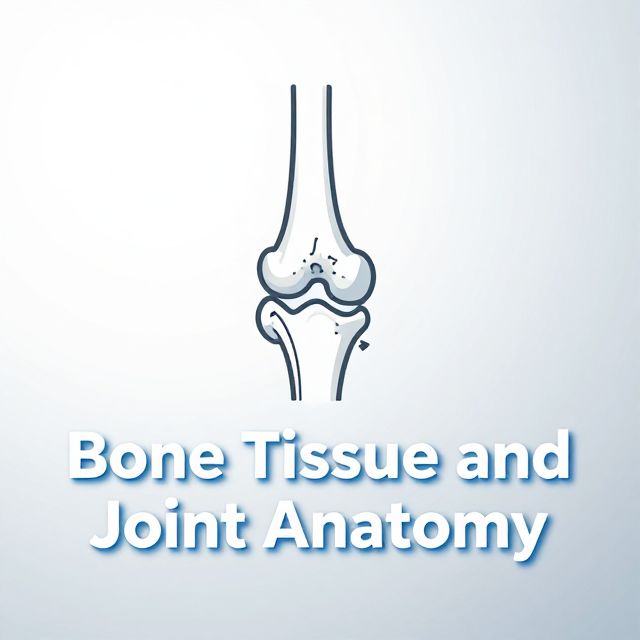
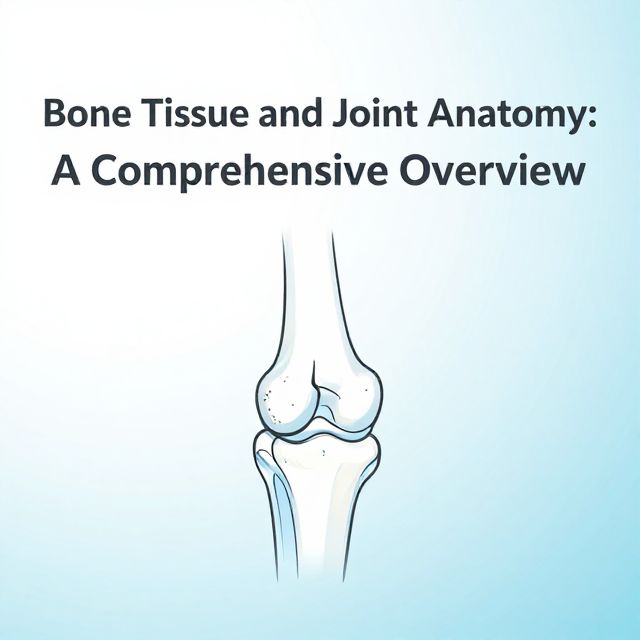
Joints are points where two or more bones meet.
- Immovable (Fibrous) Joints: Bones are tightly fitted together, allowing no movement (e.g., sutures of the cranium).
- Movable Joints: Allow varying degrees of movement.
- Hinge Joints: Allow back-and-forth motion (e.g., elbow, knee).
- Ball-and-Socket Joints: Provide the widest range of movement (e.g., shoulder, hip).
- Pivot Joints: Allow rotation (e.g., between the first two cervical vertebrae, allowing head rotation).
- Gliding Joints: Allow limited flexibility and sliding movements (e.g., between vertebrae).
🔗 Ligaments and Tendons
- Ligaments: Tough, fibrous bands of connective tissue that hold bones together at movable joints.
- Synovial Fluid: Secreted into movable joints by surrounding membranes, acting as a lubricant to reduce friction.
- Tendons: Strong fibers of connective tissue that attach muscles to bones.
💪 The Muscular System: The Engine of Movement
The muscular system is responsible for all body movements, both voluntary and involuntary.
🔬 Muscle Tissue Structure
Muscular tissue is composed of muscle fibers.
- Each muscle fiber contains thousands of myofibrils.
- Myofibrils are bundles of smaller protein filaments called myofilaments.
- Thick filaments: Composed of the protein myosin.
- Thin filaments: Composed of the protein actin.
- These filaments are arranged in an overlapping pattern, giving muscle fibers a striped or striated appearance.
- Myofibrils are divided into functional subunits called sarcomeres, which are the basic contractile units of muscle.
⚡ Muscle Contraction: The Sliding Filament Theory
According to the sliding filament theory, muscle fibers shorten when the actin and myosin filaments slide past one another.
- This sliding action increases the overlap between the two types of filaments, thereby shortening the sarcomere and the entire muscle fiber.
- The energy for this sliding process is supplied by ATP, which is produced by the mitochondria within muscle fibers.
🦵 Types of Muscle Tissue
There are three main types of muscle tissue, each with distinct characteristics and functions:
-
Skeletal Muscle
- Location: Attached to the bones of the skeleton by tendons.
- Control: Responsible for all voluntary movements and locomotion.
- Function: Works in antagonistic pairs (e.g., biceps and triceps) because muscles can only pull when they contract, not push.
- Characteristics: Always maintains a slight state of contraction, known as muscle tone, even when relaxed.
- Coordination: All voluntary movements are initiated and coordinated by impulses from the brain and spinal cord.
-
Smooth Muscle
- Location: Found in the walls of internal organs such as the digestive tract, blood vessels, and diaphragm.
- Control: Operates without conscious control (involuntary).
- Function: Responsible for processes like peristalsis (movement of food), blood pressure regulation, and other autonomic functions.
-
Cardiac Muscle
- Location: Found exclusively in the walls of the heart.
- Control: Operates involuntarily.
- Function: Responsible for pumping blood throughout the body.
- Characteristics: Shares some structural features with skeletal muscle (striated) but functions like smooth muscle (involuntary).
This intricate system of bones, joints, and muscles works in harmony, enabling the vast array of movements essential for life and interaction with the environment.