 Podit
Podit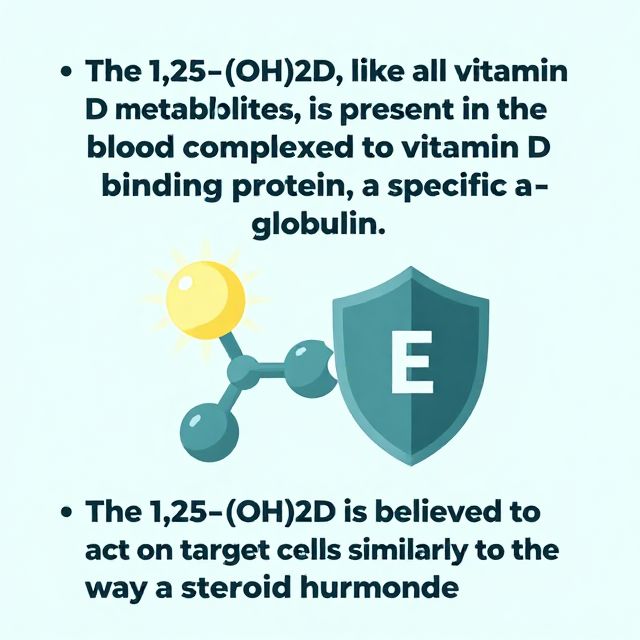
Study Material: Vitamins D and E - Metabolism, Functions, and Clinical Aspects
Source Information: This study material has been compiled from a lecture audio transcript and copy-pasted text provided by the user.
📚 Introduction to Vitamins D and E
Vitamins D and E are essential fat-soluble vitamins crucial for numerous physiological processes in the human body. While Vitamin D is primarily known for its role in calcium homeostasis, it also exhibits significant immunomodulatory effects. Vitamin E, on the other hand, is a potent antioxidant, protecting cellular membranes from oxidative damage. This guide will delve into the metabolism, mechanisms of action, and diverse functions of these vital micronutrients.
☀️ Vitamin D (Calciferol)
Vitamin D is a prohormone that undergoes activation to exert its biological effects. Its most active form is 1,25-dihydroxyvitamin D, also known as calcitriol or 1,25-(OH)2D.
1. Active Form and Mechanism of Action
- Transport: 1,25-(OH)2D, like all vitamin D metabolites, circulates in the blood complexed to vitamin D binding protein (DBP), a specific alpha-globulin. ✅
- Steroid Hormone-like Action: 1,25-(OH)2D acts on target cells similarly to a steroid hormone. The free hormone crosses the plasma membrane.
- Nuclear Receptor Interaction: It interacts with a specific nuclear receptor called the Vitamin D Receptor (VDR), which is a DNA-binding, zinc-finger protein. 💡
- Gene Expression: The ligand-receptor complex binds to a specific Vitamin D-responsive element (VDRE) on DNA. With associated transcription factors (e.g., retinoid X receptor), this complex enhances the transcription of messenger RNAs (mRNAs). These mRNAs code for:
- Calcium-transporting proteins
- Bone matrix proteins
- Cell cycle-regulating proteins
2. Role in Calcium Homeostasis
1,25-(OH)2D works in conjunction with parathyroid hormone (PTH) to regulate plasma levels of ionized calcium and phosphate.
- Physiological Feedback Loop:
- Calcium Sensing: The loop begins with the calcium receptor of the parathyroid gland sensing a fall in plasma ionized calcium levels.
- PTH Secretion: When calcium levels fall, PTH is secreted by the parathyroid gland.
- 1,25-(OH)2D Synthesis: PTH stimulates the renal enzyme 25-OH-D-1-alpha-hydroxylase to convert 25-OH-D (the circulating storage form) into active 1,25-(OH)2D.
- Increased Calcium Transport: The resulting increase in 1,25-(OH)2D (along with PTH) enhances calcium transport in the intestine, bone, and kidney.
- Intestine: Stimulates intestinal absorption of calcium and phosphate.
- Bone: Mobilizes calcium and phosphate by stimulating bone resorption.
- Kidney: Increases calcium reabsorption.
- Restoration of Calcium Levels: These actions collectively raise plasma calcium levels back to normal.
- Feedback Inhibition: The normalized calcium levels are sensed by the parathyroid gland, reducing further PTH secretion. Additionally, 1,25-(OH)2D directly suppresses PTH synthesis in the parathyroid gland, forming a short feedback loop.
3. Immunomodulatory Effects
Beyond calcium regulation, 1,25-(OH)2D has broader cellular actions.
- Widespread Receptors: VDRs are found in many non-target tissues, including the brain, bone marrow-derived cells, skin, and thymus.
- Macrophage Differentiation: 1,25-(OH)2D induces the fusion and differentiation of macrophages.
- T Lymphocyte Suppression: It suppresses interleukin 2 production in activated T lymphocytes, suggesting a role in immunomodulation.
4. Assessment of Vitamin D Status 📊
Plasma 25-OH-D concentration is the primary measure of vitamin D status, correlating strongly with bone health.
- Deficiency: Serum 25-OH D concentrations less than 50 nmol/L (20 ng/mL). Historically, <25-30 nmol/L (10-12 ng/mL) was used.
- Insufficiency: Concentrations in the range of 50 to 72 nmol/L (20–29 ng/mL).
- Optimal Bone Health: Concentrations exceeding 75 to 100 nmol/L (30–40 ng/mL) are generally considered necessary.
5. Vitamin D Toxicity ⚠️
- Adverse Effects: High vitamin D intakes can lead to hypercalciuria (excess calcium in urine) and hypercalcemia (high blood calcium).
- Toxicity Threshold: Toxicity is apparent when serum 25-OH D concentrations exceed approximately 500 nmol/L (200 ng/mL). Some evidence suggests concentrations >150 nmol/L (60 ng/mL) may be adverse.
- Safety Margin: Current recommended intakes are well below the lowest observed adverse effect level (LOAEL) of 50 µg/day and the no observed adverse effect level (NOAEL) of 20 µg/day.
🌿 Vitamin E (Tocopherols and Tocotrienols)
Vitamin E is a group of eight fat-soluble compounds known as vitamers, each possessing antioxidant properties.
1. Structure and Forms (Vitamers)
- Components: Each vitamer contains a phenolic functional group on a chromanol/chromane ring (the "head") and an attached phytyl side chain.
- Classes:
- Tocopherols: Have saturated side chains with 16 carbons.
- Tocotrienols (Trienols): Have unsaturated side chains.
2. Sources 🥕
Vitamin E is primarily found in plant foods, especially plant oils.
- Rich in α-tocopherol: Wheat germ, sunflower, canola, and safflower oils.
- Rich in γ-tocopherol: Soybean and corn oils.
- Other Sources: Foods made from vegetable oils (especially full-fat varieties), peanuts, cashews, almonds, and hazelnuts.
- Dietary Consideration: Limiting fat intake can inadvertently reduce vitamin E consumption.
3. Digestion and Absorption
- Esterification: Tocopherols are free in foods, while tocotrienols are esterified and require hydrolysis before absorption.
- Hydrolysis: Pancreatic esterase and duodenal mucosal esterase (carboxyl ester hydroxylase) hydrolyze tocotrienols and synthetic ester α-tocopherols in the lumen or at the brush border membrane of enterocytes.
- Absorption Site: Primarily absorbed in the jejunum via passive diffusion.
- Role of Bile Salts: Bile salts are essential for emulsification, solubilization, and micelle formation, facilitating diffusion across the enterocyte membrane.
- Absorption Efficiency: Higher intake of vitamin E appears to reduce its absorption efficiency.
4. Transport, Metabolism, and Storage
- Chylomicron Transport: Absorbed tocopherols are incorporated into chylomicrons within enterocytes for transport through the lymph and into circulation.
- ABCA1 Transporter: An ATP-binding cassette A1 (ABCA1) membrane transporter facilitates the secretion of α- and γ-tocopherol across the enterocyte’s basolateral membrane for lymphatic transport.
- Lipoprotein Distribution: During chylomicron transport, tocopherol equilibrates or transfers among other lipoproteins (HDLs, LDLs). LDLs typically carry the highest concentrations of α-tocopherol.
- Liver Processing: Chylomicron remnants deliver vitamin E to the liver. Alpha-tocopherol transfer protein (αTTP), produced in the liver, transfers α-tocopherol into VLDLs (very-low-density lipoproteins) for distribution to tissues.
5. Functions and Mechanisms of Action
The principal function of vitamin E is its role as an antioxidant.
-
Primary Role: Antioxidant ✅
- Membrane Integrity: Maintains the integrity of body cell membranes by preventing the oxidation (peroxidation) of unsaturated fatty acids in membrane phospholipids.
- Susceptible Tissues: Tissues with cell membranes particularly susceptible to oxidation include the lungs, brain, and erythrocytes. Mitochondrial and endoplasmic reticulum membranes are also highly vulnerable due to their high content of unsaturated fatty acids.
- Chain-Breaking Antioxidant: Vitamin E functions primarily as a chain-breaking antioxidant, preventing the propagation of lipid peroxidation. Peroxyl radicals react with vitamin E faster than with other molecules, thereby breaking the free radical chain and decreasing oxidative stress.
- Antioxidant Network: Alpha-tocopherol (the primary circulating form) donates an electron to reactive oxygen species, stabilizing them. It interacts with other antioxidants in a network.
- Singlet Oxygen Destruction: Can destroy singlet molecular oxygen.
-
Other Roles 💡
- Cell Signaling: Functions as a cell signaling molecule, interacting with cell receptors and transcription factors.
- Gene Expression: Affects signaling cascades, gene expression, enzyme activity, and protein concentrations.
6. Assessment of Vitamin E Status 📊
Evaluation relies primarily on blood analyses.
- Normal Levels: Plasma vitamin E concentrations typically range from 5 to 20 μg/mL in adults.
- Deficiency: Plasma concentrations < 5 μg/mL indicate deficiency and reflect dietary intake.
- Toxicity: Concentrations exceeding about 20 μg/mL may reflect toxicity.
7. Vitamin E Toxicity ⚠️
- Low Toxicity: Vitamin E is considered one of the least toxic vitamins. Mild gastrointestinal problems may occur with intakes between 200 and 800 mg/day.
- Bleeding Risk: The main concern with high intakes is an increased tendency for bleeding due to antiplatelet effects and/or abnormal blood clotting.
- Tolerable Upper Intake Level (UL): The Food and Nutrition Board has established a UL of 1,000 mg of α-tocopherol/day for adults due to the bleeding risk.