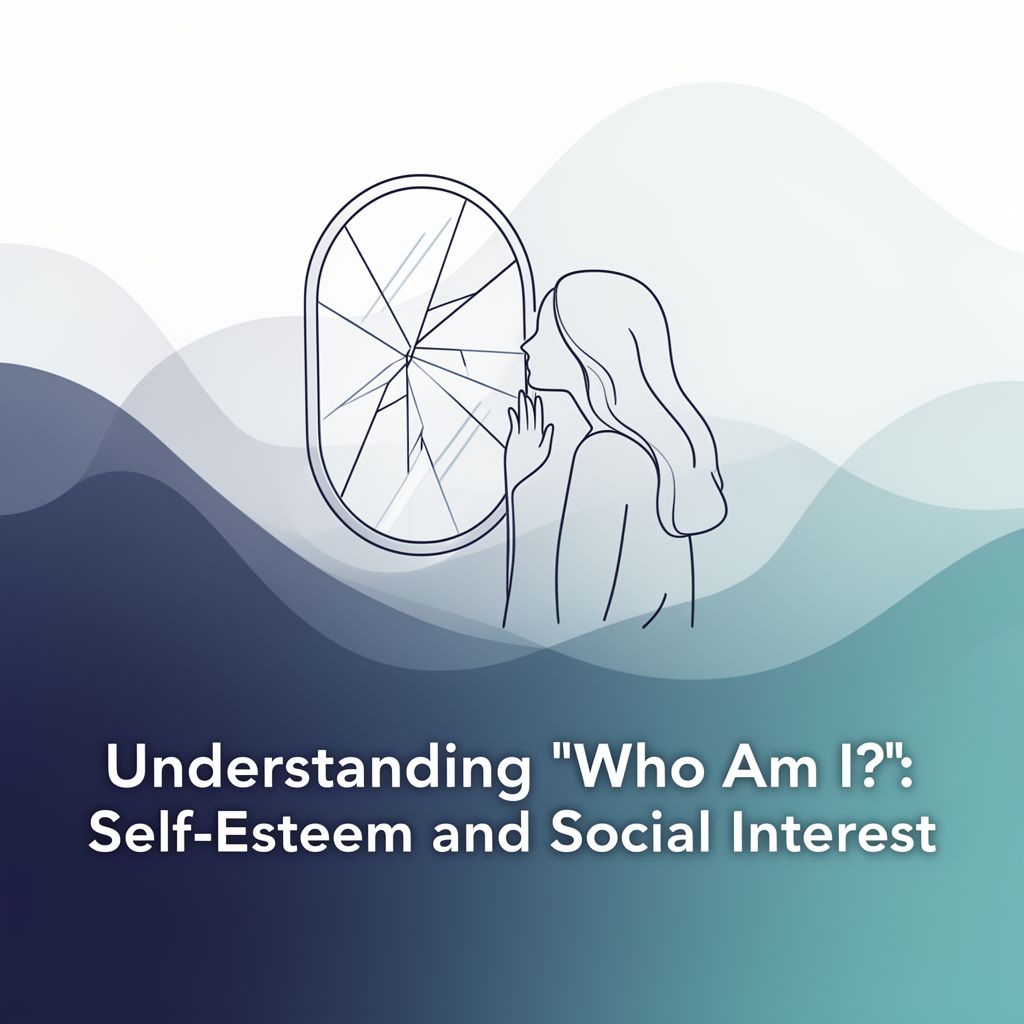
Understanding 'Who Am I?': Self-Esteem and Social Interest - kapak
Psikoloji#self_identity#who_am_i#insecurity#self_esteem

Understanding 'Who Am I?': Self-Esteem and Social Interest

This podcast explores the profound question 'Who am I?', delving into its philosophical, psychological, and therapeutic dimensions, and identifying insecurity, self-esteem, and social interest as key concepts.

mustafacellistJanuary 9, 2026 ~13 dk toplam
01

Sesli Özet

5 dakika

Konuyu otobüste, koşarken, yolda dinleyerek öğren.

Sesli Özet

Understanding 'Who Am I?': Self-Esteem and Social Interest

0:004:52
02

Flash Kartlar

22 kart

Karta tıklayarak çevir. ← → ile gez, ⎵ ile çevir.

1 / 22
Tüm kartları metin olarak gör
  1. 1. What is considered a fundamental existential question?

    The question 'Who am I?' is considered one of the most fundamental existential questions that explores the core of human existence.

  2. 2. What perspectives does the 'Who am I?' question encompass?

    This question encompasses philosophical, ethical, spiritual, and behavioral perspectives, making it a multi-layered inquiry into our being.

  3. 3. How do people commonly define themselves?

    People commonly define themselves through their appearance, thoughts, knowledge, feelings, and actions, often struggling to integrate these into a coherent whole.

  4. 4. What does the question 'Who am I?' often indicate in a therapeutic context?

    In a therapeutic context, the question 'Who am I?' often indicates the presence of deep underlying pain within the individual.

  5. 5. What must a therapeutic answer to 'Who am I?' go beyond?

    A therapeutic answer must go beyond superficial definitions like roles, physical appearance, education, social status, financial value, or relationship abilities.

  6. 6. What is the underlying motivation behind asking 'Who are you?'?

    The underlying motivation behind asking 'Who are you?' is almost always directly related to the amount of insecurity one feels.

  7. 7. What is insecurity considered the heart of?

    Insecurity is considered the heart of all emotional dysfunction and is highly linked to physical ailments and mental anxieties.

  8. 8. What does insecurity imply about one's self-perception?

    Insecurity implies a state of self-doubt, where a person cannot trust who they are or what they are, leading to an inability to recognize themselves.

  9. 9. What is the consequence of not knowing or trusting oneself?

    If one does not know or trust oneself, they cannot truly love themselves, highlighting a critical link between self-knowledge and self-love.

  10. 10. How is insecurity defined in relation to self-esteem?

    Insecurity can be defined as having low or no self-esteem, because self-esteem inherently implies a person's ability to love themselves.

  11. 11. Where do many people initially search for the answer to 'Who am I?'?

    Many people initially search for the answer to 'Who am I?' by focusing on the differences between themselves and others, often through comparison and criticism.

  12. 12. What is the paradoxical way to find answers to self-discovery?

    Paradoxically, the answers to self-discovery emerge when we find the similarities we share with others, rather than focusing on differences.

  13. 13. What concept is introduced regarding finding commonalities with others?

    The concept of Social Interest is introduced, which suggests that relating to shared commonalities with others leads to a sense of belongingness.

  14. 14. How does encouragement relate to security according to Social Interest?

    According to Social Interest, the more encouragement one gives and receives, the more security one gains, fostering a sense of safety and belonging.

  15. 15. What is emphasized about one's perspective in self-discovery?

    It is emphasized that self-discovery involves seeing oneself as part of a whole with others, rather than separating oneself from them.

  16. 16. What is a critical step in the journey of self-discovery?

    A critical step in the journey of self-discovery is understanding the deep connection between insecurity and the inability to love oneself.

  17. 17. What are the two main antidotes to the reasons for asking 'Who am I?'?

    The two main antidotes are the development of self-esteem and Social Interest, which address the underlying issues of self-doubt and isolation.

  18. 18. Define self-esteem as presented in the text.

    Self-esteem is defined as appreciating one's own worth and abilities, loving oneself, and having self-confidence, serving as the foundation of emotional health.

  19. 19. How does self-esteem relate to insecurity?

    Self-esteem is the direct opposite of insecurity, providing a sense of personal value and confidence that counteracts self-doubt and promotes well-being.

  20. 20. Define Social Interest as presented in the text.

    Social Interest is the desire to empathize with others, find common ground, and contribute to society, fostering connection and community.

  21. 21. What do self-esteem and Social Interest enable a person to feel?

    Developing self-esteem and Social Interest enables a person to feel more secure, experience a greater sense of belonging, and ultimately lead a happier life.

  22. 22. How can one find their true identity according to the text?

    One can find their true identity not by comparing themselves to others, but by connecting with them and discovering shared aspects of humanity.

03

Detaylı Özet

3 dk okuma

Tüm konuyu derinlemesine, başlık başlık.

📚 Understanding "Who Am I?": A Journey of Self-Discovery

Source Information: This study material has been compiled from a copy-pasted text and a lecture audio transcript.


🎯 Introduction: The Existential Question

The question "Who am I?" is a fundamental inquiry into human existence. It is a multifaceted question that can be explored through various lenses, including philosophical, ethical, spiritual, and behavioral perspectives. Our identity is shaped by a combination of our training, experiences, hopes, accomplishments, failures, and often, a connection to a higher power or life force. We typically define ourselves by our physical appearance, thoughts, knowledge, feelings, and actions. However, integrating these diverse aspects into a cohesive whole often presents a significant challenge.


1️⃣ The Therapeutic Lens: Pain and Underlying Motivation

When the question "Who am I?" arises in a therapeutic context, it almost invariably signals the presence of underlying pain. A therapeutic response must delve beyond superficial external characteristics to uncover the true motivation behind this profound inquiry.

🔍 Beyond External Definitions

We often define ourselves by:

  • Roles: The parts we play in life.
  • Physical Appearance: How we look.
  • Education: Our academic achievements.
  • Status & Financial Worth: Our societal standing and economic position.
  • Relational Ability: Our capacity to connect with others.

However, these external factors do not fully answer the question of "who we are."

⚠️ Insecurity: The Core Motivation

Almost always, the motivation for asking "Who am I?" is directly linked to the level of insecurity one feels.

  • 📚 Definition of Insecurity: Doubting oneself, which leads to an inability to trust who and what you are, ultimately resulting in a lack of self-knowledge.
  • Consequences of Insecurity:
    • It lies at the heart of all emotional dysfunctions.
    • It is highly correlated with physical ailments.
    • It is linked to spiritual anxieties.
  • The Trust-Love Connection: If you do not know yourself and do not trust yourself, how can you truly love yourself?
  • ✅ Insecurity and Self-Esteem: Insecurity can be defined as low or absent Self-Esteem, as Self-Esteem inherently implies self-love.

2️⃣ The Paradox of Self-Discovery: Social Interest and Belongingness

Many of us search for the answer to "Who am I?" by focusing on the differences between ourselves and others. This often leads to:

  • Comparison
  • Criticism
  • Judgment
  • Feelings of being lost

💡 Finding Similarities: The Path to Self-Discovery

Paradoxically, the answers to finding ourselves emerge when we discover the similarities we share with others. This concept is known as Social Interest.

  • 📚 Definition of Social Interest: The ability to relate to the shared sameness you have with others.
  • Benefits of Social Interest:
    • The more you connect with shared human experiences, the greater your sense of belongingness.
    • The more encouragement you give and receive, the more security you achieve.
  • This perspective emphasizes seeing oneself as part of a whole, rather than separate from others, which is crucial for overcoming feelings of loneliness and being lost.

3️⃣ The Antidotes: Developing Self-Esteem and Social Interest

The solutions to the underlying reasons for asking "Who am I?" are found in the development of two key attributes: Self-Esteem and Social Interest.

✅ Self-Esteem

  • 📚 Definition: The appreciation of one's own worth and abilities; it involves self-love and self-trust.
  • Significance: It is the direct opposite of insecurity and forms the foundation of emotional well-being.

✅ Social Interest

  • 📚 Definition: The desire to empathize with others, find common ground, and contribute to society.
  • Significance: These two qualities enable individuals to live a more secure, belonging, and ultimately happier life.

📈 Cultivating Identity

True identity is found not through comparing oneself to others, but by building connections and discovering shared humanity. Developing Self-Esteem and Social Interest are fundamental principles that strengthen both inner peace and external relationships, guiding one on the journey of self-understanding and building a more fulfilling life.

Kendi çalışma materyalini oluştur

PDF, YouTube videosu veya herhangi bir konuyu dakikalar içinde podcast, özet, flash kart ve quiz'e dönüştür. 1.000.000+ kullanıcı tercih ediyor.

Sıradaki Konular

Tümünü keşfet
MBCT vs. Schema Therapy: A Deep Dive

MBCT vs. Schema Therapy: A Deep Dive

Explore Mindfulness-Based Cognitive Therapy (MBCT) and Schema Therapy. Understand their core principles, key concepts, and how they help you navigate your inner world for better mental well-being.

12 dk Özet 23 15
Understanding Acceptance and Commitment Therapy (ACT)

Understanding Acceptance and Commitment Therapy (ACT)

Explore Acceptance and Commitment Therapy (ACT), a powerful approach to living a rich, full life by accepting difficult experiences and committing to your values. Learn its core principles and how you can apply them.

10 dk Özet 23 15
Adlerian Therapy: Understanding Your Unique Path

Adlerian Therapy: Understanding Your Unique Path

Discover Adlerian Therapy, a holistic approach to understanding your unique lifestyle, overcoming inferiority feelings, and fostering social connection for personal growth.

14 dk Özet 25 15
Adolescents and Social Media: Engagement, Theories, and Well-being

Adolescents and Social Media: Engagement, Theories, and Well-being

Explore how adolescents and young adults engage with social media, examining key theories, the screen time debate, and the nuanced impact of online interactions on well-being.

Özet Görsel
Self and Personality: Psychological Perspectives

Self and Personality: Psychological Perspectives

This audio summary explores the psychological concepts of self and personality, examining how individuals understand themselves, various theoretical approaches to personality, biological influences, and assessment methods.

8 dk Özet 25 15 Görsel
From Learning Theory to Contemporary Models in Psychology

From Learning Theory to Contemporary Models in Psychology

Explore the evolution of psychological thought from early behaviorism to the cognitive revolution and sociobehaviorism, focusing on key figures like Bandura and Rotter.

Özet 15
Cognitive Biases and Heuristics in Behavioral Economics

Cognitive Biases and Heuristics in Behavioral Economics

An academic summary exploring key cognitive biases and heuristics, their impact on human decision-making, and their role in behavioral economics, contrasting with traditional economic theory.

5 dk Özet 25 15
Social Psychology: Core Concepts and Influences

Social Psychology: Core Concepts and Influences

An academic overview of social psychology, covering its definition, historical development, foundational principles, cultural influences, and key concepts like affect, behavior, and cognition.

5 dk Özet 25 15