 Podit
Podit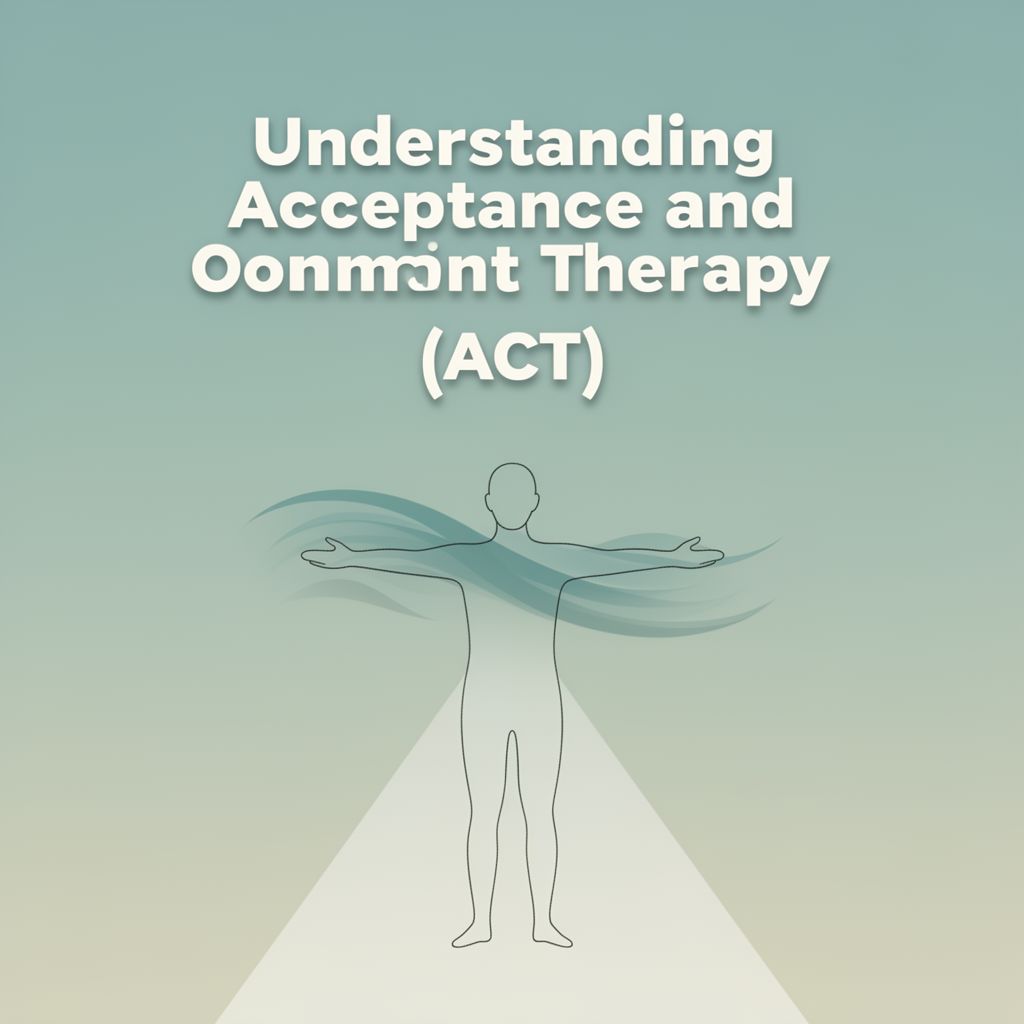
Acceptance and Commitment Therapy (ACT): Living a Richer Life
📚 Study Material Overview
This study material provides a comprehensive introduction to Acceptance and Commitment Therapy (ACT), a modern behavioral therapy focused on increasing psychological flexibility. It explores ACT's core principles, its approach to psychological pain, and the six interconnected processes that form its foundation, known as the Hexaflex. The goal of ACT is not to eliminate difficult thoughts and feelings, but to help individuals live a rich, full, and meaningful life by aligning their actions with their deeply held values, even in the presence of discomfort.
1. Introduction to Acceptance and Commitment Therapy (ACT)
ACT is a unique and empirically supported psychological intervention that encourages individuals to embrace their thoughts and feelings rather than fighting or feeling guilty about them. It shifts the focus from symptom reduction to living a life guided by personal values.
✅ Core Idea: Living a rich, full, and meaningful life, even when pain and discomfort are present. 💡 Key Distinction: ACT is not about feeling good all the time; it's about living well. 📚 Psychological Flexibility: The central aim of ACT. It's the ability to adapt to changing situational demands, to shift or maintain behavior when doing so serves valued ends, and to be present and open to experience.
2. Understanding Psychological Pain and the Struggle for Control
Life inevitably involves pain and discomfort. Our natural human tendency is to try and control or eliminate these unpleasant internal experiences (thoughts, feelings, sensations). However, ACT posits that this struggle often leads to increased suffering.
2.1. The Nature of Psychological Pain and Suffering
Psychological pain refers to the uncomfortable internal experiences we have, such as anxiety, sadness, anger, fear, self-doubt, or physical discomfort. ⚠️ Suffering vs. Pain: ACT distinguishes between pain (an inevitable part of life) and suffering (the additional distress caused by our attempts to control or avoid pain).
- Pain: The direct experience of an unpleasant sensation or emotion.
- Suffering: The struggle with the pain, the attempts to suppress, avoid, or get rid of it.
2.2. Common Response Styles to Pain
When faced with psychological pain, people often adopt various control-oriented response styles:
- Avoidance: Trying to escape situations, thoughts, or feelings that trigger discomfort.
- Suppression: Pushing unwanted thoughts or feelings out of awareness.
- Distraction: Engaging in activities to divert attention from internal experiences.
- Rumination: Overthinking or dwelling on negative thoughts in an attempt to solve them.
- Self-Medication: Using substances or behaviors (e.g., overeating, excessive gaming) to numb pain.
2.3. Creative Hopelessness 💡
This is a crucial concept in ACT, often explored early in therapy. It involves helping individuals recognize that their past attempts to control or eliminate psychological pain have been largely ineffective and have often led to more suffering or limited their lives. 1️⃣ Step 1: Inventory Control Strategies: Clients review all the ways they've tried to get rid of or control their difficult thoughts and feelings. 2️⃣ Step 2: Evaluate Effectiveness: They assess whether these strategies have truly worked in the long term to reduce their suffering or improve their lives. 3️⃣ Step 3: Acknowledge the Cost: Clients recognize the significant time, energy, and life opportunities lost due to these control efforts. ✅ Outcome: The realization that "what I've been doing to fix this problem isn't working, and in fact, it's making things worse or keeping me stuck." This isn't about giving up on life, but giving up on unworkable control strategies, opening the door for new approaches.
2.4. Behavioral Analysis in ACT
While not explicitly a separate step, ACT implicitly involves a functional behavioral analysis. It examines the function of behaviors (especially avoidance behaviors) in the context of a person's life.
- Question: "What is this behavior doing for you?"
- Insight: Often, avoidance behaviors provide short-term relief but lead to long-term costs, moving individuals away from their values. Understanding this helps in choosing new, more effective actions.
3. The ACT Hexaflex: Six Core Processes for Psychological Flexibility
The ACT Hexaflex describes six interconnected processes that foster psychological flexibility. These processes can be broadly categorized into two groups: those that help you change your relationship with your inner experiences, and those that help you move towards a valued life.
3.1. Relating Differently to Inner Experiences
These processes help individuals engage with their thoughts, feelings, and sensations in a more open and less reactive way.
3.1.1. Acceptance 🤝
📚 Definition: Actively and non-judgmentally embracing private experiences (thoughts, feelings, memories, physical sensations) as they are, without trying to change or push them away.
- Not Resignation: It's not about liking pain or giving up; it's about making space for it.
- Analogy: The "Tug-of-War with a Monster." If you're in a tug-of-war with a monster (difficult feelings), the harder you pull, the harder it pulls back. Acceptance is dropping the rope. The monster might still be there, but you're no longer engaged in the exhausting struggle.
- Practice: Allowing discomfort to be present without letting it control your actions. "Okay, anxiety, you can be here, but I'm still going to do what matters to me."
3.1.2. Cognitive Defusion 🧠
📚 Definition: Stepping back from thoughts, observing them, and seeing them as just words, images, or sounds in the mind, rather than absolute truths or commands.
- "Fused" vs. "Defused": When fused, we treat thoughts as facts ("I am a failure"). When defused, we see them as mental events ("I'm having the thought that I'm a failure").
- Analogy: Thoughts as "leaves floating down a stream." You can watch them go by without jumping onto each leaf.
- Techniques:
- Adding "I'm having the thought that..." before a thought.
- Saying the thought out loud in a funny voice.
- Repeating a thought until it loses its meaning.
- Goal: To reduce the power and influence of unhelpful thoughts, not to eliminate them.
3.1.3. Present Moment Awareness (Mindfulness) 🧘
📚 Definition: Consciously bringing attention to the here and now, without judgment.
- Focus: Connecting with what's happening right now through your senses (sights, sounds, smells, tastes, touch).
- Benefit: Helps you engage more fully with life and notice opportunities for action that might be missed if your mind is constantly dwelling on the past or worrying about the future.
- Practice: Observing experiences as they unfold, moment by moment, without getting caught up in judgments or stories about them.
3.1.4. Self-as-Context (The Observing Self) 🌌
📚 Definition: Recognizing the "observing self" – the part of you that notices your thoughts, feelings, and sensations, but isn't defined by them. It's the consistent "you" that has been present through all experiences.
- Analogy: You are the "sky," and your thoughts and feelings are like the "weather." Clouds come and go, storms rage, sunshine appears, but the sky itself remains.
- Insight: You are more than your current thoughts or feelings; you are the container for them. This provides a sense of stability and continuity, even when your inner world feels chaotic.
3.2. Moving Towards a Valued Life
These processes help individuals identify what truly matters to them and take action consistent with those priorities.
3.2.1. Values 🧭
📚 Definition: Your heart's deepest desires for how you want to behave, what you want to stand for, and what kind of person you want to be. They are chosen life directions that are ongoing and never fully achieved.
- Not Goals: Values are like a compass direction (e.g., "being a loving partner"); goals are specific destinations (e.g., "getting married"). You can always move in a valued direction, regardless of whether you achieve a specific goal.
- Source of Motivation: Clarifying values provides meaning and purpose, offering a powerful source of motivation that isn't dependent on feeling good.
- Examples: Connection, creativity, kindness, adventure, contribution, learning, integrity.
3.2.2. Committed Action 💪
📚 Definition: Taking effective action, guided by your values, even when difficult thoughts and feelings show up. It involves setting goals consistent with your values and taking concrete steps towards them.
- "Rubber Meets the Road": This is where the insights from the other processes are put into practice.
- Process:
- Clarify Values: What truly matters to you?
- Set Goals: Identify small, manageable steps aligned with those values.
- Take Action: Move towards those goals, practicing acceptance and defusion with any internal barriers (e.g., anxiety, self-doubt) that arise.
- Example: If you value "connection" but experience social anxiety, committed action might involve attending a local meeting for 15 minutes, even if anxiety is present. You accept the anxiety, defuse from thoughts like "everyone will judge me," and act because it aligns with your value.
4. Psychological Flexibility: The Ultimate Goal
📊 Summary: Psychological flexibility is the overarching outcome of effectively applying the six core processes of the Hexaflex. It is your ability to:
- Contact the present moment fully, as a conscious human being.
- Openly experience thoughts and feelings without unnecessary struggle.
- Choose to change or persist in behavior when doing so serves valued ends.
This dynamic process allows you to adapt, persist, and live a rich, full, and meaningful life, even in the face of life's inevitable challenges and internal discomfort. It's about progress, not perfection.
5. Conclusion: Your Journey Towards a Meaningful Life
ACT offers a powerful framework for navigating life's challenges by changing your relationship with your inner world and aligning your actions with what truly matters to you. By practicing acceptance, cognitive defusion, present moment awareness, and self-as-context, you can free up energy previously spent fighting with yourself. By clarifying your values and taking committed action, you can build a life that is rich, full, and meaningful.
💡 Actionable Tip: Start small. Identify one area where you feel stuck, clarify a value related to it, and take one small committed action, practicing acceptance and defusion as you go.