 Podit
Podit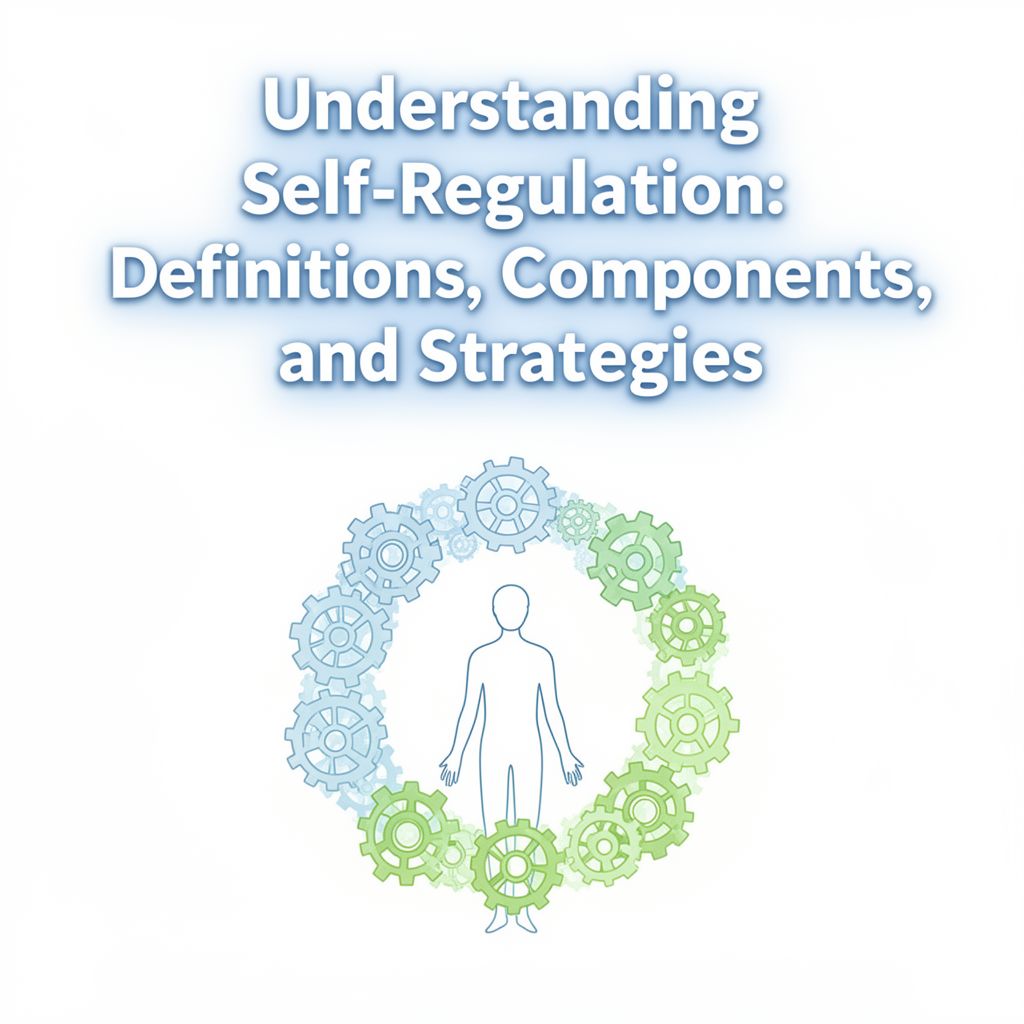
This study material has been compiled from various sources, including a lecture audio transcript and copy-pasted text. The information has been organized and consolidated to provide a comprehensive overview of self-regulation.
🧠 Self-Regulation: Managing the Self
📚 Introduction
Self-regulation is a fundamental aspect of individual development and behavioral control. It serves as a crucial control mechanism that individuals employ to align their behavior with established standards or desired goals. This study guide will delve into the meaning, components, key variables, subcategories, and effective strategies of self-regulation.
📚 Definitions of Self-Regulation
Self-regulation encompasses a range of abilities crucial for personal effectiveness and well-being. Here are key definitions:
- Control Mechanism ✅: Self-regulation is a control mechanism used by individuals to match behavior to standards or goals.
- Behavioral Compliance & Modulation ✅: It is the ability to:
- Comply with a request.
- Initiate and cease activities according to situational demands.
- Modulate the intensity, frequency, and duration of verbal and motor acts in social and educational settings.
- Postpone acting upon a desired object/goal.
- Generate socially approved behavior in the absence of external monitors (Kopp, 1982).
- Impulse & Mood Control ✅: The ability to control or redirect disruptive impulses and moods; the propensity to suspend judgment—to think before acting (Goleman, 2004, p. 88).
- Emotional Balance ✅: Refers to a person's capacity to balance anxiety, fear, and anger so that they do not overly interfere with getting things accomplished (Griffin & Moorhead, 2007, p. 65).
🧩 Components of Self-Regulation
The self-regulation process involves three main components:
- Goal Selection 🎯
- This initial stage involves determining what an individual wishes to achieve.
- Often evaluated within the framework of the expectancy-value model, where the expectation of achieving a goal and the value attached to that goal are significant.
- Preparation for Action 🛠️
- Involves steps taken before acting on a goal.
- Includes gathering information, mental rehearsal, and practice.
- Individuals mentally and physically prepare themselves to take the necessary steps towards their goals.
- Cybernetic Cycle 🔄
- Operates through feedback loops.
- Involves a Comparator (compares current state to desired state), the Current state, an Output function (behavioral adjustments), and the Effect on environment.
- This continuous cycle allows individuals to adjust their behavior and observe the impact on their environment, ensuring progress towards their goals.
🔑 Key Variables in Self-Regulation
Two important variables significantly influence the self-regulation process:
- Self-Focus 💡
- Heightened awareness of oneself.
- The ability to observe one's own thoughts, feelings, and behaviors.
- Self-Efficacy 💪
- Belief in one’s abilities.
- A strong conviction in one's capacity to successfully perform a task enhances motivation and perseverance in the self-regulation process.
🌟 Subcategories of Self-Regulation
Self-regulation can be broken down into several distinct subcategories, each reflecting an individual's control capabilities in different areas:
-
Emotional Self-Control 🧘
- Definition: The ability to keep impulsive feelings and emotions under control. It involves restraining negative actions when provoked, faced with opposition or hostility, or working under pressure.
- Competencies:
- Manage impulsive feelings and distressing emotions well.
- Stay composed, positive, and unflappable even in trying moments.
- Think clearly and stay focused under pressure.
-
Trustworthiness 🤝
- Definition: Maintaining standards of honesty and integrity. It includes openly communicating intentions, ideas, and feelings, and welcoming openness and honesty in others.
- Competencies:
- Act ethically and are above reproach.
- Build trust through reliability and authenticity.
- Admit their own mistakes and confront unethical actions in others.
- Take tough, principled stands even if they are unpopular.
-
Conscientiousness 📝
- Definition: Taking responsibility for personal performance. It reflects an underlying drive for being reliable and delivering quality work.
- Competencies:
- Meet commitments and keep promises.
- Hold themselves accountable for meeting their objectives.
- Are organized and careful in their work.
-
Adaptability ⚙️
- Definition: The ability to be flexible and work effectively within a variety of changing situations and with various individuals and groups.
- Competencies:
- Smoothly handle multiple demands, shifting priorities, and rapid change.
- Adapt their responses and tactics to fit fluid circumstances.
- Are flexible in how they see events.
-
Optimism ✨
- Definition: Seeing the world as a glass that is “half-full” rather than “half-empty.” It is the ability to see good in others and in the situations at hand. Threats are viewed merely as opportunities that can be acted upon and taken advantage of to achieve optimal outcomes.
- Competencies:
- See opportunities rather than threats.
- Have mainly positive expectations about others.
- Have hopes that the future will be better than the past.
-
Initiative 🚀
- Definition: The ability to identify a problem, obstacle, or opportunity and take action on it. People with initiative consistently strive to do better, experience new challenges, and be held accountable for their actions and ideas.
- Competencies:
- Seek out fresh ideas from a wide variety of sources.
- Entertain original solutions to problems.
- Generate new ideas.
- Take fresh perspectives and risks in their thinking.
📈 Self-Regulatory Strategies
To enhance self-regulation skills, two primary strategies are employed:
1. Self-Distancing ↔️
- Concept: This strategy relates to how you recall negative emotional events.
- Perspectives:
- Self-immersed perspective: Recalling an event in the first-person (i.e., from the perspective of your own eyes). This can intensify emotional experience.
- Self-distanced perspective: Recalling an event in the third-person (i.e., from the perspective of an observer). Research suggests that recalling negative events from a third-person perspective can help reduce emotional intensity and foster a more rational viewpoint.
2. Emotion Regulation 💖
- Concept: Self-regulation specifically focused on the control of emotional experience.
- Processes: Involves monitoring, evaluating, and modifying emotional reactions.
- It applies to both negative and positive emotions.
- It's not just about dampening emotions but also about increasing them when appropriate.
- Definition: Emotion regulation consists of the extrinsic and intrinsic processes responsible for monitoring, evaluating, and modifying emotional reactions, especially their intensive and temporal features, to accomplish one’s goals.
Influences on Emotion Regulation:
- Extrinsic Influences 👨👩👧👦:
- Parents are critical, especially in the early months, providing external soothing and guidance.
- Intrinsic Influences 🧬:
- Temperament plays a significant role in an individual's innate emotional reactivity and regulation capacity.
What is Regulated?
- Underlying Arousal Processes 🧠: Control of these processes through maturing systems of neurophysiological regulation.
- Diffuse excitatory processes decline in lability during the first year.
- Cortical inhibitory controls emerge gradually during infancy.
- Nervous system reactivity is regulated.
- Attention Processes 👁️: Emotions can be regulated by managing the intake of emotionally arousing information.
- Redirecting attention: Shifting focus away from distressing stimuli.
- Internal redirection of attention: As individuals mature, they can engage in internal strategies, such as thinking of something pleasant during an unpleasant situation.
- Other Components of Information Processing 💭:
- Altering interpretations: Re-framing the meaning of an event (e.g., "He didn’t really die, he just got frightened and ran away" or "It’s just pretend").
- Coping Resources 🛡️: Increasing access to and utilization of coping resources.
- Emotional Demands ⚖️: Regulating the emotional demands of familiar situations.
Importance of Social Interaction and Attachment:
- Social Interaction 🗣️: Others can significantly help regulate our emotions (e.g., mothers soothing a young infant).
- Attachment Relationship ❤️: Secure attachment relationships are crucial.
- Others can help us with our interpretations of situations.
- We model the behavior of those around us, learning emotional regulation strategies.
Individual Differences in Emotion Regulation:
- Temperament 👶
- Attachment Styles 🔗
- Parenting Styles 👨👩👧
- Other factors also contribute to how an individual regulates their emotions.
Thank you for studying!