Understanding Organizational Role Stress - kapak
Psikoloji#organizational stress#role stress#workplace psychology#stress management

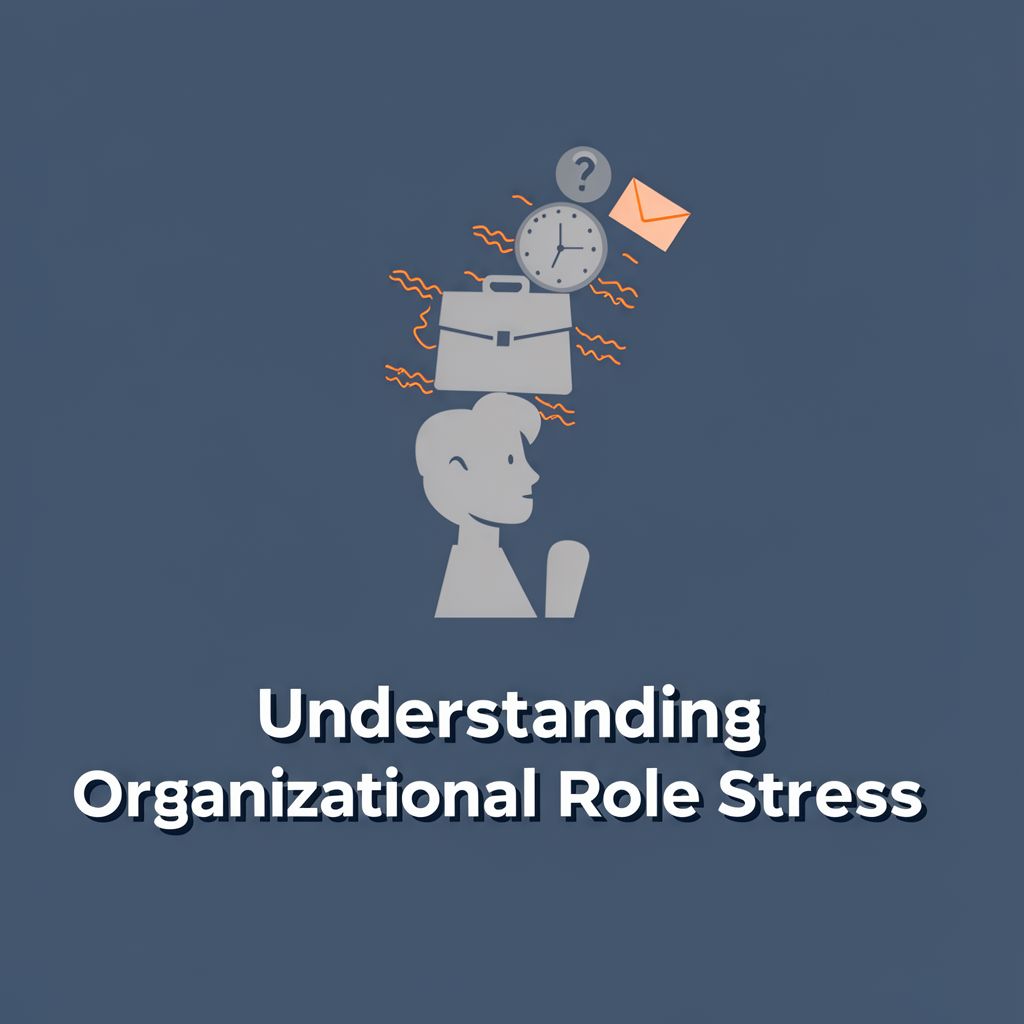
Understanding Organizational Role Stress

Learn about organizational role stress: what it is, its causes, impact, and practical strategies for individuals and organizations to manage it effectively. Master this crucial workplace concept.

December 25, 2025 ~10 dk toplam
01

Flash Kartlar

23 kart

Karta tıklayarak çevir. ← → ile gez, ⎵ ile çevir.

1 / 23
Tüm kartları metin olarak gör
  1. 1. What is the core definition of organizational role stress?

    It is the tension felt when job demands clash with personal abilities, resources, or other roles held by an individual.

  2. 2. What is role ambiguity?

    Role ambiguity occurs when an individual is unsure about their responsibilities, goals, or how their performance will be evaluated.

  3. 3. Explain role conflict.

    Role conflict arises when an individual faces contradictory demands from different people or when job demands clash with personal values.

  4. 4. What is role overload?

    Role overload is the experience of having too much to do in the available time, or feeling that demands exceed one's capabilities.

  5. 5. Define role underload.

    Role underload happens when an individual does not have enough challenging work, leading to boredom and a feeling of underutilization.

  6. 6. What is role erosion?

    Role erosion is the feeling that one's role is shrinking or becoming less important within the organization.

  7. 7. Describe inter-role distance.

    Inter-role distance occurs when an individual's work role conflicts with their personal life roles, such as being a parent or a friend.

  8. 8. Name a major cause of organizational role stress related to communication.

    Poor communication is a significant cause, as unclear expectations can lead to role ambiguity and stress.

  9. 9. How do unclear job descriptions contribute to role stress?

    Unclear job descriptions can lead to confusion about responsibilities and expectations, fostering role ambiguity and stress.

  10. 10. What impact do rapid organizational changes have on role stress?

    Rapid organizational changes without proper support can contribute to increased role stress among employees.

  11. 11. List two individual consequences of organizational role stress.

    Individual consequences include burnout, decreased job satisfaction, and a general feeling of unhappiness at work.

  12. 12. How can role stress manifest physically in individuals?

    Physically, role stress can cause headaches, fatigue, and potentially more serious health issues for individuals.

  13. 13. What mental health issues can arise from organizational role stress?

    Mentally, individuals might experience anxiety, irritability, and difficulty concentrating due to role stress.

  14. 14. Name two organizational consequences of high role stress among employees.

    Organizational consequences include reduced productivity, lower quality of work, increased absenteeism, and higher employee turnover.

  15. 15. What is a key individual strategy to manage role ambiguity?

    Improving communication by asking for clarification from managers about expectations and priorities is a key strategy.

  16. 16. How can setting boundaries help manage role stress?

    Setting clear boundaries between work and personal life is crucial to prevent work demands from encroaching on personal time and causing inter-role distance.

  17. 17. What role does self-care play in managing individual role stress?

    Self-care activities like regular exercise, mindfulness, and hobbies are essential for stress reduction and maintaining overall well-being.

  18. 18. What is an organizational responsibility to minimize role stress related to job roles?

    Organizations need to ensure clear job descriptions and provide adequate training and resources to employees.

  19. 19. How can leadership contribute to reducing organizational role stress?

    Supportive leadership, where managers actively listen to employee concerns and provide constructive feedback, is invaluable for reducing stress.

  20. 20. What kind of workplace culture helps in managing role stress?

    A culture that values work-life balance and encourages employees to speak up about stress can significantly transform the workplace.

  21. 21. Why is it important for individuals to learn to say 'no' when managing role stress?

    Learning to say 'no' helps manage role overload by preventing individuals from taking on more tasks than they can realistically handle.

  22. 22. How do time management techniques assist in mitigating role stress?

    Techniques like prioritizing tasks and delegating when possible can significantly help individuals manage role overload and reduce stress.

  23. 23. What is the overall benefit of addressing role stress for an organization?

    Addressing role stress leads to happier, healthier employees and a more productive, thriving organization, making it a win-win situation for all.

02

Detaylı Özet

5 dk okuma

Tüm konuyu derinlemesine, başlık başlık.

📚 Organizational Role Stress: A Comprehensive Study Guide

Overview

This study material provides a detailed exploration of Organizational Role Stress. It defines what role stress is, identifies its various forms, discusses its underlying causes, outlines its significant consequences for both individuals and organizations, and presents practical strategies for its management. Understanding this concept is crucial for fostering healthier work environments and improving individual well-being and organizational performance.

📌 Source Information

This study material has been compiled and organized from a lecture audio transcript and general academic knowledge on the subject of organizational role stress.


1. 📚 Defining Organizational Role Stress

Organizational Role Stress refers to the psychological tension and discomfort experienced by an individual when the demands of their job role clash with their personal abilities, available resources, or other roles they hold. It's the feeling of being overwhelmed or confused by job expectations.

1.1. Types of Organizational Role Stress

Organizational role stress manifests in several distinct forms:

  • Role Ambiguity

    • Definition: Occurs when an individual lacks clear information about their job responsibilities, performance expectations, goals, or the methods for achieving them.
    • Analogy: Like being given a role in a play without any lines or stage directions.
    • Example: Not knowing how your performance will be evaluated or what your exact duties are.
  • Role Conflict

    • Definition: Arises when an individual faces contradictory demands from different sources, or when job demands clash with their personal values or beliefs.
    • Example: A manager asking for speed, while another manager demands meticulous quality, creating conflicting priorities.
  • Role Overload

    • Definition: The most common type, characterized by having too many tasks to complete within the available time, or feeling that job demands exceed one's capabilities.
    • Example: Juggling multiple high-priority projects with tight deadlines simultaneously.
  • Role Underload

    • Definition: The opposite of overload, where an individual does not have enough challenging work, leading to boredom, feelings of underutilization, and a lack of engagement.
    • Example: Having significant downtime or repetitive, unchallenging tasks that don't utilize one's skills.
  • Role Erosion

    • Definition: Occurs when an individual perceives their role as shrinking, becoming less important, or having its responsibilities taken over by others.
    • Example: A team member's key responsibilities being reassigned to a new hire without clear communication.
  • Inter-Role Distance

    • Definition: The tension experienced when an individual's work role conflicts with their personal life roles (e.g., parent, spouse, friend).
    • Example: Work demands consistently interfering with family commitments or personal time.

2. 📈 Causes of Organizational Role Stress

The roots of organizational role stress are often embedded within the organizational environment itself.

  • Poor Communication 🗣️
    • Unclear expectations, goals, and feedback mechanisms.
    • Lack of transparency regarding organizational changes.
  • Unclear Job Descriptions 📝
    • Vague or outdated descriptions that do not accurately reflect current responsibilities.
  • Rapid Organizational Changes 🔄
    • Changes implemented without adequate support, training, or communication for employees.
  • Lack of Resources 🛠️
    • Insufficient tools, staff, budget, or time to effectively complete tasks.
  • Conflicting Management Styles 👥
    • Different managers providing contradictory instructions or priorities.
  • Organizational Culture 🏢
    • A culture that promotes excessive competition, long hours, or discourages work-life balance.

3. 📊 Consequences of Organizational Role Stress

The impact of role stress can be severe, affecting both individuals and the organization as a whole.

3.1. Individual Consequences

  • Burnout 🔥: Emotional, physical, and mental exhaustion caused by prolonged or excessive stress.
  • Decreased Job Satisfaction 😔: Reduced enjoyment and fulfillment from work.
  • Health Issues 🤒:
    • Physical: Headaches, fatigue, sleep disturbances, increased susceptibility to illness, cardiovascular problems.
    • Mental: Anxiety, depression, irritability, difficulty concentrating, reduced self-esteem.
  • Reduced Well-being 📉: A general decline in overall happiness and quality of life.

3.2. Organizational Consequences

  • Reduced Productivity 📉: Employees under stress are less efficient and effective.
  • Lower Quality of Work ⚠️: Errors increase, and attention to detail diminishes.
  • Increased Absenteeism 🚶‍♂️: More sick days and unexplained absences.
  • Higher Employee Turnover 🚪: Employees are more likely to leave the organization.
  • Decreased Morale 😞: A negative work atmosphere and reduced team cohesion.
  • Increased Accidents/Incidents 🚨: Stress can impair judgment and attention, leading to workplace safety issues.

4. 💡 Strategies for Managing Organizational Role Stress

Managing role stress requires a dual approach, involving both individual efforts and organizational support.

4.1. Individual Strategies

  1. Improve Communication 🗣️
    • Proactively seek clarification: Ask managers for clear expectations, priorities, and performance metrics.
    • Provide feedback: Communicate challenges and resource needs to supervisors.
  2. Set Boundaries 🚧
    • Work-life balance: Establish clear distinctions between work and personal time, especially in remote work settings.
    • Learn to say 'no': Decline additional tasks when your workload is already full.
  3. Time Management Techniques
    • Prioritize tasks: Use methods like the Eisenhower Matrix or ABC analysis.
    • Delegate: If possible, assign tasks to others.
    • Break down large tasks: Make overwhelming projects more manageable.
  4. Self-Care Practices 🧘‍♀️
    • Regular exercise: Physical activity helps reduce stress hormones.
    • Mindfulness and meditation: Techniques to stay present and reduce anxiety.
    • Hobbies and interests: Engage in activities outside of work to recharge.
    • Adequate sleep: Essential for mental and physical recovery.
  5. Skill Development 🧠
    • Seek training to improve skills that address areas of role ambiguity or overload.

4.2. Organizational Strategies

  1. Clear Job Descriptions & Expectations 📝
    • Regularly review and update job roles and responsibilities.
    • Ensure performance metrics are transparent and understood.
  2. Adequate Training & Resources 📚
    • Provide necessary training for new roles or technologies.
    • Ensure employees have the tools, budget, and support needed to succeed.
  3. Foster Open Communication Channels 💬
    • Encourage upward and downward communication.
    • Implement regular feedback sessions and performance reviews.
  4. Supportive Leadership 🤝
    • Managers should actively listen to employee concerns.
    • Provide constructive feedback and emotional support.
    • Lead by example in promoting work-life balance.
  5. Promote Work-Life Balance Culture ⚖️
    • Implement flexible work arrangements (e.g., remote work, flexible hours).
    • Discourage excessive overtime and encourage taking breaks.
  6. Conflict Resolution Mechanisms ☮️
    • Establish clear processes for resolving inter-departmental or interpersonal conflicts.
  7. Employee Assistance Programs (EAPs) 📞
    • Offer resources for mental health support and stress management.

5. ✅ Key Takeaways

  • Organizational Role Stress is a multifaceted issue stemming from various tensions within a job role.
  • It significantly impacts individual well-being and organizational performance.
  • Both individuals and organizations have a crucial role in mitigating and managing role stress.
  • Proactive communication, clear expectations, and supportive environments are key to a healthier workplace.

Kendi çalışma materyalini oluştur

PDF, YouTube videosu veya herhangi bir konuyu dakikalar içinde podcast, özet, flash kart ve quiz'e dönüştür. 1.000.000+ kullanıcı tercih ediyor.

Sıradaki Konular

Tümünü keşfet
Understanding and Managing Stress

Understanding and Managing Stress

Explore the nature of stress, its indicators, and effective management strategies, including action-oriented, emotion-oriented, and acceptance-oriented approaches.

9 dk Özet 15
Exploring Human Psychology: Development, Emotion, Motivation, Personality, and Health

Exploring Human Psychology: Development, Emotion, Motivation, Personality, and Health

This podcast offers an in-depth look into human development, the intricacies of emotion and motivation, various personality theories, social behavior, and the psychological aspects of health and stress management.

23 dk 25 15
Functionalism in Psychology: Origins and Impact

Functionalism in Psychology: Origins and Impact

This summary explores the historical development of functionalism in psychology, examining its roots in Darwinian evolution, Galton's individual differences, and William James's contributions, along with its criticisms and lasting impact.

6 dk 25 Görsel
Adolescents and Social Media: Engagement, Theories, and Well-being

Adolescents and Social Media: Engagement, Theories, and Well-being

Explore how adolescents and young adults engage with social media, examining key theories, the screen time debate, and the nuanced impact of online interactions on well-being.

Özet Görsel
Expressing Opinions and Beliefs Using Sync Belief

Expressing Opinions and Beliefs Using Sync Belief

This summary explores the articulation of opinions and beliefs, differentiating between them, examining communication strategies, and detailing the 'sync belief' approach for effective, aligned discourse.

6 dk Özet 25 15 Görsel
Self and Personality: Psychological Perspectives

Self and Personality: Psychological Perspectives

This audio summary explores the psychological concepts of self and personality, examining how individuals understand themselves, various theoretical approaches to personality, biological influences, and assessment methods.

8 dk Özet 25 15 Görsel
Social Psychology: Perception, Attitudes, and Influence

Social Psychology: Perception, Attitudes, and Influence

This summary explores fundamental concepts in social psychology, including social perception, attribution biases, stereotypes, attitude formation, persuasion, group dynamics, and the complexities of interpersonal relationships.

9 dk 15
Understanding Pubertal Development: Status, Timing, and Tempo

Understanding Pubertal Development: Status, Timing, and Tempo

Explore the nuances of pubertal development, differentiating between pubertal status, timing, and tempo. Learn about measurement tools, sex differences, and the social context that shapes adolescent experiences.

Özet 15