 Podit
Podit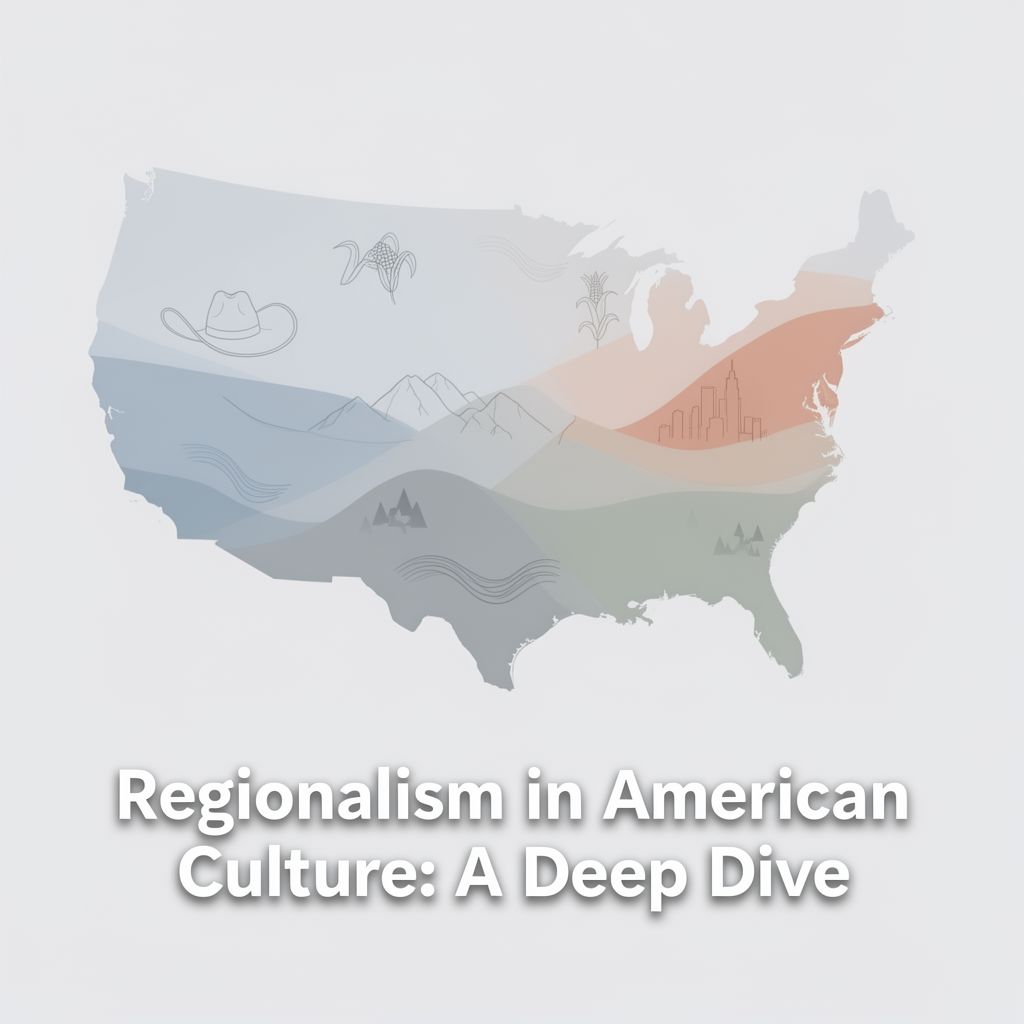
Study Material: Regionalism in American Culture
Source Information: This study material has been compiled from a lecture audio transcript on the topic of Regionalism in American Culture.
📚 Introduction to American Regionalism
Have you ever noticed how different parts of a country can feel like entirely distinct places, even within the same nation? This phenomenon is particularly evident in the United States, where cultural practices, dialects, traditions, and even political views can vary significantly from one region to another. This study guide will explore regionalism in American culture, examining its definition, the factors that shape regional identities, and providing specific examples from across the United States. Understanding regionalism helps us appreciate the rich and diverse tapestry of American society.
📚 What is Regionalism?
Regionalism is a powerful concept that describes the strong sense of identity and loyalty individuals feel towards their specific geographic region. This loyalty often manifests in distinct cultural practices, shared beliefs, and unique perspectives that differentiate one region from another. It's about the unique "flavor" or "personality" that a particular area possesses.
🌍 Factors Shaping Regional Identity
Several powerful ingredients combine to create these deep-seated regional differences:
-
Geography 🏞️
- Impact: The physical environment (e.g., coastlines, deserts, mountains) profoundly influences daily life, industries, architecture, and even the pace of life.
- Example: Living by the ocean fosters different cultural norms and economic activities (like fishing) compared to living in a landlocked agricultural plain.
-
History 📜
- Impact: The way a region was settled, major historical events (e.g., wars, migrations), and the initial groups of people who arrived leave a lasting mark on its culture.
- Example: The legacy of slavery significantly shaped the social and cultural landscape of the American South.
-
Economic Activities 💰
- Impact: The dominant industries and economic structures of a region influence its values, work ethic, and community development.
- Example: A region built on manufacturing will develop a different culture than one focused on agriculture or technology.
-
Immigration Patterns ✈️
- Impact: Different waves of immigrants bring their unique languages, foods, customs, and traditions, enriching and diversifying specific regions in distinct ways.
- Example: Strong Hispanic cultural influences are prominent in the American Southwest due to historical and ongoing immigration.
🇺🇸 Spotlight on American Regions: Examples
Let's explore how these factors play out in specific regions of the United States:
1. The South 🍑
- Characteristics: Known for sweet tea, barbecue, a slower pace of life, distinct accents, and a strong sense of hospitality.
- Shaping Factors: Deeply rooted in its agricultural history (especially cotton) and unique social structures, profoundly influenced by the legacy of slavery.
2. New England ⚓
- Characteristics: Strong emphasis on community, a more reserved demeanor, distinct accents (e.g., "Boston" accent), and a love for seafood (e.g., clam chowder).
- Shaping Factors: Stems from its Puritanical roots, early industrialization, and maritime history.
3. The Midwest (The "Heartland") 🌽
- Characteristics: Often known for practicality, friendliness, and a strong work ethic. Accents are generally considered more "neutral" American, though subtle differences exist.
- Shaping Factors: Culture is often tied to farming and manufacturing industries.
4. The West (Southwest) 🌵
- Characteristics: Influenced by vast landscapes, the legacy of the frontier, and strong Hispanic cultural influences. Features unique architecture, cuisine, and a more laid-back, independent spirit.
- Shaping Factors: Geography (deserts, mountains), historical expansion, and significant immigration patterns.
✅ Embracing America's Cultural Mosaic
Understanding regionalism is crucial for appreciating the incredible diversity within American culture. It helps us:
- Move beyond stereotypes: Recognize the rich tapestry of traditions, dialects, and ways of life.
- Acknowledge complexity: Understand that there is no single "American experience," but rather a beautiful mosaic of many.
- Foster appreciation: See how geography, history, economics, and immigration weave together to create unique identities across the nation.
💡 Insight: Regionalism reminds us that the United States is a collection of distinct cultures, each contributing to the nation's overall identity. Exploring these differences is a fantastic way to learn about the world and the diverse human experience.