 Podit
Podit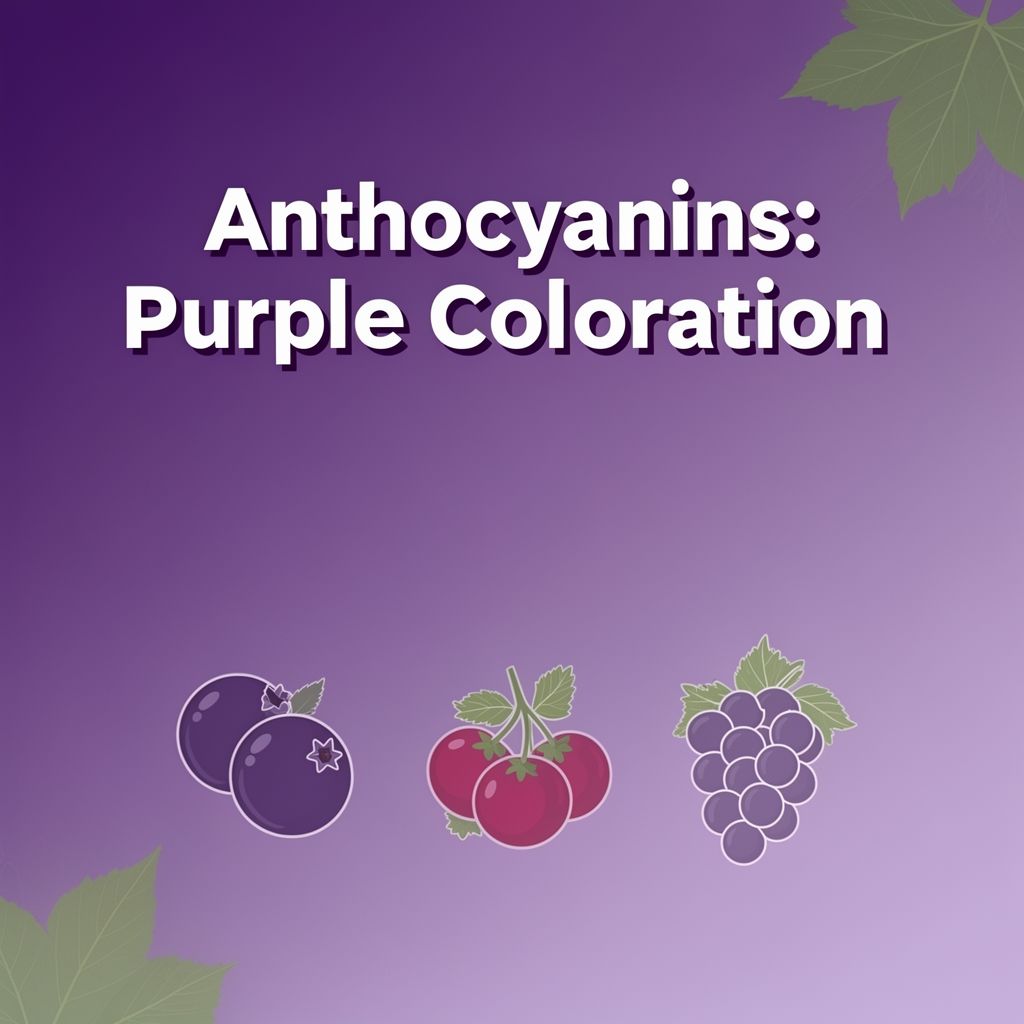
Flash Kartlar
25 kartKarta tıklayarak çevir. ← → ile gez, ⎵ ile çevir.
Tüm kartları metin olarak gör
1. What are anthocyanins?
Anthocyanins are water-soluble pigments responsible for the vibrant purple coloration seen in many fruits and flowers.
2. What is a key chemical characteristic of anthocyanins regarding their structure?
Anthocyanins always contain a hydroxyl group at the C-3 position, often found as 3-monosides or 3,5-diglucosides.
3. How does pH affect the color of anthocyanins in acidic conditions?
In acidic conditions, anthocyanins appear a stable red color.
4. What color do anthocyanins exhibit at neutral pH?
At neutral pH, anthocyanins turn purple.
5. What color can anthocyanins show in weak acid environments (pH 4-6) and why?
In weak acid environments (pH 4-6), anthocyanins can exhibit a blue hue due to a quinoic structure.
6. Name three conditions required for optimal stability and efficacy of anthocyanins.
Optimal stability requires an inert atmosphere (like nitrogen gas), low temperatures, and protection from light.
7. What are two primary bioactive properties of anthocyanins?
Anthocyanins are recognized as strong antioxidants and exhibit significant anti-edema properties.
8. What circulatory conditions can anthocyanins help address?
Anthocyanins can help address venous and lymphatic insufficiency, and combat capillary fragility.
9. What common vitamin effect is compared to anthocyanins' ability to combat capillary fragility?
The effect of anthocyanins on capillary fragility is often compared to Vitamin P.
10. What is the scientific name for Billberry?
The scientific name for Billberry is Vaccinium myrtillus, and its fruit is Myrtilli fructus.
11. Which plant family does Billberry belong to?
Billberry belongs to the Ericaceae family.
12. What is a primary health benefit of Billberry, especially for the eyes?
Billberry is renowned for its benefits to eye health, including enhancing night vision and reducing capillary permeability.
13. For what specific eye conditions are Billberry extracts utilized?
Billberry extracts are utilized for improving night blindness and for hemorrhoids.
14. What is the scientific name for Cranberry?
The scientific name for Cranberry is Vaccinium macrocarpon, and its fruit is Vaccini macrocarpi fructus.
15. What is the main health benefit of Cranberry?
Cranberry is celebrated for its strong anti-bacterial effects, primarily in preventing and managing urinary tract infections (UTIs).
16. How does Cranberry help prevent UTIs?
Cranberry helps prevent UTIs by preventing bacterial adhesion to the urinary tract walls.
17. What important caution should be observed when consuming Cranberry, especially for individuals on medication?
Individuals taking Warfarin should consult their healthcare provider, as cranberry consumption might influence its effects.
18. Which parts of the Blackcurrant plant are used for their medicinal properties?
Both the leaves (folium) and fruits (fructus) of Blackcurrant (Ribis nigri) are used.
19. What is the primary property of Blackcurrant?
Blackcurrant possesses diuretic properties, promoting increased urine production.
20. What caution should be exercised when using Blackcurrant, especially with other medications?
If you are already taking diuretic drugs, consult a healthcare professional before incorporating blackcurrant to avoid excessive fluid loss.
21. What is the scientific name for Grape?
The scientific name for Grape is Vitis vinifera.
22. Which compounds are abundantly found in Grape, especially in its seeds?
Proanthocyanidins are abundantly found in Grape, particularly in its seeds.
23. What are two key health benefits of Proanthocyanidins from Grape?
Proanthocyanidins are highly effective in addressing capillary fragility and venous insufficiency.
24. Besides structural support, what other significant activities do grape extracts, especially from seeds, possess?
Grape extracts are recognized for their potent antioxidant activity and vasoprotective potential, strengthening blood vessel walls.
25. What is the overall theme of the podcast regarding plant-derived compounds?
The podcast highlights the significant health benefits of natural compounds like anthocyanins from plants, contributing to overall well-being.
Bilgini Test Et
15 soruÇoktan seçmeli sorularla öğrendiklerini ölç. Cevap + açıklama.
What is the primary chemical characteristic of anthocyanins mentioned in the text?