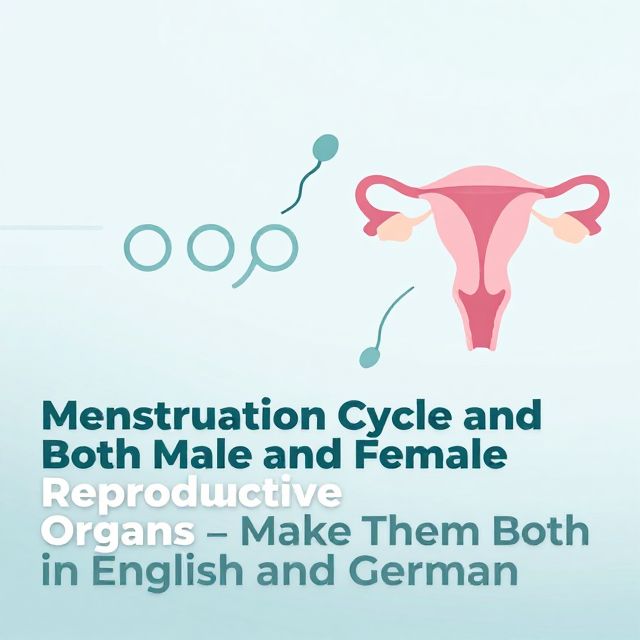
Understanding Reproductive Systems and Menstruation - kapak
Sağlık#reproductive health#menstruation#female anatomy#male anatomy

Understanding Reproductive Systems and Menstruation

Explore the intricate details of the male and female reproductive organs and demystify the menstruation cycle. Learn about their functions, key hormones, and importance for human life.

s2ciFebruary 26, 2026 ~15 dk toplam
01

Flash Kartlar

25 kart

Karta tıklayarak çevir. ← → ile gez, ⎵ ile çevir.

1 / 25
Tüm kartları metin olarak gör
  1. 1. What are the primary organs of the female reproductive system?

    The primary organs of the female reproductive system are the ovaries, fallopian tubes, uterus, and vagina. These organs work together to produce eggs, facilitate fertilization, and support the development of a fetus. Each plays a crucial role in the complex process of human reproduction.

  2. 2. What are the two main functions of the ovaries?

    The ovaries have two crucial functions. Firstly, they are responsible for producing and storing eggs, also known as ova, which are essential for reproduction. Secondly, they produce vital hormones such as estrogen and progesterone, which regulate the menstrual cycle and are critical for supporting a potential pregnancy.

  3. 3. Where does fertilization typically occur in the female reproductive system?

    Fertilization, if it occurs, usually happens within the fallopian tubes. These tubes serve as a pathway for the egg, guiding it from the ovary towards the uterus. Sperm travel up through the uterus into the fallopian tubes to meet the egg, making this the common site for conception.

  4. 4. Describe the role of the uterus in the female reproductive system.

    The uterus, often referred to as the womb, is a pear-shaped, muscular organ. Its primary role is to provide a site for a fertilized egg to implant and develop during pregnancy. The inner lining of the uterus, called the endometrium, thickens each month in preparation for a potential pregnancy, providing a nutrient-rich environment.

  5. 5. What is the function of the vagina?

    The vagina is a muscular canal connecting the uterus to the outside of the body. It serves multiple functions: it acts as the birth canal during childbirth, allows for the exit of menstrual flow, and receives sperm during sexual intercourse. Its elasticity and muscular structure are vital for these roles.

  6. 6. What is the menstrual cycle and its typical duration?

    The menstrual cycle is a monthly series of changes a woman's body undergoes in preparation for the possibility of pregnancy. It is regulated by a delicate balance of hormones. While it can vary, the cycle typically lasts about 28 days, encompassing several distinct phases.

  7. 7. Name the four main phases of the menstrual cycle.

    The four main phases of the menstrual cycle are the menstrual phase, the follicular phase, ovulation, and the luteal phase. These phases occur in a specific sequence, each driven by hormonal changes, to prepare the body for potential pregnancy or to shed the uterine lining if pregnancy does not occur.

  8. 8. What happens during the menstrual phase of the cycle?

    The menstrual phase typically lasts from day one to day five of the cycle. During this time, if pregnancy has not occurred, the thickened lining of the uterus, known as the endometrium, sheds. This shedding exits the body through the vagina, commonly referred to as a period.

  9. 9. Describe the follicular phase and the hormone involved.

    The follicular phase overlaps with the menstrual phase and continues until ovulation, usually from day one to day thirteen. During this phase, the pituitary gland releases Follicle-Stimulating Hormone (FSH), which stimulates several follicles in the ovaries to grow. These growing follicles produce estrogen, which in turn causes the uterine lining to thicken again.

  10. 10. What is the role of estrogen during the follicular phase?

    During the follicular phase, as follicles grow in the ovaries, they produce estrogen. Estrogen plays a crucial role by causing the uterine lining, the endometrium, to thicken once more. This thickening prepares the uterus for a potential pregnancy, creating a suitable environment for a fertilized egg to implant.

  11. 11. When does ovulation typically occur, and what triggers it?

    Ovulation typically occurs around day fourteen of the menstrual cycle. It is triggered by a surge in Luteinizing Hormone (LH), which is also released from the pituitary gland. This LH surge causes the most mature egg to be released from the ovary, marking the most fertile window for pregnancy.

  12. 12. What happens to the egg after it is released during ovulation?

    After an egg is released from the ovary during ovulation, it travels into the fallopian tube. This is the pathway where fertilization by sperm is most likely to occur. The egg then continues its journey towards the uterus, where it would implant if fertilized.

  13. 13. Describe the luteal phase and the role of the corpus luteum.

    The luteal phase lasts from day fifteen to day twenty-eight of the cycle. After the egg is released, the empty follicle transforms into a structure called the corpus luteum. This corpus luteum produces progesterone, a hormone that further thickens and maintains the uterine lining, making it ready for a fertilized egg to implant.

  14. 14. What happens if the egg is not fertilized during the luteal phase?

    If the egg is not fertilized or does not implant during the luteal phase, the corpus luteum degenerates. This degeneration leads to a drop in progesterone levels. Consequently, the uterine lining can no longer be maintained and sheds, initiating the menstrual phase and starting the cycle all over again.

  15. 15. What are the primary organs of the male reproductive system?

    The main organs of the male reproductive system include the testes, epididymis, vas deferens, seminal vesicles, prostate gland, and the penis. These organs work in concert to produce and deliver sperm, as well as to synthesize male hormones. Each component plays a specific role in the reproductive process.

  16. 16. What are the two crucial functions of the testes?

    The testes, located in the scrotum outside the body, have two crucial functions. Firstly, they are responsible for producing sperm, which are the male reproductive cells. Secondly, they synthesize testosterone, the primary male sex hormone, which is vital for sperm production and the development of male secondary sexual characteristics.

  17. 17. What is the role of testosterone in the male body?

    Testosterone is the primary male sex hormone synthesized by the testes. It is vital for several key processes in the male body. These include stimulating sperm production and facilitating the development of male secondary sexual characteristics, such as a deeper voice and the growth of body hair.

  18. 18. Where do sperm mature and get stored after production in the testes?

    After sperm are produced in the testes, they move into the epididymis. The epididymis is a coiled tube located on the back of each testicle. Here, sperm undergo a maturation process and are stored until they are ready for ejaculation.

  19. 19. What is the function of the vas deferens?

    The vas deferens is a muscular tube that transports mature sperm. Each vas deferens carries sperm from the epididymis up into the pelvic cavity. It serves as a crucial pathway for sperm to travel before combining with fluids from other glands to form semen.

  20. 20. What do the seminal vesicles contribute to semen?

    The seminal vesicles, two glands located behind the bladder, produce a fluid that is a significant component of semen. This fluid is rich in fructose, which provides essential energy for the sperm's journey. It also contains other substances that help with sperm motility, aiding their movement.

  21. 21. Describe the contribution of the prostate gland to semen.

    The prostate gland, situated just below the bladder, adds a milky, slightly acidic fluid to the semen. This fluid plays a vital role in activating the sperm, enhancing their ability to move and fertilize an egg. It also helps protect the sperm from the acidic environment of the vagina, increasing their chances of survival.

  22. 22. What is semen composed of?

    Semen is composed of sperm combined with fluids contributed by several glands in the male reproductive system. Specifically, it includes sperm produced by the testes, fluid rich in fructose and motility substances from the seminal vesicles, and a milky, slightly acidic fluid from the prostate gland. These components work together to ensure sperm viability and transport.

  23. 23. What is the dual function of the urethra in males?

    In males, the urethra is a tube that runs through the penis and serves a dual function. It acts as the exit pathway for both urine from the bladder and semen during ejaculation. However, it is important to note that urine and semen never exit the body at the same time, as different mechanisms control their release.

  24. 24. What is the primary function of the penis?

    The primary function of the penis is to facilitate the transfer of semen, containing sperm, into the female reproductive tract during sexual intercourse. This delivery mechanism is essential for the potential fertilization of an egg and the initiation of pregnancy. It is the external organ responsible for this transfer.

  25. 25. Which hormones are produced by the ovaries?

    The ovaries produce crucial hormones that regulate the menstrual cycle and support pregnancy. These primary hormones are estrogen and progesterone. They play interconnected roles in preparing the uterus for implantation, maintaining a pregnancy if it occurs, and influencing female secondary sexual characteristics.

02

Bilgini Test Et

15 soru

Çoktan seçmeli sorularla öğrendiklerini ölç. Cevap + açıklama.

Soru 1 / 15Skor: 0

Which of the following is NOT listed as a primary organ of the female reproductive system in the provided text?

03

Detaylı Özet

5 dk okuma

Tüm konuyu derinlemesine, başlık başlık.

Understanding Human Reproduction: The Menstrual Cycle and Reproductive Organs

This study material is compiled from a lecture transcript on reproductive health. It provides a comprehensive overview of the female and male reproductive systems and the intricate process of the menstrual cycle.


1. Introduction to Human Reproduction 🧬

Human reproduction is a fundamental biological process that ensures the continuation of our species. It involves complex systems in both male and female bodies, each designed with specific organs and hormonal mechanisms to facilitate the creation of new life. This guide will explore these fascinating systems, detailing the structure and function of key reproductive organs and demystifying the female menstrual cycle.


2. The Female Reproductive System ♀️

The female reproductive system is a remarkable and complex set of organs primarily responsible for producing eggs, nurturing a developing fetus, and enabling childbirth.

2.1. Key Female Reproductive Organs 📚

  • Ovaries
    • Description: Two almond-shaped glands located on either side of the uterus.
    • Functions:
      1. Egg Production: Produce and store ova (eggs), the female reproductive cells.
      2. Hormone Production: Synthesize crucial hormones like estrogen and progesterone, which regulate the menstrual cycle and support pregnancy.
  • Fallopian Tubes (Oviducts)
    • Description: Two narrow tubes extending from the ovaries to the uterus.
    • Functions:
      1. Egg Transport: Act as a pathway, guiding the released egg from the ovary towards the uterus.
      2. Fertilization Site: The usual site where fertilization (the fusion of sperm and egg) occurs.
  • Uterus (Womb)
    • Description: A pear-shaped, muscular organ located in the pelvis.
    • Functions:
      1. Implantation & Development: Where a fertilized egg implants and develops into a fetus during pregnancy.
      2. Endometrial Lining: Its inner lining, the endometrium, thickens each month in preparation for a potential pregnancy.
  • Vagina
    • Description: A muscular, elastic canal connecting the uterus to the outside of the body.
    • Functions:
      1. Birth Canal: Serves as the pathway for childbirth.
      2. Menstrual Flow: Allows for the exit of menstrual blood.
      3. Receives Sperm: Receives sperm during sexual intercourse.

2.2. The Menstrual Cycle 🗓️

The menstrual cycle is a monthly series of hormonal and physiological changes a woman's body undergoes to prepare for the possibility of pregnancy. It typically lasts about 28 days but can vary.

2.2.1. Phases of the Menstrual Cycle 📊

The cycle is regulated by a delicate balance of hormones and consists of four main phases:

  1. Menstrual Phase (Days 1-5) 🩸

    • What happens: If pregnancy has not occurred, the thickened uterine lining (endometrium) sheds and exits the body through the vagina. This is commonly known as a "period."
    • Hormonal activity: Estrogen and progesterone levels are low.
  2. Follicular Phase (Days 1-13) 🥚

    • What happens: This phase overlaps with the menstrual phase and continues until ovulation.
    • Hormonal activity:
      • The pituitary gland releases Follicle-Stimulating Hormone (FSH), which stimulates several follicles (each containing an immature egg) in the ovaries to grow.
      • As follicles grow, they produce estrogen, causing the uterine lining to thicken again, preparing for a potential pregnancy.
  3. Ovulation (Around Day 14) 🎯

    • What happens: A surge in Luteinizing Hormone (LH), also from the pituitary gland, triggers the release of the most mature egg from the ovary.
    • Key point: This is the window when pregnancy is most likely to occur. The egg then travels into the fallopian tube.
  4. Luteal Phase (Days 15-28) 🤰

    • What happens: After the egg is released, the empty follicle transforms into a structure called the corpus luteum.
    • Hormonal activity: The corpus luteum produces progesterone, which further thickens and maintains the uterine lining, making it ready for a fertilized egg to implant.
    • Outcome:
      • If the egg is fertilized and implants, the corpus luteum continues to produce progesterone to support the early pregnancy.
      • If the egg is not fertilized or does not implant, the corpus luteum degenerates, progesterone levels drop, and the uterine lining sheds, restarting the menstrual phase.

💡 Understanding the menstrual cycle is crucial for female reproductive health, fertility planning, and recognizing hormonal imbalances.


3. The Male Reproductive System ♂️

The male reproductive system is primarily responsible for producing and delivering sperm to fertilize an egg, thereby initiating pregnancy.

3.1. Key Male Reproductive Organs 📚

  • Testes (Testicles)
    • Description: Two oval-shaped organs located in the scrotum (a sac of skin outside the body).
    • Functions:
      1. Sperm Production: Produce sperm, the male reproductive cells.
      2. Hormone Production: Synthesize testosterone, the primary male sex hormone, vital for sperm production and the development of male secondary sexual characteristics (e.g., deeper voice, body hair).
  • Epididymis
    • Description: A coiled tube located on the back of each testicle.
    • Functions: Where sperm mature and are stored until ejaculation.
  • Vas Deferens
    • Description: A muscular tube that carries mature sperm from the epididymis up into the pelvic cavity.
    • Functions: Transports sperm towards the urethra during ejaculation.
  • Seminal Vesicles
    • Description: Two glands located behind the bladder.
    • Functions: Produce a fluid rich in fructose (which provides energy for sperm) and other substances that aid in sperm motility. This fluid contributes to semen.
  • Prostate Gland
    • Description: A gland located just below the bladder, surrounding the urethra.
    • Functions: Adds a milky, slightly acidic fluid to the semen. This fluid helps activate sperm and protects them in the acidic environment of the vagina.
  • Urethra
    • Description: A tube that runs through the penis.
    • Functions: Serves as the exit pathway for both urine and semen (the fluid containing sperm and glandular secretions), though never at the same time.
  • Penis
    • Description: The external male organ.
    • Functions: Facilitates the delivery of semen into the female reproductive tract during sexual intercourse for fertilization.

💡 The male reproductive system acts as a sophisticated factory and delivery system, continuously producing and preparing sperm for the potential of creating new life.


4. The Interconnectedness of Life 🤝

Both the male and female reproductive systems, while distinct in their structures and primary functions, are equally vital and incredibly complex. They showcase the marvels of human biology and the intricate hormonal dances that allow for the continuation of life. Understanding these systems is not just about biology; it's about understanding ourselves, our health, and the fundamental processes that underpin human existence.
Kendi çalışma materyalini oluştur

PDF, YouTube videosu veya herhangi bir konuyu dakikalar içinde podcast, özet, flash kart ve quiz'e dönüştür. 1.000.000+ kullanıcı tercih ediyor.

Sıradaki Konular

Tümünü keşfet
Understanding Female Genital Anatomy

Understanding Female Genital Anatomy

Explore the intricate details of female genital anatomy, covering both external and internal structures and their vital functions. Learn about your body in a clear, organized, and comprehensive way.

5 dk Özet 25 15
Understanding Male Genital Anatomy: A Detailed Guide

Understanding Male Genital Anatomy: A Detailed Guide

Explore the intricate structures of the male reproductive system, covering both external and internal components, their functions, and their importance for reproductive health.

Özet 25 15
Understanding Genital Tract and Sexually Transmitted Infections

Understanding Genital Tract and Sexually Transmitted Infections

A comprehensive guide to genital tract infections (GTIs) and sexually transmitted infections (STIs), covering normal/abnormal discharge, specific infections, transmission, prevention, and nursing care.

22 dk Özet 25 15
Family Planning and Counseling Services

Family Planning and Counseling Services

This podcast provides an in-depth look into family planning and counseling services, covering risky pregnancies, their consequences, service aims, and policy evolution in Turkey.

Özet 23
Essential Vitamins: A Deep Dive into Vitamin A and D

Essential Vitamins: A Deep Dive into Vitamin A and D

Explore the forms, sources, metabolism, functions, and health implications of Vitamin A and Vitamin D, crucial for vision, bone health, and immune function.

Özet 15
Vitamin D Deficiency and Calcium Disorders

Vitamin D Deficiency and Calcium Disorders

An in-depth look into Vitamin D metabolism, deficiency, and various calcium disorders including hypoparathyroidism and associated genetic syndromes.

Özet 25 15
The Digestive System: An Academic Overview

The Digestive System: An Academic Overview

An academic summary of the human digestive system, detailing its organs, processes, and functions, from mechanical breakdown to nutrient absorption and waste elimination.

4 dk Özet 25 15
Data Analysis for Mobile Medical Services

Data Analysis for Mobile Medical Services

This audio summary explores data analysis in mobile medical services, covering supply chain optimization, inventory management, scenario planning, and future strategies using analytical tools and technologies.

6 dk Özet 25 15