 Podit
Podit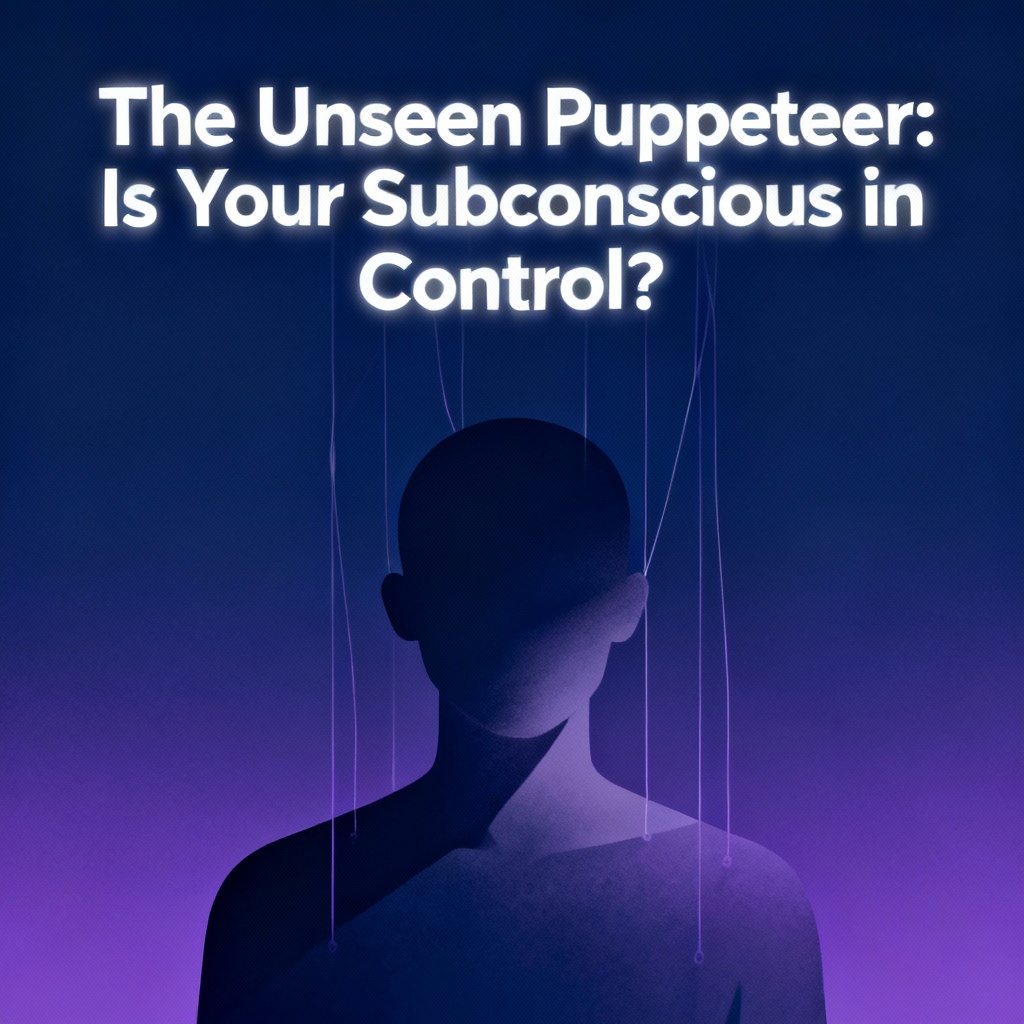
Sesli Özet
3 dakikaKonuyu otobüste, koşarken, yolda dinleyerek öğren.
Sesli Özet
The Unseen Puppeteer: Is Your Subconscious in Control?
Flash Kartlar
22 kartKarta tıklayarak çevir. ← → ile gez, ⎵ ile çevir.
Tüm kartları metin olarak gör
1. What analogy is commonly used to describe the conscious and subconscious mind?
The iceberg analogy, where conscious awareness is the small tip and the subconscious is the vast, unseen mass below.
2. What is an example of the subconscious mind working while driving?
Driving home from work and not remembering the last few minutes of the journey, as if on autopilot.
3. Which part of the mind regulates involuntary bodily functions like heartbeat and breathing?
The subconscious mind acts as the silent engine that keeps your body running.
4. How does the subconscious mind handle habits like tying your shoes?
It automates the process through repetition, so you don't have to consciously think through each step.
5. What is the main benefit of the subconscious automating our skills and habits?
It frees up the conscious mind to focus on new challenges and learning.
6. What governs our gut feelings and immediate emotional reactions?
The subconscious mind, which processes information much faster than the conscious mind.
7. How does the subconscious create an instant feeling of unease about someone?
By rapidly processing countless non-verbal cues like body language and tone of voice.
8. The subconscious is described as a vast library of what three things?
It is a library of all your past experiences, beliefs, and learned behaviors.
9. In the relationship between conscious and subconscious, are we just passengers?
No, it's more like a captain (conscious mind) and a highly automated ship (subconscious mind).
10. In the captain and ship analogy, what is the role of the conscious mind?
The conscious mind is the captain who sets the destination and gives the instructions.
11. In the captain and ship analogy, what does the subconscious mind represent?
The subconscious is the ship's powerful engine and navigation system that executes tasks.
12. How can one actively program or reprogram their subconscious mind?
Through conscious effort, repetition, and focused attention on a new goal or habit.
13. Name two techniques mentioned for giving new instructions to the subconscious.
Techniques like mindfulness, visualization, and simple goal-setting can be used.
14. Does the subconscious mind have its own malicious agenda?
No, it simply runs the programs it has been given by your conscious mind and experiences.
15. The subconscious controls the 'how' of our actions. What does the conscious mind control?
The conscious mind retains the ultimate power to decide the 'what' and the 'why'.
16. What is the key to effectively using your subconscious power?
The key is to become a more aware captain, learning to direct its power toward your goals.
17. In the iceberg analogy, what does the small, visible tip above the water represent?
The tip of the iceberg represents our conscious awareness.
18. What term is used to describe the subconscious mind's ability to handle many tasks at once?
It is referred to as the 'ultimate multitasker'.
19. From where does the subconscious shape our perceptions and decisions?
It shapes them from 'behind the scenes' based on its programming of past experiences and beliefs.
20. What is the role of the conscious mind when you decide to quit a bad habit?
The conscious mind acts as the captain, setting the destination or goal to change the programming.
21. What is the central question posed by the power of the subconscious?
Are we truly the authors of our own lives, or are we merely puppets directed by this unseen force?
22. What allows you to ride a bike without painstakingly thinking through each step?
Your subconscious has automated the process through repetition, making it a habit.
Bilgini Test Et
10 soruÇoktan seçmeli sorularla öğrendiklerini ölç. Cevap + açıklama.
What is the primary analogy used in the text to illustrate the proportion of the conscious versus the subconscious mind?