Podit
Podit
This content is based on a YouTube video.
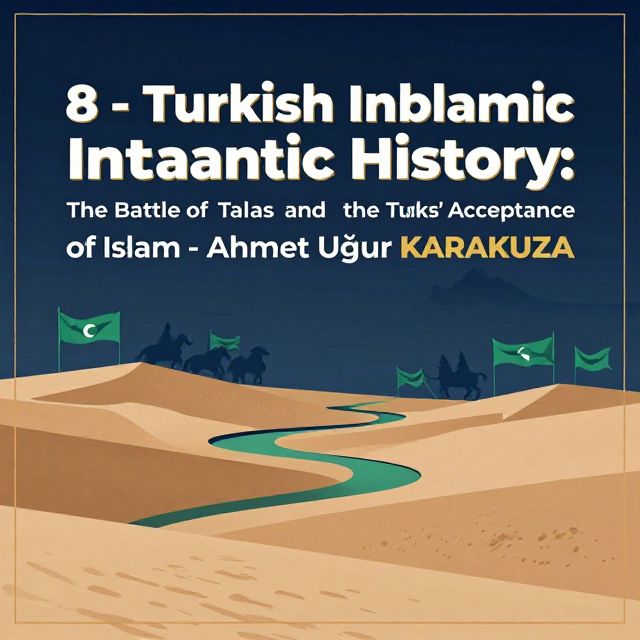
📚 The Talas War (751 CE) and the Islamization of Turkic Peoples
This study material explores the pivotal Talas War of 751 CE and its profound impact on the widespread adoption of Islam among various Turkic communities. It examines the historical context, key players, immediate and long-term consequences, and the gradual process through which Islam became deeply integrated into Turkic societies, fundamentally altering their cultural, social, and political structures.
1. The Talas War (751 CE): Context, Combatants, and Outcome
The Talas War was a critical military engagement that reshaped the geopolitical landscape of Central Asia.
1.1. 🌍 Context and Causes
- Date and Location: Fought in July 751 CE near the Talas River, in present-day Kyrgyzstan.
- Imperial Ambitions: The primary cause was the competing imperial ambitions of two major powers:
- Abbasid Caliphate: Seeking to consolidate its eastern frontiers and extend authority into Transoxiana after overthrowing the Umayyads.
- Tang Dynasty of China: Expanding its influence westward, establishing protectorates and asserting suzerainty over local rulers.
- Strategic Importance: Both empires aimed to control the strategic Fergana Valley and the lucrative Silk Road trade routes in Central Asia.
1.2. ⚔️ Combatants and Key Players
- Abbasid Caliphate: Led by General Ziyad ibn Salih.
- Tang Dynasty of China: Led by General Gao Xianzhi.
- Karluk Turks: A crucial element, initially nominal allies of the Tang.
1.3. 💡 The Decisive Role of the Karluk Turks
- During the battle, the Karluk Turks defected from the Tang side to the Abbasids.
- They attacked the Tang forces from the rear, proving to be a decisive strategic betrayal.
1.4. ✅ Outcome and Immediate Consequences
- Tang Defeat: A crushing defeat for the Tang army.
- End of Chinese Expansion: Forced the Tang to retreat from Central Asia, effectively ending Chinese westward expansion for several centuries.
- Abbasid Control: Solidified Abbasid control over Transoxiana.
- Shift in Power: Marked a significant shift in the balance of power in the region.
2. 📈 Impact on Turkic Peoples and Early Conversions
The aftermath of the Talas War created conditions highly conducive to the Islamization of Turkic peoples.
2.1. vacuum in Central Asia
- The Tang defeat removed a major non-Islamic imperial power.
- This created a power vacuum that the Abbasids, and later various Turkic-Islamic states, would fill.
2.2. 🤝 Closer Ties and Accelerated Conversions
- The Karluks' pivotal role in the Abbasid victory fostered closer ties between Turkic tribes and the Islamic world.
- While individual conversions occurred before Talas (through trade or military interactions), the war significantly accelerated this process.
2.3. 📜 Abbasid Policies and Inclusivity
- Unlike their Umayyad predecessors, the Abbasid Caliphate adopted a more inclusive policy towards non-Arab converts, known as Mawali.
- This policy integrated converts into broader Islamic society and administration, making Islam more appealing to Turkic elites and commoners.
2.4. ⚔️ Cultural Synthesis and Shared Ethos
- A shared martial ethos between early Islamic society and Turkic nomadic warrior traditions facilitated cultural synthesis.
- The Islamic concept of Jihad (holy struggle) resonated with the Turkic concept of Ghaza (raiding for faith).
2.5. 💰 Economic Incentives
- Access to vast Islamic trade networks.
- The stability offered by a powerful empire.
- These factors attracted Turkic tribes to Islam.
3. ⏳ The Process and Significance of Turkic Islamization
The Islamization of Turkic peoples was a gradual, multifaceted process with far-reaching consequences.
3.1. 🔄 Gradual Transformation
- Not a singular event, but a process spanning several centuries after the Talas War.
- Progressed from individual conversions to tribal adoptions, eventually leading to the establishment of powerful Turkic-Islamic states.
3.2. 👑 Key Turkic Groups and States
- Early Adopters: Karluks, Oghuz.
- Official Adoption: The Karakhanid Khanate was one of the first major Turkic states to officially adopt Islam in the late 10th century.
3.3. 🕌 Role of Sufi Mystics
- Key Facilitators: Sufi mystics and dervishes played a crucial role.
- Methodology: They traveled with merchants and warriors, adapting Islamic teachings to local Turkic customs and beliefs.
- Effectiveness: Their emphasis on personal piety, spiritual experience, and community building made Islam more accessible and culturally resonant.
4. 🌍 Long-Term Consequences and Legacy
The conversion of Turkic peoples had immense consequences for both Turkic history and the broader Islamic world.
4.1. 💪 Turkic Contribution to Islam
- Turkic converts became fervent defenders and expanders of Islam.
- They contributed significantly to its military, political, and cultural development.
4.2. 🏰 Formation of Powerful Turkic-Islamic States
- Established influential dynasties such as:
- Ghaznavids
- Seljuks
- Ottomans
- These empires profoundly shaped the course of Islamic civilization, spreading its influence across Anatolia, India, and Eastern Europe.
4.3. 🎨 Cultural Synthesis and Enduring Legacy
- This period marked the beginning of a rich synthesis between Turkic culture and Islamic civilization.
- Led to unique artistic, architectural, and literary traditions that continue to define the region.
5. 🎯 Conclusion: A Turning Point in History
The Talas War of 751 CE was a pivotal catalyst, rather than the sole cause, for the widespread Islamization of Turkic peoples in Central Asia. By removing Tang Chinese influence and fostering closer ties with the Abbasid Caliphate, the war created an environment conducive to the adoption of Islam. The subsequent centuries witnessed a gradual but profound transformation, driven by Abbasid policies, shared cultural values, economic opportunities, and the influential work of Sufi orders. The acceptance of Islam by Turkic tribes fundamentally reshaped their identity, leading to the formation of powerful Turkic-Islamic states that became central to the expansion and flourishing of Islamic civilization. This historical development underscores the complex interplay of military conflict, political strategy, cultural exchange, and religious appeal in shaping the destinies of entire civilizations.