Podit
Podit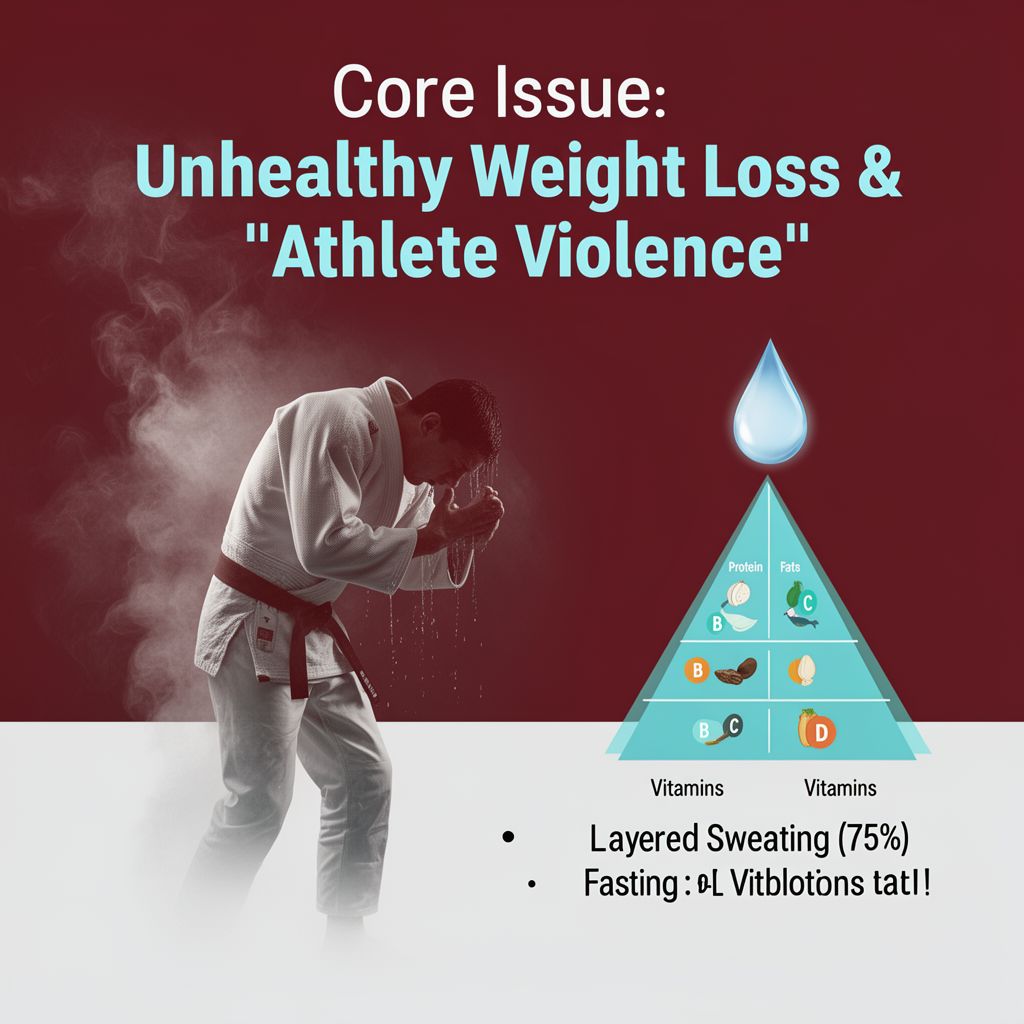
📚 Comprehensive Study Guide: Unhealthy Weight Loss & Sports Nutrition Fundamentals
This study material has been compiled and organized from a lecture audio transcript and various copy-pasted text sources.
1. ⚠️ The Peril of Unhealthy Weight Loss in Sports
Unhealthy weight loss practices among athletes, often termed "athlete violence" or abuse, represent a critical issue within the athletic community. These methods are employed by athletes to meet specific weight categories, particularly in sports like wrestling, judo, and taekwondo.
1.1. 🚨 Defining Unhealthy Practices
These practices involve extreme measures that can severely compromise an athlete's health and performance. ✅ Methods include:
- Starvation and meal skipping
- Dehydration (e.g., restricting fluid intake)
- Excessive heat exposure (e.g., prolonged sauna use, wearing multiple layers)
- Use of certain medications (e.g., diuretics)
1.2. 📊 Prevalence Among Athletes
Studies indicate a high prevalence of these methods:
- Sweating by wearing multiple layers: 75% of athletes
- Meal skipping and starvation: 64.3% - 65.7%
- Sauna use: 42.9% - 58% 💡 Key Insight: A significant 94.3% of athletes report choosing these methods based on their own decisions, suggesting a strong individual drive rather than primary influence from coaches or peers.
1.3. 💔 Grave Dangers
The severity of these practices is underscored by past incidents, including tragic deaths in environments like saunas, directly linked to extreme weight-cutting methods.
2. 📉 Detrimental Effects of Rapid Weight Loss
Scientific studies consistently demonstrate that sudden fluid loss and rapid weight reduction lead to a cascade of negative consequences for athletes, impacting physical, physiological, and psychological well-being.
2.1. 💪 Performance Impairment
- Strength Loss: Measurements on young judokas showed significant decreases in back, leg, grip strength, and vertical jump performance after rapid weight loss.
- Overall Success Hindrance: Rapid weight loss does not enhance performance; instead, it impedes success due to:
- Weakness (reported by 66.3% of athletes)
- Cramps (affecting 20%)
- Extreme fatigue
2.2. 🩺 Physiological Damage
- Impaired kidney function
- Muscle atrophy and contraction
- Reduction in plasma volume
- Increased heart rate
2.3. 🧠 Psychological Impacts
- Tendencies towards depression
- Increased aggression and anger
- Loss of self-confidence
- Decreased concentration
2.4. 🛡️ Immune System Suppression
- Observations, particularly in taekwondo athletes, show that rapid weight loss suppresses the immune system.
- This leads to an increased incidence of upper respiratory tract infections, making athletes more susceptible to illness.
3. 💧 The Critical Role of Hydration
Given the severe consequences of dehydration, understanding and maintaining proper hydration is paramount for athletes.
3.1. ✅ Water's Vital Functions
Water performs critical functions essential for athletic performance and general health:
- Regulates body temperature
- Transports nutrients to tissues
- Cleanses metabolic waste products
- Lubricates joints
3.2. strategi Hydration Strategy for Athletes
- Pre-Exercise: Consume approximately 400-600 mL of fluid about two hours before exercise.
- During & Post-Exercise: Replenish lost fluids continuously without waiting for the sensation of thirst. ⚠️ Urgent Need: There is an urgent need for comprehensive education for both coaches and athletes on these critical issues.
4. 🍎 Fundamentals of Sports Nutrition
Nutrition is the process of taking in and utilizing food for vital functions, growth, and health. Sports nutrition is a specialized plan focused on fueling physical activity, accelerating recovery, and enhancing performance.
4.1. ⚖️ Nutrient Classification
Nutrients are categorized based on quantity needed and function:
- Macronutrients: Needed in large amounts, provide energy.
- Carbohydrates, Proteins, Fats
- Micronutrients: Needed in small amounts, critical for metabolic processes.
- Vitamins, Minerals
4.2. 📚 Key Nutritional Terms
- Essential Nutrients: Substances the body cannot produce and must be obtained through diet.
- Dietary Reference Intakes (DRI): Average daily intake levels established to meet the nutritional needs of healthy individuals (e.g., Recommended Dietary Allowances - RDA, Estimated Average Requirements - EAR).
5. 💪 Macronutrients: The Energy Providers
Macronutrients are the body's primary sources of energy and structural components.
5.1. 🍚 Carbohydrates
- Primary Energy Source: The body's main fuel.
- Digestion & Storage: Digestion begins in the mouth, absorbed in the small intestine, stored as glycogen in muscles and liver.
- Energy Yield: 1 gram provides approximately 4 kilocalories (kcal).
5.2. 🥩 Proteins
- Building Blocks: Essential for tissue construction, repair, and immune system function.
- Muscle Composition: Muscles (myosin and actin) are largely composed of proteins.
- Energy Yield: 1 gram provides approximately 4 kcal.
- Athlete Recommendation: Typically 1-1.5 grams per kilogram of body weight daily.
5.3. 🥑 Fats
- Most Concentrated Energy: 1 gram provides 9 kcal.
- Other Roles: Maintain body temperature, support internal organs, long-term energy reserve.
5.4. 🔄 Digestion and Metabolism
- "Input-Output" System: Nutrients enter via digestion; metabolism produces mechanical energy, heat, CO2, water, and waste.
- Breakdown:
- Carbohydrates → Monosaccharides
- Proteins → Amino Acids
- Fats → Glycerol and Fatty Acids
- These simpler forms are then absorbed.
6. 💊 Micronutrients: Vitamins
Vitamins are crucial for various metabolic processes, categorized by their solubility.
6.1. ☀️ Fat-Soluble Vitamins (A, D, E, K)
- Characteristics: Stored in the body (liver, fatty tissues). Deficiencies may be slow to appear, but excessive intake can be toxic.
- A Vitamin: Critical for eye health and immune function.
- D Vitamin: Indispensable for calcium absorption and bone health. Deficiency in athletes can lead to decreased performance and increased injury risk (e.g., stress fractures, muscle weakness).
- E Vitamin: Powerful antioxidant, protects cells from damage.
- K Vitamin: Vital for blood clotting.
6.2. 💦 Water-Soluble Vitamins (B-Complex, C)
- Characteristics: Generally not stored in the body (except B12), excess is excreted via urine. Requires regular daily intake.
- B-Complex Vitamins: Often called the "spark plugs of the engine" for energy metabolism. They convert carbohydrates and proteins into usable energy.
- B1 (Thiamine): Carbohydrate-to-energy conversion, nervous system support.
- B2 (Riboflavin): Energy production, vision.
- B3 (Niacin): Digestive, skin, and nerve functions.
- B5 (Pantothenic Acid): Hormone production, energy metabolism.
- B6 (Pyridoxine): Protein metabolism, red blood cell formation.
- B7 (Biotin): Hair, skin, nail health, fat metabolism.
- B9 (Folate/Folic Acid): DNA synthesis, cell division.
- B12 (Cobalamin): Blood cell formation, brain function.
- C Vitamin: Essential for connective tissue (collagen) formation, iron absorption, and immune function. Can reduce the risk of upper respiratory tract infections in intensely training athletes.
7. 📈 Why Vitamins are Crucial for Athletes
Vitamins play a direct and indispensable role in athletic performance and recovery.
- 1️⃣ Energy Production: B-group vitamin deficiencies hinder the efficient conversion of carbohydrates into fuel, even with sufficient carbohydrate intake.
- 2️⃣ Antioxidant Protection: Exercise increases "free radicals" (harmful substances). Vitamins C and E act as antioxidants, neutralizing these radicals and reducing muscle damage.
- 3️⃣ Bone and Muscle Health: Vitamin D deficiency is directly linked to stress fractures and muscle weakness, highlighting its critical role.
8. 📊 Nutritional Hierarchy: The Athlete's Pyramid
Visualizing nutrition as a pyramid helps understand the relative importance and roles of different nutrient groups:
- Base (Foundation): Carbohydrates 🍚
- Primary energy store.
- Building Blocks: Proteins 🥩
- Essential for muscle repair and growth.
- Support & Long-Term Energy: Fats 🥑
- Provide concentrated energy and support hormone production.
- Regulators: Vitamins 💊
- Ensure all bodily systems function smoothly and efficiently.