Podit
Podit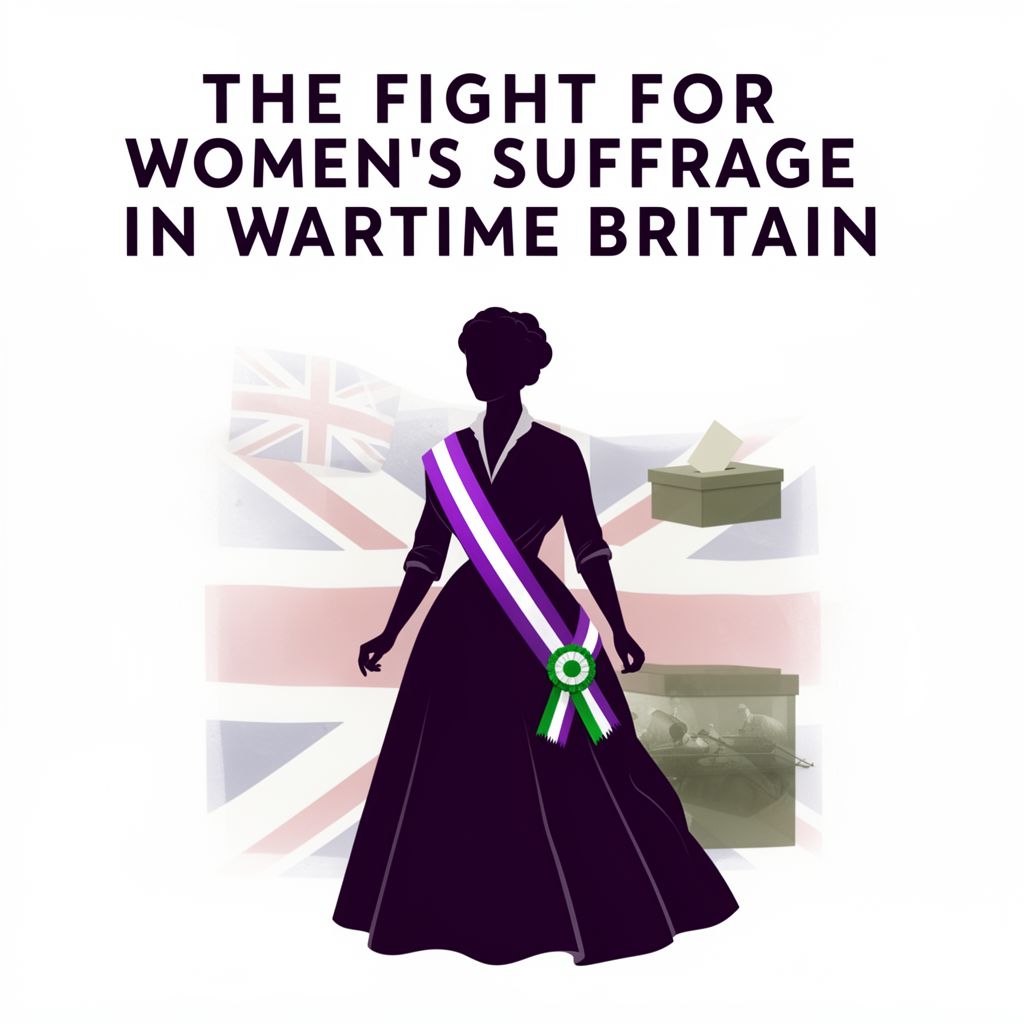
Sesli Özet
5 dakikaKonuyu otobüste, koşarken, yolda dinleyerek öğren.
Sesli Özet
The Fight for Women's Suffrage in Wartime Britain
Flash Kartlar
25 kartKarta tıklayarak çevir. ← → ile gez, ⎵ ile çevir.
Tüm kartları metin olarak gör
1. What was the general status of women's rights at the beginning of the 20th century globally?
At the turn of the 20th century, very few women worldwide possessed the right to vote, known as suffrage, and they were largely treated as second-class citizens. Despite increasing job opportunities due to industrial growth, societal beliefs remained rigid, confining women primarily to domestic roles. This fundamental inequality was the driving force behind early women's rights movements.
2. Define 'suffrage' in the context of women's rights.
Suffrage refers to the right to vote in political elections. At the beginning of the 20th century, this right was largely denied to women across the globe. The fight for women's suffrage was a central goal of early feminist movements, aiming to grant women political agency and equal participation in democratic processes.
3. How did industrial growth in the 19th century impact women's employment in the UK?
The industrial growth of the 19th century significantly broadened job opportunities for women. For instance, by 1911, 600,000 women were employed in the UK textile industry alone. Many others found work as domestic staff or secretaries, indicating a shift in women's roles outside the home, even if societal perceptions lagged.
4. What were the prevailing societal beliefs about gender roles at the turn of the 20th century?
Societal beliefs at the time rigidly defined gender roles, asserting that men and women occupied naturally different spheres. Men were seen as leaders and primary wage-earners, responsible for public life. Women, conversely, were expected to remain primarily at home, focusing on raising children and managing the household.
5. What did the 1868 Taunton Report conclude regarding the mental capacities of boys and girls?
The 1868 Taunton Report confirmed that boys and girls possessed equal mental capacities. Despite this official finding, many people continued to believe that women were inherently 'irrational' and 'emotional.' This persistent misconception was often used to justify restricting women's access to higher education and political participation.
6. What concerns were raised about women's education during this period?
Concerns were frequently raised that education could make women 'unmarriageable' or negatively affect their fertility. These fears led to significant restrictions on women's access to educational institutions, particularly at higher levels. Such arguments reflected a societal desire to maintain traditional gender roles and limit women's intellectual and professional development.
7. What was a common argument used by opponents against women's suffrage?
A common argument against women's suffrage was that women did not need the vote because their husbands or fathers could vote on their behalf. This perspective assumed that men adequately represented women's interests and that women's political involvement was unnecessary or even undesirable. It reinforced the idea of women as dependents rather than independent citizens.
8. What was Queen Victoria's stance on female political involvement?
Queen Victoria herself believed that female political involvement went against traditional gender roles. Her view reflected a widespread sentiment among the establishment that women's place was in the domestic sphere, not in the public arena of politics. Her opinion, coming from a powerful female figure, further complicated the suffrage movement's efforts.
9. Name two significant early achievements of feminist campaigns in Britain before the major suffrage movements.
Early feminist campaigns achieved significant improvements in women's education and property rights. By 1864, 12 secondary schools for girls were established in Britain, expanding educational access. A major victory also came in 1882 when married British women gained the right to own their own property, which had previously belonged to their husbands.
10. When did the University of London begin awarding degrees to women?
The University of London began awarding degrees to women in 1878. This was a crucial step forward in expanding educational opportunities for women, challenging the prevailing notion that higher education was unsuitable or unnecessary for them. It provided women with formal recognition of their academic achievements and intellectual capabilities.
11. What significant property right did married British women gain in 1882?
In 1882, married British women gained the right to own their own property. Prior to this, a married woman's property automatically became her husband's upon marriage, leaving her without independent financial control. This legal reform was a major victory for women's economic autonomy and a foundational step towards greater equality.
12. Which country was the first to grant women suffrage, and in what year?
New Zealand became the first country to grant women suffrage in 1893. This pioneering achievement provided a powerful source of inspiration and renewed hope for women's suffrage movements in other nations, including Britain. It demonstrated that women's right to vote was an attainable goal.
13. What was the full name of the organization known as the Suffragists, and when was it formed?
The full name of the organization known as the Suffragists was the National Union of Women's Suffrage Societies (NUWSS). It was formed in 1897, uniting various smaller suffrage groups under a common banner. The NUWSS advocated for women's right to vote through peaceful and constitutional means.
14. Who was the leader of the National Union of Women's Suffrage Societies (NUWSS)?
The National Union of Women's Suffrage Societies (NUWSS) was led by Millicent Fawcett. She championed a strategy of peaceful demonstrations, logical arguments, petitions, and direct negotiations with politicians. Fawcett's leadership guided the Suffragists in their constitutional pursuit of voting rights for women.
15. Describe the primary tactics employed by the Suffragists (NUWSS).
The Suffragists, led by Millicent Fawcett, advocated for the vote through peaceful and constitutional methods. Their primary tactics included organizing peaceful demonstrations, presenting logical arguments, submitting petitions to Parliament, and engaging in direct negotiations with politicians. They believed in achieving change through persuasion and legal means.
16. What was the main argument put forth by the Suffragists for women's right to vote?
The main argument put forth by the Suffragists was that since women were bound by the laws of the land, they should have a say in their creation. They argued that taxation without representation was unjust and that women, as citizens, deserved a voice in the political process that governed their lives. This was a logical and rights-based appeal.
17. What was the membership size of the NUWSS by 1914, and how successful were their legislative efforts?
By 1914, the NUWSS had grown significantly, boasting over 100,000 members. Despite their large membership and persistent efforts, none of the bills they championed for women's suffrage passed into law. This lack of legislative success, despite peaceful advocacy, contributed to the rise of more militant approaches.
18. What led to the formation of the Women's Social and Political Union (WSPU)?
The Women's Social and Political Union (WSPU) was formed out of frustration with the lack of progress achieved through the peaceful methods of the NUWSS. Some women concluded that men would never voluntarily share power, prompting a desire for more direct and impactful action. This dissatisfaction with the status quo fueled the shift towards militancy.
19. Who founded the Women's Social and Political Union (WSPU), and in what year?
The Women's Social and Political Union (WSPU) was founded in 1903 by Emmeline Pankhurst and her daughters, Christabel and Sylvia. They broke away from the NUWSS, believing that a more radical approach was necessary to achieve women's suffrage. The WSPU became known for its militant tactics and direct action.
20. By what name were the members of the WSPU commonly known?
The members of the Women's Social and Political Union (WSPU) were commonly known as the Suffragettes. This term distinguished them from the more moderate Suffragists of the NUWSS. The Suffragettes adopted a more confrontational and militant approach to campaigning for women's right to vote.
21. What role did Sophia Duleep Singh play in the WSPU?
Sophia Duleep Singh, an exiled Sikh princess, played a crucial role in funding the WSPU. Beyond financial support, she was also a vocal advocate for suffrage, extending her activism to British colonies. Her involvement highlighted the diverse support for the movement and its broader implications for women's rights.
22. What was the slogan adopted by the WSPU, reflecting their approach?
The slogan adopted by the WSPU was 'deeds not words.' This motto perfectly encapsulated their militant approach, emphasizing direct action and confrontational tactics over peaceful persuasion and petitions. It signaled a clear departure from the Suffragists' methods and a determination to force political change.
23. List three militant tactics employed by the Suffragettes.
The Suffragettes employed a range of militant tactics to draw attention to their cause. These included chaining themselves to buildings, disrupting political meetings, smashing windows, bombing mailboxes, and setting fire to empty buildings. These actions, while controversial, generated significant publicity for the suffrage movement.
24. What was the dual impact of the Suffragettes' militant tactics?
The Suffragettes' militant tactics had a dual impact: they generated significant publicity for the suffrage cause, making it impossible for politicians to ignore. However, these bold actions also alienated potential supporters, limiting the WSPU's membership. Despite this, their unwavering stance fostered a new mood of feminist militancy.
25. What happened to many Suffragettes who were arrested and went on hunger strike in prison?
Many Suffragettes who were arrested went on hunger strike in prison to highlight their cause and protest their incarceration. To prevent them from becoming martyrs, prison wardens brutally force-fed them. This practice was highly controversial and drew further attention to the harsh treatment of the Suffragettes.