 Podit
Podit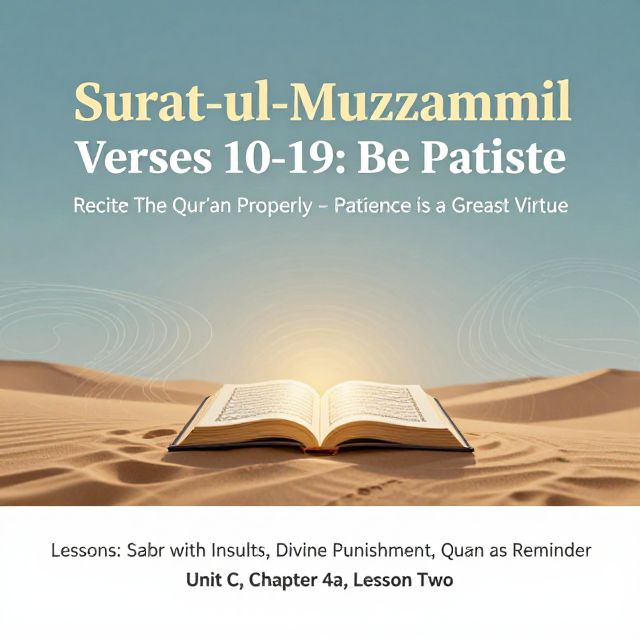
This study material has been compiled from a copy-pasted text and a lecture audio transcript.
Surat-ul-Muzzammil (Chapter 73), Verses 10-19: Patience, Justice, and Divine Guidance
Introduction
Surat-ul-Muzzammil, meaning "Wrapped in Clothing," is the 73rd chapter of the Qur'an. Verses 10-19 of this Surah deliver profound messages concerning patience, divine justice, and the ultimate accountability on the Day of Judgment. These verses were revealed during a challenging period for Prophet Muhammad (peace be upon him), offering guidance and solace amidst the intense opposition he faced from the disbelievers in Makkah. This segment of the Qur'an serves as a crucial reminder for believers, emphasizing the importance of steadfastness in faith and the severe consequences awaiting those who reject divine guidance.
I. Understood Meaning of Verses (73:10-19) 📚
These verses provide direct instructions and warnings:
- 73:10 ✅ And be patient when the disbelievers say hurtful things about you and wisely stay away from them (when they do this).
- 73:11 ✅ And leave to Me those wealthy disbelievers; let them have a little more time.
- 73:12 ✅ We have chains to tie them and a raging Hell to punish them in,
- 73:13 ✅ And food that sticks in the throat and lots of other painful punishment.
- 73:14 ✅ [This punishment comes] on the day when the Earth and the mountains will shake and the mountains will be like a pile of fine sand.
- 73:15 ✅ [You disbelievers] I have sent you a messenger to be a witness against you (on that day). He is sent to you like I sent to Pharaoh another messenger.
- 73:16 ✅ Pharaoh disobeyed his messenger, [like you are disobeying your messenger], so I destroyed him in a severe way [by drowning him and his supporters].
- 73:17 ✅ So how will you save yourselves from a scary day that would turn the hair of children white from terror?
- 73:18 ✅ The sky will be torn during that day and Allah's promise to bring you back from the dead for judgment will happen.
- 73:19 ✅ This is just a reminder and warning. So whoever wants should take the path to his Lord [by obeying Allah's Messengers].
II. Key Lessons from Surat-ul-Muzzammil (73:10-19)
These verses impart timeless lessons crucial for a believer's life:
A. Patience (Sabr) is a Great Virtue 🧘
The Prophet Muhammad (peace be upon him) endured immense suffering and insults from the disbelievers of Makkah. They called him a liar, a fortune teller, and a magician, causing him great hurt and insult. Immediately, Allah commanded him to show sabr, or patience, and to wisely avoid contact with those who sought to harm him.
- Dealing with Adversity: This teaches us that when faced with hurtful words or actions from evil people, we must not succumb to depression or lose our temper.
- Focus on Good: Instead, our focus should remain on the good work we are doing, preventing distractions from negative influences.
- Prophetic Trait: Sabr is a noble characteristic shared by all Prophets, and Allah taught them to employ it during times of distress. It is a fundamental principle for maintaining composure and avoiding unproductive confrontations.
B. Divine Justice: Allah Punishes the Evil ⚖️
While Allah desires all disbelievers to be guided to the straight path, and Prophet Muhammad exerted his utmost effort to convey the message of the Qur'an to the Quraysh, they rejected Islam and actively fought against him and his followers. They even attempted to assassinate him.
- Promise of Retribution: Consequently, Allah informed Prophet Muhammad that He would punish these evil individuals in Hellfire. This serves as a reassurance that justice will ultimately prevail, and believers should not despair over the apparent prosperity of wrongdoers.
- Historical Fulfillment: This warning was not merely theoretical. A few years later, during the Battle of Badr, many of the evil leaders of the Quraysh were indeed killed, fulfilling this divine promise. A'ishah (may Allah be pleased with her) recounted, "After Allah revealed this verse 'leave to me those disbelievers...' it was only a short time until the Battle of Badr." This demonstrates Allah's justice and the certainty of His promises.
- Day of Judgment: The verses vividly describe the grim reality awaiting disbelievers in the afterlife, with "chains to tie them and a raging Hell to punish them in," along with "food that sticks in the throat and lots of other painful punishment." The Day of Judgment will be a terrifying event where "the Earth and the mountains will shake and the mountains will be like a pile of fine sand," and "the sky will be torn."
C. The Qur'an as a Great Reminder 💡
Ayah 19 explicitly describes the Qur'an as "a reminder." Its primary function is to guide and warn humanity.
- Guidance for Life: It consistently reminds us to cultivate strong faith, perform good deeds, and embody a pious character.
- Personal Development: The more we recite the Qur'an and diligently act upon its teachings, the more we evolve into better individuals and develop noble personalities.
- Consequences of Neglect: Conversely, abandoning the Qur'an and neglecting its regular recitation will inevitably deprive us of its invaluable reminders and guidance, leading us away from the path to Allah.
III. Putting the Qur'an into Action 🚀
To integrate these profound lessons into daily life:
- 1️⃣ Practice Sabr: Always practice patience (sabr) with others, especially when faced with negativity.
- 2️⃣ Wise Avoidance: Whenever others insult you or hurt your feelings, avoid retaliating with the same evil actions. Instead, defend yourself by wisely and honorably avoiding such individuals or situations.
- 3️⃣ Fear Allah: Always fear Allah and His punishment.
- 4️⃣ Avoid Sins: Consciously avoid any actions that could lead you to Hellfire.
IV. Lesson Review Questions ❓
- What did Allah order Prophet Muhammad (peace be upon him) to do with those who insulted him?
- What did Allah prepare for the evil people in the next life? Describe the punishment they will suffer then.
- Describe what will happen on the Day of Judgment according to these verses.
- What special value did Allah mention about the Qur'an in Ayah 19, and how does this help us in our daily lives?