Multiculturalism and Gender in Britain: A Historical and Political Analysis - kapak
Siyaset#multiculturalism#gender issues#britain#margaret thatcher

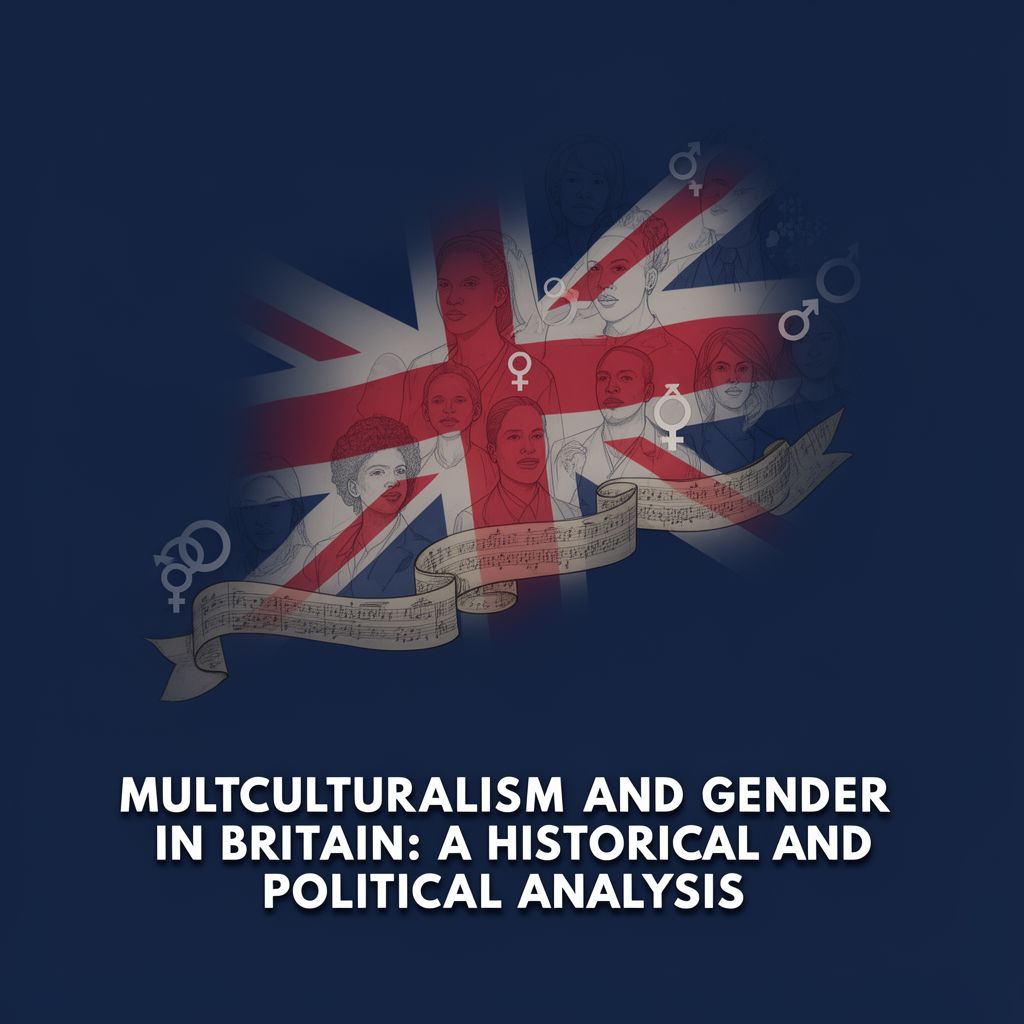
Multiculturalism and Gender in Britain: A Historical and Political Analysis

An academic overview of Britain's multicultural society and evolving gender issues, examining historical contexts, policy developments, and the significant influence of figures like Margaret Thatcher.

carpedi3mFebruary 8, 2026 ~20 dk toplam
01

Sesli Özet

6 dakika

Konuyu otobüste, koşarken, yolda dinleyerek öğren.

Sesli Özet

Multiculturalism and Gender in Britain: A Historical and Political Analysis

0:006:02
02

Flash Kartlar

25 kart

Karta tıklayarak çevir. ← → ile gez, ⎵ ile çevir.

1 / 25
Tüm kartları metin olarak gör
  1. 1. What were the two main societal topics covered in the provided content regarding Britain?

    The content primarily covers the multicultural society and gender issues in Britain. These two facets are explored through historical immigration patterns, legislative frameworks, and the socio-political climate, particularly during Margaret Thatcher's premiership.

  2. 2. Which historical period is highlighted as a critical juncture for understanding British national identity, social policy, and the role of women?

    The period of Margaret Thatcher's premiership, from 1979 to 1990, is highlighted as a critical juncture. This era offers significant insights into how national identity, social policy, and the role of women were perceived and managed during a transformative time in Britain.

  3. 3. From which regions did significant immigration occur in post-World War Two Britain, contributing to its multicultural society?

    Significant immigration occurred from Commonwealth countries, particularly from the Caribbean, the Indian subcontinent, and Africa, in post-World War Two Britain. These communities were invited to address labor shortages and played a crucial role in the nation's rebuilding efforts.

  4. 4. What was the primary reason for inviting immigrants from Commonwealth countries to Britain after World War Two?

    The primary reason for inviting immigrants from Commonwealth countries after World War Two was to address severe labor shortages. These new arrivals contributed substantially to the rebuilding of the nation following the war's devastation, filling crucial roles in various industries.

  5. 5. Name two social challenges that arose with the arrival of new immigrant communities in post-WWII Britain.

    Two social challenges that arose were racial discrimination and debates over integration versus assimilation. Despite their contributions, these communities often faced prejudice, and society grappled with how best to incorporate diverse cultures into the existing national identity.

  6. 6. Which legislative acts in the 1960s and 1970s progressively restricted immigration to Britain?

    The Commonwealth Immigrants Act of 1962 and the Immigration Act of 1971 progressively restricted immigration to Britain. These acts reflected a shifting political and public sentiment towards more controlled entry into the country, moving away from earlier open policies.

  7. 7. What was the main purpose of the Race Relations Acts of 1965, 1968, and 1976 in Britain?

    The main purpose of the Race Relations Acts of 1965, 1968, and 1976 was to combat racial discrimination and establish a legal framework for racial equality in Britain. These laws aimed to address the social challenges faced by immigrant communities and promote fairer treatment.

  8. 8. How did Margaret Thatcher's government's discourse often intertwine with multiculturalism?

    During Margaret Thatcher's tenure, the discourse around multiculturalism often became intertwined with concerns about national identity and social cohesion. Her administration emphasized a strong assertion of British nationalism, influencing how diversity was discussed and managed within society.

  9. 9. What was Thatcher's general approach to multicultural policies, contrasting with later approaches?

    Thatcher's administration generally favored a 'color-blind' approach, advocating for equal opportunity rather than specific multicultural policies. This contrasted with later approaches that embraced cultural diversity more explicitly, focusing instead on individual responsibility and meritocracy.

  10. 10. What significant event in 1981 highlighted deep-seated racial tensions and socio-economic disparities in Britain?

    The 1981 Brixton riots highlighted deep-seated racial tensions and socio-economic disparities that persisted in Britain despite legislative efforts to combat discrimination. These events underscored the ongoing challenges faced by minority communities and the need for further social reform.

  11. 11. What ongoing tension continues to define discussions on multiculturalism in Britain, even after Thatcher's era?

    The ongoing tension between cultural preservation and national unity continues to define discussions on multiculturalism in Britain. This debate centers on how to balance the distinct identities of various communities with a cohesive national identity, a challenge that persists today.

  12. 12. Name two key legislative advancements in Britain aimed at addressing gender disparities before Thatcher's premiership.

    Two key legislative advancements were the Equal Pay Act of 1970 and the Sex Discrimination Act of 1975. These acts aimed to address disparities in employment and opportunities, laying foundational legal frameworks for gender equality in the workplace and wider society.

  13. 13. What persistent challenges related to gender issues remained prevalent despite early legislative frameworks in Britain?

    Persistent challenges included the gender pay gap, underrepresentation in leadership roles, and issues of work-life balance. Despite legal advancements, systemic inequalities continued to affect women in various aspects of British society, indicating that legislation alone was not sufficient.

  14. 14. Why was Margaret Thatcher's election as Prime Minister in 1979 considered a watershed moment for gender representation?

    Her election was a watershed moment because she became the first female head of government in British history. This achievement challenged traditional perceptions of women's capabilities in politics and leadership, demonstrating that the highest office was attainable for women.

  15. 15. How did Margaret Thatcher generally view or identify with the feminist movement?

    Margaret Thatcher rarely identified as a feminist and frequently distanced herself from women's movements. She famously stated, 'I owe nothing to women's lib,' emphasizing her individual achievements rather than advocating for collective women's rights or systemic change.

  16. 16. What political philosophy did Thatcher prioritize, rather than specific policies for gender equality?

    Thatcher's political philosophy prioritized individual meritocracy and economic liberalism. She believed in individual achievement and free-market principles, rather than implementing specific policies aimed at advancing gender equality as a collective societal goal.

  17. 17. According to critics, how did some of Thatcher's policies disproportionately affect women?

    Critics argue that Thatcher's policies, particularly cuts to public services, disproportionately affected women. Women were often predominantly employed in these sectors or heavily reliant on the services provided, leading to negative impacts on their economic and social well-being.

  18. 18. In what way did Thatcher's presence as Prime Minister serve as an inspiration, despite her stance on feminist issues?

    Her very presence in such a powerful role undeniably served as an inspiration for many, demonstrating that the highest office was attainable for women. Regardless of her personal stance on feminist issues, her achievement broke a significant barrier and showed what was possible.

  19. 19. What is the subject of considerable academic debate regarding Margaret Thatcher's legacy on gender equality?

    Her legacy regarding gender equality remains a subject of considerable academic debate, highlighting the distinction between individual achievement and broader societal change. Scholars discuss whether her personal success translated into systemic improvements for women across Britain.

  20. 20. How did Thatcher's government's approach to immigration policy compare to existing race relations legislation?

    While her government did not explicitly dismantle existing race relations legislation, its emphasis on individual responsibility and a more restrictive approach to immigration policy, coupled with British nationalism, was perceived by some as contributing to social divisions rather than fostering integration.

  21. 21. What does the text suggest about the roots of Britain's multicultural society and gender issues?

    The text suggests that both the multicultural society and gender issues in Britain are deeply rooted in historical developments. They are continuously shaped by political and social forces, reflecting Britain's colonial legacy and evolving societal norms over time.

  22. 22. What does the evolution of multiculturalism in Britain reflect, according to the conclusion?

    The evolution of multiculturalism in Britain reflects its colonial legacy, its economic needs, and ongoing debates about national identity and social cohesion. These factors have collectively shaped the diverse social fabric of the nation and continue to influence its development.

  23. 23. What does the text state about the progression of gender issues in Britain?

    Gender issues in Britain have progressed from foundational legislative changes, such as the Equal Pay Act, to contemporary struggles for equitable representation and the eradication of systemic biases. This indicates a continuous effort towards greater equality, moving beyond just legal frameworks.

  24. 24. Why is understanding the intersecting dynamics of multiculturalism and gender issues essential for modern Britain?

    Understanding these intersecting dynamics is essential for comprehending the intricate social fabric of modern Britain. It helps in navigating the complexities of diversity and equality in the 21st century, which are ongoing challenges and defining features of the nation.

  25. 25. What was a key characteristic of the socio-political climate during Thatcher's era concerning multiculturalism?

    The socio-political climate during Thatcher's era was characterized by ongoing debates about the balance between cultural preservation and national unity. Her government's strong assertion of British nationalism often fueled these discussions, leading to tensions regarding diversity.

03

Bilgini Test Et

15 soru

Çoktan seçmeli sorularla öğrendiklerini ölç. Cevap + açıklama.

Soru 1 / 15Skor: 0

What was a primary driver for the emergence of a multicultural society in Britain post-World War Two?

04

Detaylı Özet

4 dk okuma

Tüm konuyu derinlemesine, başlık başlık.

📚 Study Material: Multiculturalism and Gender Issues in Britain (with a focus on Margaret Thatcher's Era)

This study material is compiled from a lecture audio transcript focusing on the multicultural society and gender issues in Britain, particularly during the premiership of Margaret Thatcher (1979-1990).


🌍 Introduction: Britain's Evolving Social Landscape

Britain's societal fabric is a rich tapestry woven from diverse cultures and evolving gender dynamics. Understanding these aspects requires examining historical immigration patterns, legislative frameworks, and the socio-political climate. The period of Margaret Thatcher's leadership serves as a crucial lens, offering insights into how national identity, social policy, and the role of women were perceived and managed during a transformative era.


multiculturalism in Britain

The concept of a multicultural society in Britain is deeply rooted in its post-World War Two history.

1️⃣ Historical Context and Immigration Patterns

  • Post-WWII Immigration: Significant immigration from Commonwealth countries (Caribbean, Indian subcontinent, Africa) occurred to address severe labor shortages during national rebuilding efforts.
  • Initial Challenges: The arrival of these communities led to social challenges, including racial discrimination and debates about integration versus assimilation.

2️⃣ Legislative Responses to Immigration and Discrimination

Early legislative actions reflected shifting public and political sentiments:

  • Commonwealth Immigrants Act (1962): Began to restrict immigration.
  • Immigration Act (1971): Further tightened immigration controls.
  • Race Relations Acts (1965, 1968, 1976): Aimed to combat discrimination and establish a legal framework for racial equality.

3️⃣ Margaret Thatcher's Era and Multiculturalism (1979-1990)

During Thatcher's premiership, the discourse around multiculturalism became intertwined with concerns about national identity and social cohesion.

  • Emphasis on National Identity: Her government asserted a strong sense of British nationalism.
  • Restrictive Immigration Policy: A more restrictive approach to immigration was adopted.
  • "Color-Blind" Approach: Thatcher's administration generally favored equal opportunity for individuals rather than specific multicultural policies that explicitly embraced cultural diversity.
  • Social Divisions: Critics argue that this approach, combined with an emphasis on individual responsibility, contributed to social divisions.
    • Example: The 1981 Brixton riots highlighted deep-seated racial tensions and socio-economic disparities that persisted despite existing legislation.
  • Ongoing Debates: This period was characterized by continuous debates about balancing cultural preservation with national unity, a tension that remains relevant today.

👩‍⚖️ Gender Issues in Britain

Gender issues in Britain have seen significant transformations, driven by social movements and legislative advancements.

1️⃣ Historical Milestones and Legislative Progress

  • Women's Suffrage Movement: Paved the way for women's political participation.
  • Increased Female Workforce Participation: A growing number of women entered the workforce throughout the 20th century.
  • Key Legislation:
    • Equal Pay Act (1970): Aimed to address pay disparities between men and women.
    • Sex Discrimination Act (1975): Sought to combat discrimination in employment and opportunities.

2️⃣ Persistent Challenges

Despite legislative frameworks, several challenges remained prevalent:

  • Gender Pay Gap: Women continued to earn less than men for comparable work.
  • Underrepresentation in Leadership: Women were (and often still are) underrepresented in senior management and political roles.
  • Work-Life Balance Issues: Difficulties in balancing career demands with family responsibilities disproportionately affected women.

3️⃣ Margaret Thatcher's Impact on Gender (1979-1990)

Margaret Thatcher's election as Prime Minister in 1979 was a watershed moment, making her the first female head of government in British history.

  • Breaking the Glass Ceiling: Her rise to power challenged traditional perceptions of women's capabilities in politics and leadership.
  • Complex Stance on Feminism:
    • She rarely identified as a feminist and often distanced herself from women's movements.
    • She famously stated, "I owe nothing to women's lib," emphasizing her individual achievements.
    • Her political philosophy prioritized individual meritocracy and economic liberalism over specific policies aimed at advancing collective gender equality.
  • Paradoxical Legacy:
    • Inspiration: Her presence in such a powerful role undeniably served as an inspiration for many women, demonstrating that the highest office was attainable.
    • Policy Impact: Critics argue that her policies did not actively promote systemic change for women.
      • Example: Cuts to public services under her government disproportionately affected women, who were often employed in these sectors or reliant on these services.
  • Academic Debate: Her legacy regarding gender equality remains a subject of considerable academic debate, highlighting the distinction between individual achievement and broader societal change.

💡 Conclusion: Intersecting Dynamics of Modern Britain

Both multiculturalism and gender issues are dynamic and multifaceted phenomena in Britain, deeply rooted in historical developments and continuously shaped by political and social forces.

Multiculturalism: Reflects Britain's colonial legacy, economic needs, and ongoing debates about national identity and social cohesion. ✅ Gender Issues: Have progressed from foundational legislative changes to contemporary struggles for equitable representation and the eradication of systemic biases.

The era of Margaret Thatcher provides a crucial lens for examining these developments. Her policies and political philosophy significantly influenced the discourse on immigration and national identity, while her unprecedented leadership as a woman presented a complex figure in the narrative of gender equality. Understanding these intersecting dynamics is essential for comprehending the intricate social fabric of modern Britain as it navigates the complexities of diversity and equality in the 21st century.
Kendi çalışma materyalini oluştur

PDF, YouTube videosu veya herhangi bir konuyu dakikalar içinde podcast, özet, flash kart ve quiz'e dönüştür. 1.000.000+ kullanıcı tercih ediyor.

Sıradaki Konular

Tümünü keşfet
Britain's Transformation: From Thatcherism to the Age of Insecurity

Britain's Transformation: From Thatcherism to the Age of Insecurity

Explore Britain's profound political, economic, and social changes from the late 1970s, covering Thatcherism, New Labour, the age of insecurity, multiculturalism, and evolving social and cultural landscapes.

Özet 25 15
Britain's Social, Cultural, and Linguistic Evolution (1950s-2010s)

Britain's Social, Cultural, and Linguistic Evolution (1950s-2010s)

An academic summary exploring Britain's profound social, cultural, and linguistic transformations from the mid-20th century, covering political shifts, societal changes, and the evolution of the English language.

9 dk Özet 25 15
Contemporary British Sociopolitical and Cultural Dynamics

Contemporary British Sociopolitical and Cultural Dynamics

An academic overview of Britain's social and cultural context, examining political challenges, demographic shifts, gender equality, LGBTQ+ rights, and the evolving role of arts and popular culture in the 21st century.

8 dk Özet 25 15
US Immigration: History, Policy, and Current Debates

US Immigration: History, Policy, and Current Debates

Explore the complex world of US immigration, from its historical roots and evolving policies to the heated debates shaping America today. Understand key concepts and different perspectives.

12 dk Özet 22 15
US Immigration Debates: A Deep Dive

US Immigration Debates: A Deep Dive

Explore the complex, current debates surrounding immigration in the United States. Understand the economic, social, and political dimensions of this critical issue.

11 dk Özet 25 15
Sociopolitical, Demographic, and Cultural Shifts in Britain

Sociopolitical, Demographic, and Cultural Shifts in Britain

This summary examines significant sociopolitical, demographic, and cultural transformations in Britain from 2007 to the mid-2010s, focusing on public trust, immigration, social norms, and the evolving arts landscape.

10 dk Özet 25 15
Britain's Evolving Social and Cultural Landscape

Britain's Evolving Social and Cultural Landscape

An academic summary exploring Britain's multicultural society, advancements in gender and LGBTQ+ rights, and the transformation of its arts and cultural landscape in the 21st century.

7 dk Özet 25 15
The Fight for Women's Suffrage in Wartime Britain

The Fight for Women's Suffrage in Wartime Britain

Explore the comprehensive history of the women's suffrage movement in Britain, from early campaigns and the peaceful Suffragists to the militant Suffragettes, their tactics, and their impact.

4 dk 25