 Podit
Podit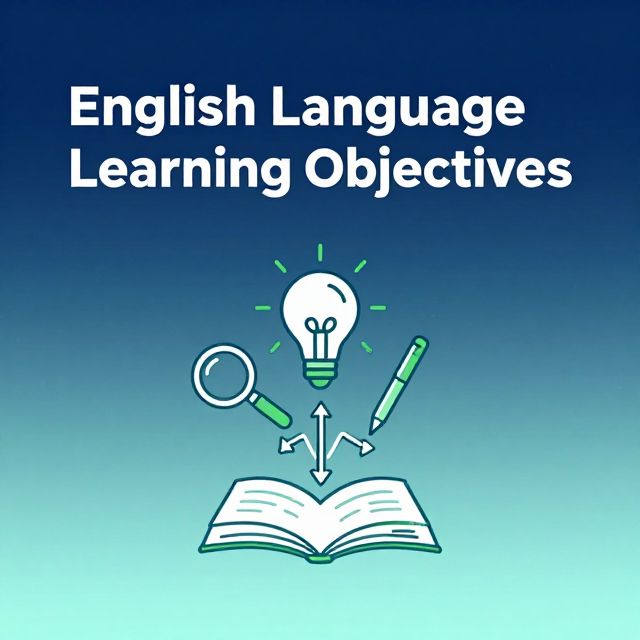
Comprehensive Study Guide: English Language Learning Objectives (E10.6 & E10.7 Series)
Source Information: This study material has been compiled from a list of specific learning objectives (Kazanımlar) and a detailed lecture audio transcript. The content aims to provide a clear and structured understanding of these objectives.
Special Focus on Clarity ("Türkçeleri Olsun"): The instruction "Türkçeleri olsun" (meaning "Let them have their Turkish equivalents" or "Let them be in Turkish") has been interpreted as a directive to ensure the English explanations are exceptionally clear, comprehensive, and accessible. While direct Turkish translations are not provided due to the strict "en" language requirement for this output, this guide is meticulously crafted to break down complex concepts, define terminology, and offer practical examples. The goal is to make the meaning and practical application of each objective fully transparent and understandable to all learners, particularly those whose native language is Turkish, as if they were reading it in their native tongue.
📚 Introduction to English Language Learning Objectives
Learning objectives are fundamental benchmarks that outline the specific competencies students are expected to acquire in various aspects of language proficiency, including reading, writing, and critical analysis. They provide a structured approach to language acquisition and serve as a guide for assessing student progress. This guide details key objectives categorized into distinct skill sets, progressing from foundational comprehension to advanced textual interpretation and production.
Section 1: Reading and Writing Objectives (E10.6 Series)
This series of objectives focuses on developing students' abilities in reading comprehension and written expression, particularly concerning texts that convey rules, advice, or regulations.
1. E10.6.R1: Identifying Advice, Rules, and Regulations in a Text
✅ Objective: Students will be able to identify the advice, rules, and regulations in a text.
Explanation: This objective targets the foundational skill of literal comprehension and information extraction. Students need to discern and differentiate between various forms of prescriptive language within a given text. This involves:
- Recognizing Linguistic Cues: Identifying words or phrases that signal advice (e.g., "should," "it's advisable to," "we recommend"), rules (e.g., "must," "are required to," "prohibited"), and regulations (often more formal, referring to official directives or laws).
- Understanding Structural Patterns: Noticing how these different types of statements are presented in a text.
- Differentiating Prescriptive Language: Distinguishing between suggestions (advice), mandatory actions or prohibitions (rules), and formalized, often legally or institutionally binding directives (regulations).
💡 Clarity for "Türkçeleri Olsun": To fully grasp this, consider how different statements guide behavior. Advice offers suggestions for benefit, rules enforce specific actions or prohibitions, and regulations are official, often legal, guidelines.
Example: In a school handbook:
- Advice: "It is advisable to bring a water bottle to stay hydrated." (A suggestion for well-being)
- Rule: "Students must wear their school uniform every day." (A mandatory requirement)
- Regulation: "The school operates under the Ministry of Education's national curriculum guidelines." (A formal, binding directive)
2. E10.6.R2: Inferring Consequences from Helpful Tips
✅ Objective: Students will be able to make use of contextual clues to infer the possible consequences about helpful tips.
Explanation: This objective moves beyond simple identification to involve inferential reasoning and predictive analysis. Students are required to:
- Utilize Contextual Clues: Use surrounding information in the text to deduce potential outcomes.
- Uncover Implicit Cause-and-Effect: Understand the unstated relationships between a tip and its potential results.
- Predict Outcomes: Project what might happen if a tip is followed or not followed. These consequences can be positive or negative.
💡 Clarity for "Türkçeleri Olsun": "Inferring" means figuring out something that isn't directly stated. "Contextual clues" are hints within the text. This skill helps you understand the implications of advice.
Example: From a text on cybersecurity:
- Helpful Tip: "Always use strong, unique passwords for your online accounts."
- Inferred Positive Consequence: "This will significantly reduce the risk of unauthorized access and data theft."
- Inferred Negative Consequence (if not followed): "Using weak or reused passwords could lead to your accounts being easily compromised."
3. E10.6.W1: Writing About Consequences of Disobeying Rules
✅ Objective: Students will be able to write a paragraph about possible consequences when they don't obey the rules.
Explanation: This objective transitions from reading comprehension to written production. It assesses a student's ability to:
- Articulate a Coherent Argument: Construct a well-reasoned and logical piece of writing.
- Logically Extrapolate Adverse Outcomes: Predict and explain the negative results that may arise from violating established rules.
- Demonstrate Clarity and Coherence: Present ideas in a structured and easy-to-understand manner.
- Reinforce Understanding of Norms: Show an understanding of the importance of rules and the repercussions of non-compliance.
💡 Clarity for "Türkçeleri Olsun": "Coherent argument" means your writing flows logically and makes sense. "Extrapolate" means to predict or estimate based on known information. This task requires you to clearly explain the "if-then" scenario of breaking rules.
Example: A paragraph discussing the consequences of not following classroom rules: "Failing to adhere to classroom rules, such as talking during lessons or not completing assignments, can lead to several negative consequences. Firstly, it disrupts the learning environment for everyone, making it difficult for other students to concentrate and grasp new concepts. Secondly, it can result in a decline in the student's own academic performance, as they miss crucial information and fall behind in their studies. Finally, consistent disobedience may lead to disciplinary actions, including warnings, detentions, or even suspension, impacting the student's overall educational experience and future opportunities."
Section 2: Text Evaluation and Organization Objectives (E10.7 Series)
This series focuses on higher-order thinking skills, including critical text evaluation and effective information organization.
1. E10.7.R1: Classifying Various Cuisines Around the World
✅ Objective: Students will be able to evaluate a text to classify various cuisines around the world.
Explanation: This objective focuses on critical evaluation and categorization skills applied to informational texts. Students are expected to:
- Analyze Textual Descriptions: Read and understand descriptions of different global cuisines.
- Identify Key Characteristics: Pinpoint distinguishing features such as typical ingredients, preparation methods, flavor profiles, and cultural origins.
- Apply Classification Criteria: Use these characteristics to group similar culinary traditions or differentiate distinct ones.
- Synthesize Information: Combine details from various parts of the text to form a comprehensive understanding for classification.
💡 Clarity for "Türkçeleri Olsun": "Evaluate" means to assess or judge. "Classify" means to group things based on shared characteristics. This involves understanding what makes each cuisine unique.
Example: After reading a text about world cuisines, a student might classify:
- Mediterranean Cuisine: Characterized by olive oil, fresh vegetables, seafood, herbs, and lean meats (e.g., Greek, Italian, Spanish).
- East Asian Cuisine: Often features rice, noodles, soy sauce, stir-frying, and a balance of sweet, sour, salty, and umami flavors (e.g., Chinese, Japanese, Korean).
2. E10.7.R2: Diagramming a Text About Different Festivals Around the World
✅ Objective: Students will be able to diagrammatize a text about different festivals all around the world.
Explanation: This objective emphasizes the ability to process textual information and translate it into a visual, organized format. "Diagrammatize" means to create a graphic representation, such as:
- Charts or Tables: For comparing specific features of festivals.
- Mind Maps or Web Diagrams: For showing relationships and details about a single festival or multiple festivals.
- Flowcharts: For illustrating the sequence of events in a festival.
This task requires students to:
- Identify Central Themes and Specific Details: Extract the most important information.
- Recognize Comparative Elements: Note similarities and differences between festivals.
- Illustrate Relationships: Show how different aspects of a festival are connected.
- Create a Logical Visual Schema: Arrange information in an accessible and meaningful visual layout.
💡 Clarity for "Türkçeleri Olsun": "Diagrammatize" means to turn written information into a picture or visual organizer. "Salient points" are the most important details. This helps you see the big picture and connections.
Example: After reading about global festivals, a student could create:
- A Venn Diagram comparing Diwali and Christmas:
- Shared: Family gatherings, gift-giving, special foods.
- Diwali Only: Festival of Lights, Hindu/Jain/Sikh origins, specific rituals.
- Christmas Only: Celebration of Christ's birth, Santa Claus, specific carols.
- A Mind Map for the "Carnival of Rio":
- Central Topic: Rio Carnival
- Branches: Origin (Portuguese influence), Key Activities (Samba parades, street parties), Dates (before Lent), Significance (cultural celebration, tourism).
📈 Conclusion
The outlined learning objectives for English language education encompass a range of critical skills essential for academic and practical success. They progress from foundational comprehension, such as identifying explicit information, to more complex cognitive processes, including inferential reasoning, critical evaluation, and the structured articulation of ideas in both written and visual formats. By mastering these competencies, students will be equipped with the analytical and communicative tools necessary to effectively engage with diverse texts and express their understanding clearly, organized, and coherently. These skills are paramount for fostering well-rounded language proficiency.