 Podit
Podit
Mastering English: Language in Use & Grammar Improvement
This study material is compiled from a lecture transcript titled "Introduction to Language in Use" and a copy-pasted text containing a fill-in-the-blanks exercise.
📚 Introduction to Language in Use
This guide focuses on understanding and applying English grammar and vocabulary in context, using a narrative about starting a new hobby as a practical example. It also provides comprehensive strategies for improving grammar and writing skills, especially for quizzes and assessments.
📝 The Narrative: A New Hobby - Photography
The core of our study revolves around a personal story of someone who decided to take up photography during a winter break. Initially, they enjoyed phone photography but wished to learn how to use a professional camera. A friend, Hannah, lent them an old camera. Despite initial confusion with the camera's buttons, the basics were quickly mastered. The hobbyist developed a routine of weekend walks to photograph the city, adjusting their schedule to early mornings when the light was too strong. To further develop skills, they joined an online photography club where members shared tips and advice. The club was described as supportive and friendly. The journey culminated in participating in a first photo exhibition, where positive feedback affirmed their improvement, even without winning prizes. Looking ahead, there are plans to buy a newer camera, travel to special locations, and potentially take a short course as suggested by Hannah to further refine their skills.
✅ Analyzing Language Choices in the Narrative
Let's examine the specific language choices that best complete the narrative, ensuring grammatical accuracy and contextual appropriateness.
-
Blank 6: "My friend Hannah (6) me her old one so that I could practise."
- Correct Answer:
lent - Explanation: The verb "lent" (past tense of "lend") implies a temporary transfer of an item for someone else's use, which perfectly fits the context of a friend providing a camera for practice.
- 💡 Tip: "Lend" is when you give something to someone temporarily. "Borrow" is when you take something from someone temporarily.
- Correct Answer:
-
Blank 7: "At first, I (7) understand all the buttons, but after a few days I learned the basics."
- Correct Answer:
didn't - Explanation: The phrase "At first" indicates a past state or action that was not true, followed by a change ("learned the basics"). "Didn't" (did not) is the correct past simple negative form for the verb "understand."
- 📚 Concept: Past Simple Negative.
- Correct Answer:
-
Blank 8: "Sometimes the light was too strong, so I (8) take photos early in the morning."
- Correct Answer:
had to - Explanation: The word "so" signals a consequence or necessity. The strong light compelled the photographer to change their schedule, making "had to" (expressing obligation or necessity in the past) the most suitable choice.
- 📚 Concept: Modals of Necessity (Past).
- Correct Answer:
-
Blank 9: "I also joined a small photography club online, where members (9) useful tips and give advice."
- Correct Answer:
share - Explanation: Club members typically collaborate by exchanging knowledge and advice. "Share" accurately describes this collaborative action.
- 💡 Tip: Consider the typical activities within a group or club.
- Correct Answer:
-
Blank 10: "They were all very (10) and friendly."
- Correct Answer:
helpful - Explanation: The adjective "helpful" complements "friendly" and aligns with the idea of members giving advice and tips, indicating a supportive environment.
- 📚 Concept: Adjectives describing character.
- Correct Answer:
-
Blank 11: "when people smiled and (11) my pictures, I realised how much I had improved."
- Correct Answer:
complimented - Explanation: When people appreciate artwork, they typically express praise or admiration. "Complimented" (past tense of "compliment") is the appropriate verb for this action.
- 💡 Tip: "Compliment" means to praise; "complement" means to complete or enhance.
- Correct Answer:
-
Blank 12: "I didn't win any prizes, but the experience made me very (12)."
- Correct Answer:
proud - Explanation: Despite not winning, the positive reception and personal improvement led to a feeling of accomplishment and satisfaction. "Proud" accurately reflects this emotion.
- 📚 Concept: Adjectives describing emotions.
- Correct Answer:
-
Blank 13: "In the future, I (13) buy a new camera and travel somewhere special to take more photos."
- Correct Answer:
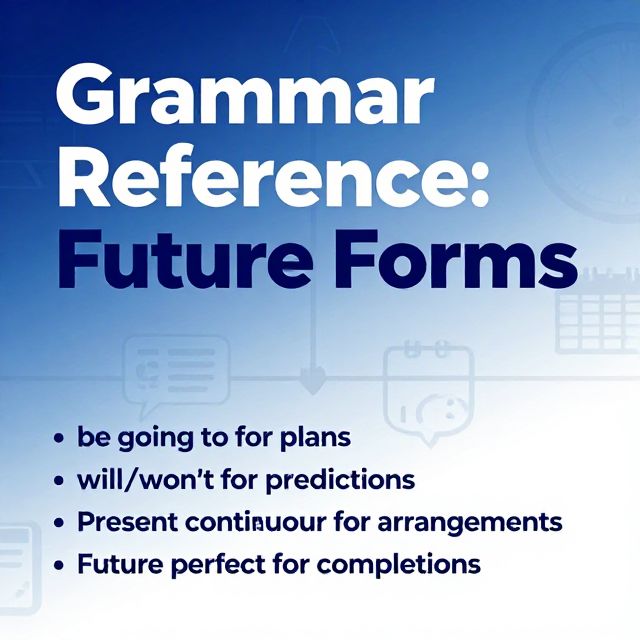
am going to - Explanation: "Am going to" expresses a clear future intention or plan that has already been decided. This fits the context of future aspirations.
- 📚 Concept: Future Tenses (Future with "going to").
- Correct Answer:
-
Blank 14: "I hope the new one will be (14) and take clearer pictures."
- Correct Answer:
newer - Explanation: When upgrading a camera, the expectation is usually for a more recent model with improved features. "Newer" is the logical comparative adjective here.
- 📚 Concept: Comparative Adjectives.
- Correct Answer:
-
Blank 15: "Hannah made a great suggestion, she says I (15) join a short course before I go, so that I can take even better photos."
- Correct Answer:
should - Explanation: The modal verb "should" is used to give advice or make a suggestion, which is precisely what Hannah offered to help improve skills.
- 📚 Concept: Modals of Advice.
- Correct Answer:
📈 Special Focus: Improving Grammar and Writing for Quizzes
It's common to feel that grammar is lacking and to make mistakes, especially in writing. This section provides detailed strategies to rapidly improve your grammar and writing skills, crucial for quizzes and overall language proficiency.
1️⃣ Strategies for Grammar Improvement
Grammar is the backbone of clear communication. Addressing weaknesses systematically can lead to significant progress.
-
Understand Core Concepts:
- 📚 Tenses: Master present, past, and future tenses (simple, continuous, perfect). Pay attention to when each tense is used.
- 📚 Parts of Speech: Clearly identify nouns, verbs, adjectives, adverbs, pronouns, prepositions, conjunctions, and interjections. Understanding their roles helps in sentence construction.
- 📚 Sentence Structure: Learn about simple, compound, complex, and compound-complex sentences. Understand subjects, verbs, and objects.
- 📚 Subject-Verb Agreement: Ensure the verb agrees in number with its subject (e.g., "He runs," "They run"). This is a very common error.
- 📚 Articles (a, an, the): Understand definite and indefinite articles and when to use them.
- 📚 Prepositions: Learn common prepositions (in, on, at, for, with, etc.) and their correct usage in various contexts.
- 📚 Modals: Understand the meaning and usage of modal verbs like can, could, may, might, must, should, will, would.
-
Active Learning & Practice:
- ✅ Dedicated Study: Use grammar textbooks, online courses (e.g., Coursera, Khan Academy), or apps (e.g., Grammarly, Duolingo) that offer structured lessons and exercises.
- ✅ Practice Exercises: Regularly complete grammar exercises focusing on specific rules. Repetition helps solidify understanding.
- ✅ Contextual Learning: Pay attention to grammar when you read English books, articles, or listen to English media. Notice how native speakers use different structures.
-
Feedback Loop:
- ⚠️ Identify Your Mistakes: Keep a "grammar error log." When you get feedback on your writing, note down the type of error and the correct form. This helps you recognize your personal weak spots.
- 💡 Seek Corrections: Ask teachers, tutors, or proficient English speakers to review your writing and explain your errors.
2️⃣ Strategies for Writing Improvement
Good writing goes beyond just correct grammar; it involves clarity, coherence, and effective expression.
-
Plan and Outline:
- ✅ Before writing, create an outline. Structure your thoughts: introduction, main points (with supporting details), and conclusion. This ensures logical flow and prevents rambling.
- 💡 Tip: For a quiz, quickly jot down keywords or a mini-outline before you start writing your answer.
-
Drafting:
- ✅ Focus on getting your ideas down first. Don't worry too much about perfection in the initial draft. The goal is to capture your thoughts.
-
Revision and Editing:
- ✅ Clarity and Coherence: Read through your writing to ensure your ideas are clear and flow logically from one paragraph to the next. Use transition words (e.g., however, therefore, in addition).
- ✅ Grammar and Punctuation Check: This is where your grammar improvement efforts pay off. Carefully check for errors in tenses, subject-verb agreement, articles, prepositions, and punctuation (commas, periods, apostrophes).
- ✅ Sentence Variety: Avoid starting every sentence the same way or using only simple sentences. Vary your sentence structures to make your writing more engaging.
- ✅ Vocabulary: Use precise and appropriate vocabulary. Avoid overly simplistic or repetitive words. Use a thesaurus carefully to find synonyms, but ensure they fit the context.
-
Read Aloud:
- 💡 Reading your writing aloud helps you catch awkward phrasing, grammatical errors, and sentences that don't sound natural.
3️⃣ Quiz Preparation Tips
Quizzes often test your ability to apply grammar rules under pressure.
-
Review and Consolidate:
- ✅ Go over all relevant grammar rules and vocabulary covered in your course. Create summary notes or flashcards for quick review.
- 📚 Example: For a tense quiz, have a chart of all tenses with their forms and usage rules.
-
Practice Under Timed Conditions:
- ✅ If possible, do practice quizzes or exercises with a timer. This helps you manage your time effectively during the actual quiz.
-
Read Instructions Carefully:
- ⚠️ Always read the instructions for each question thoroughly. Understand what is being asked (e.g., "fill in the blank," "rewrite the sentence," "identify the error").
-
Proofread Your Answers:
- ✅ Before submitting, quickly proofread your answers for any obvious grammatical or spelling errors. Even a quick scan can catch simple mistakes.
💡 Conclusion and Key Takeaways
Mastering "Language in Use" requires a combination of understanding grammatical rules, expanding vocabulary, and practicing their application in various contexts. The narrative of "A New Hobby" demonstrated how precise word choices enhance meaning and coherence. By actively working on your grammar and writing skills through structured study, consistent practice, and careful revision, you can significantly improve your proficiency and perform better in quizzes and all forms of English communication.