Understanding Accounting and the Business Cycle - kapak
İş Dünyası#accounting#business cycle#finance#purchasing

Understanding Accounting and the Business Cycle

Explore the fundamentals of accounting, its role as the language of business, and the essential components of the continuous business cycle, including financing, purchasing, processing, and sales.

oguz81January 20, 2026 ~17 dk toplam
01

Sesli Özet

7 dakika

Konuyu otobüste, koşarken, yolda dinleyerek öğren.

Sesli Özet

Understanding Accounting and the Business Cycle

0:007:12
02

Flash Kartlar

25 kart

Karta tıklayarak çevir. ← → ile gez, ⎵ ile çevir.

1 / 25
Tüm kartları metin olarak gör
  1. 1. What is accounting often referred to as, and what is its precise definition?

    Accounting is often called the language of business. More precisely, it is a systematic process for maintaining reports of a company's operations and communicating that vital information to decision-makers. This process ensures that financial data is organized and presented in a way that is understandable and useful for various stakeholders.

  2. 2. What are the two core functions of financial accounting?

    The two core functions of financial accounting are, first, to meticulously measure business activities, and second, to effectively communicate the information derived from those activities. This communication is crucial for facilitating informed decision-making by both internal and external users of the financial data.

  3. 3. Who are the typical internal users of accounting information?

    Internal users of accounting information typically include directors and management. These individuals rely on accounting data for strategic planning, operational control, and making day-to-day decisions that affect the company's performance and direction. Their access to detailed financial insights helps in efficient resource allocation.

  4. 4. Who are the typical external users of accounting information?

    External users are a broader group, encompassing stakeholders such as shareholders, banks, investors, and clients or suppliers. All these parties have a vested interest in the company's financial health and performance, using accounting information to make decisions related to investment, lending, or business partnerships.

  5. 5. What is the primary objective of financial statements?

    The primary objective of financial statements is to circulate transparent and truthful information regarding the company's activities. This includes highlighting both economic and financial aspects, providing a clear picture to all parties interested in the current and prospective management of the company, ensuring accountability and trust.

  6. 6. What is the business cycle, and what does it represent?

    The business cycle represents the continuous operational flow within a company. It describes the sequence of activities that a business undertakes to generate revenue and sustain its operations. This cycle is fundamental to understanding how a company functions from a financial and operational perspective.

  7. 7. List the typical stages of the business cycle in order.

    The typical stages of the business cycle are: financing, purchasing, processing, and sales. This sequence illustrates how funds are acquired, inputs are bought, products or services are created, and then sold to generate revenue, which in turn feeds back into financing for the next cycle.

  8. 8. What is the overarching objective for company management regarding the business cycle?

    The overarching objective for company management is to keep the business cycle efficient, balanced, and profitable. This involves ensuring that all stages are well-coordinated and that revenues consistently exceed costs, thereby enabling the company to achieve sustainable growth and maximize shareholder value.

  9. 9. Why is coordination crucial in the business cycle?

    Coordination is crucial in the business cycle to ensure that financing, purchasing, processing, and sales activities are meticulously aligned. Effective coordination prevents bottlenecks, optimizes resource utilization, and ensures that the company can consistently meet its operational goals and achieve profitability. Without it, the cycle can break down.

  10. 10. What is the purpose of the financing stage in the business cycle?

    The financing stage provides the essential resources to purchase inputs and cover operational costs. It is the initial step where a company secures the necessary capital to begin or continue its operations, ensuring that funds are available for all subsequent stages of the business cycle.

  11. 11. What are the two main forms of financing mentioned in the text?

    The two main forms of financing mentioned are capital endowment, known as equity, and loans, which represent financial debt. These distinct forms differ in their source, repayment structure, and the rights and returns provided to the capital providers, offering companies flexibility in funding their operations.

  12. 12. Explain equity financing, including its repayment and return characteristics.

    Equity financing involves shareholders' capital, which can include various types of shares. Repayment is generally related to net profits, meaning there's no fixed repayment schedule. The return for shareholders is typically in the form of dividends, reflecting their property rights and a share in the company's success.

  13. 13. Provide examples of equity providers.

    Examples of equity providers include entrepreneurial families, companies, investment funds, pension funds, private equity funds, venture capital funds, households' savings, and even government shareholdings in companies. These diverse sources contribute capital in exchange for ownership and a share of future profits.

  14. 14. Explain financial debt, including its repayment and return characteristics.

    Financial debt includes various forms of loans and bonds. Repayment for financial debt is structured according to contractual expiring dates, meaning there's a fixed schedule for principal and interest payments. The return for creditors is typically in the form of interest rates, and they hold specific rights as per their loan agreements.

  15. 15. Provide examples of financial debt instruments.

    Examples of financial debt instruments include short-term and long-term bank financing, bond loans, leasing, and factoring. These instruments represent obligations to repay borrowed funds, often with interest, and are crucial for companies needing capital without diluting ownership.

  16. 16. What are financial liabilities, and from whom can they originate?

    Financial liabilities represent the obligations to financers. They can originate from banks, market investors, or other financial institutions. These obligations arise from various instruments like loans, overdrawn accounts, advances on invoices, leasing, factoring, project financing, bonds, and convertible bonds, all requiring repayment.

  17. 17. What is the purpose of the purchasing stage in the business cycle?

    The purpose of the purchasing stage is the acquisition of production factors, which are the tangible and intangible resources necessary for production. This stage ensures that the company has all the essential inputs, such as raw materials, goods, and services, required to create its final products or deliver its services.

  18. 18. What are production factors, and how are they categorized?

    Production factors are the tangible and intangible resources necessary for production. They are categorized into fixed assets and current expenses. Fixed assets have long-term utility, while current expenses have short-term utility, distinguishing between capital investments and operational costs.

  19. 19. Differentiate between fixed assets and current expenses based on their utility and examples.

    Fixed assets possess long-term utility, meaning they are useful for more than one production cycle, representing capital investments (e.g., buildings, machinery, R&D). Current expenses, conversely, have short-term utility, being useful only once for a single production cycle, and are considered costs (e.g., raw materials, wages, interest expenses).

  20. 20. Explain operating investments as a type of fixed asset.

    Operating investments are a type of fixed asset that generates income only when combined with other production factors. Examples include tangible plant and machinery, or intangible assets like research and development. These assets are directly involved in the company's core production or service delivery processes.

  21. 21. Explain intangible assets as a type of fixed asset.

    Intangible assets are a type of fixed asset that lacks physical substance but provides long-term value to a company. Examples include research and development (R&D) and brands. Like operating investments, they generate income when combined with other production factors, contributing to the company's competitive advantage.

  22. 22. Explain financial investments as a type of fixed asset.

    Financial investments are a type of fixed asset that generates individual returns regardless of other production factors. Examples include bonds or equity shares in other companies. These investments are held for capital appreciation or income generation, separate from the company's primary operational activities.

  23. 23. What is the outcome of the purchasing stage in terms of cash and cost?

    The purchasing stage ultimately leads to a reduction of cash, as funds are used to acquire necessary inputs. Simultaneously, it generates a cost for the company, which is recorded in its financial statements. This often results in trade debt, representing amounts owed to suppliers for goods or services received on credit.

  24. 24. What is the processing stage, and what does it involve?

    The processing stage, also known as production or service delivery, encompasses the set of operations implemented to transform acquired inputs into final products. It is an economic transformation, converting the utilities of production factors into the utilities of valuable outputs, whether they are goods or services.

  25. 25. Describe the three types of economic transformation that can occur during processing.

    The three types of economic transformation are physical, spatial, and temporal. Physical transformation is seen in manufacturing, changing raw materials into finished goods. Spatial transformation involves moving goods, as in transportation. Temporal transformation focuses on preserving goods for customers, as in storage enterprises, making them available when needed.

03

Detaylı Özet

5 dk okuma

Tüm konuyu derinlemesine, başlık başlık.

This study material is compiled from a lecture audio transcript and supplementary copy-pasted text.


📚 Accounting and the Business Cycle: A Comprehensive Study Guide

Introduction to Accounting: The Language of Business

Accounting is universally recognized as the "language of business." More precisely, it is a systematic process designed for maintaining detailed reports of a company's operations and effectively communicating that vital information to various decision-makers. The core functions of financial accounting involve two primary aspects:

  1. Measuring Business Activities: Meticulously tracking and recording all financial transactions and events.
  2. Communicating Information: Presenting the derived information from these activities to facilitate informed decision-making.

Users of Accounting Information

Accounting information serves a diverse group of users, both internal and external, who rely on it for different purposes:

  • Internal Users: These are individuals within the organization who use accounting data for strategic planning, operational control, and performance evaluation.
    • Directors
    • Management
  • External Users: These are individuals or entities outside the organization with a vested interest in its financial health and performance.
    • Shareholders
    • Banks
    • Investors
    • Clients/Suppliers
    • Other stakeholders (e.g., government agencies, employees)

Objective of Financial Statements

The primary objective of financial statements is to circulate transparent and truthful information regarding a company's activities. This includes highlighting both economic and financial aspects, providing a clear and comprehensive picture to all parties interested in the current and prospective management of the company.

📊 The Business Cycle: An Overview

The business cycle represents the continuous operational flow within a company, illustrating how resources are acquired, transformed, and converted into revenue. It is a fundamental concept in understanding how businesses operate and sustain themselves.

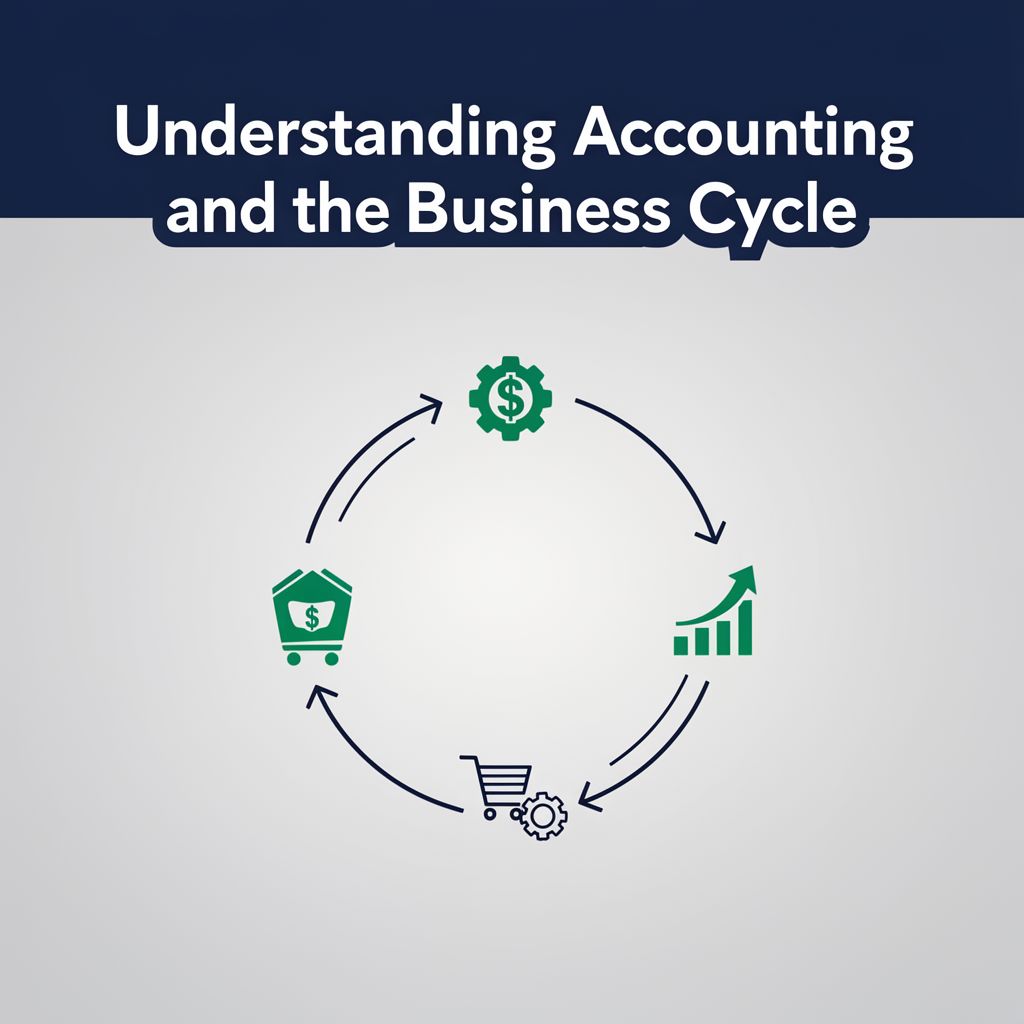
The cycle typically follows a continuous loop: Financing ➔ Purchasing ➔ Processing ➔ Sales ➔ Financing (reinvestment)

The overarching objective for company management is to keep this cycle efficient, balanced, and profitable. Effective management ensures that all stages—financing, purchasing, processing, and sales—are meticulously coordinated so that revenues consistently exceed costs, enabling sustainable growth.

Stages of the Business Cycle

Let's delve into each stage of the business cycle in detail:

1️⃣ Financing

Goal: Obtain the necessary funds to start and sustain operations. Use: Financing provides the essential resources to purchase inputs and cover operational costs.

Funds can originate from two main sources:

  • Internal Sources: Primarily shareholders.
  • External Sources: Banks or other financial backers.

Financing typically takes two main forms:

📚 Equity (Capital Endowment)

  • Definition: Represents shareholders' capital, reflecting ownership in the company.

  • Components: Ordinary shares, preferred shares, savings shares.

  • Repayment: Generally related to net profits; shareholders receive a return in the form of dividends.

  • Rights: Shareholders hold property rights in the company.

  • Providers: Entrepreneurial families, companies (groups or coalitions), investment funds, pension funds, private equity funds, venture capital funds, households' savings, and government shareholdings.

    💡 Example - Equity: Three friends invest their own money to open a restaurant: Owner A (€30,000), Owner B (€20,000), Owner C (€50,000). Total capital: €100,000. This is equity financing, meaning it doesn't need to be repaid like a loan. Each owner receives a share of profits (dividends) proportional to their ownership (e.g., if net profit is €40,000, Owner A gets €12,000 for 30% ownership).

📚 Financial Debt (Loans)

  • Definition: Funds borrowed from external parties that must be repaid with interest.

  • Components: Short-term and long-term bank financing, bond loans, leasing, factoring.

  • Repayment: Structured according to contractual expiring dates.

  • Return: Creditors receive a return in the form of interest rates.

  • Rights: Creditors hold specific rights as per their loan agreements.

  • Financial Liabilities: Obligations to financers, which can come from banks, market investors, or other financial institutions through instruments like loans, overdrawn accounts, advances on invoices, leasing, factoring, project financing, and bonds.

    💡 Example - Financial Debt: A local bakery secures a €50,000 term loan from Intesasanpaolo Bank at 6% interest over 5 years to purchase a new oven and renovate its shop. The bakery repays the loan with monthly installments of approximately €966 from its sales revenue. This financing allows the bakery to grow immediately, but requires careful cash flow management to cover repayments.

2️⃣ Purchasing

Goal: Acquire the necessary inputs (raw materials, goods, services) for production. Process: Involves the acquisition of production factors, which are the tangible and intangible resources required.

Production factors are categorized by their utility:

  • Fixed Assets (Capital Investments):

    • Utility: Long-term utility, useful for more than one production cycle.
    • Examples: Buildings, plant & machinery, equity stakes, research & development (R&D), brands.
    • Types:
      • Operating Investments: Investments in goods and services necessary for production (e.g., plant and machinery, R&D). These generate income only when combined with other production factors.
      • Financial Investments: Investments in bonds and equity shares of other companies (e.g., 10% of shares of another company). These generate individual returns regardless of other production factors.
  • Current Expenses (Costs):

    • Utility: Short-term utility, useful only once for a single production cycle.
    • Examples:
      • From Operating Activities: Raw materials, merchandise goods, services/rents/operating leases, wages and salaries, social security contributions.
      • From Financing Activities: Interest expenses.
      • Non-recurring Items: Extraordinary and non-recurring expenses (e.g., errors, discontinued operations).
      • Taxation: Operating income tax.

Outcome of Purchasing: A reduction of cash (e.g., from a bank account) and the generation of a cost, often leading to trade debt.

3️⃣ Processing (Production / Service Delivery)

Goal: Transform acquired inputs into valuable outputs (products or services). Definition: This stage concerns the set of operations put in place to implement the production process. It is an economic transformation, converting the utilities of production factors into the utilities of final products.

The transformation can take various forms:

  • Physical Processing: Common in manufacturing enterprises (e.g., raw materials into finished goods).
  • Transformation in Space: Moving goods from one location to another, typical for transportation and service enterprises.
  • Transformation over Time: Preservation of goods for customers, characteristic of storage enterprises.

4️⃣ Sales

Goal: Deliver goods or services to customers and generate revenue for the company. Process: Involves the transfer of a product or service obtained through the processing of production factors.

Outcome of Sales: Generates cash (e.g., into a bank account) and revenue. It can also create trade receivables (commercial credits) if sales are made on credit.

Sources of Revenue:

  • From Operating Activities: Revenues from sales of goods, revenues from sales of services, other operating revenues, capital gain on fixed assets.
  • From Financing Activities: Interest revenues, dividends, capital gains on bonds, securities, and shareholdings, other financial revenues.
  • Non-recurring Items: Extraordinary and non-recurring revenues.
  • Taxation: Tax benefits.

💡 Key Takeaway

The business cycle is a continuous and interconnected loop. Effective management of each stage—financing, purchasing, processing, and sales—is crucial for a company's efficiency, profitability, and sustainable growth. Understanding these stages and their interdependencies is fundamental to comprehending how businesses operate and generate value.
Kendi çalışma materyalini oluştur

PDF, YouTube videosu veya herhangi bir konuyu dakikalar içinde podcast, özet, flash kart ve quiz'e dönüştür. 1.000.000+ kullanıcı tercih ediyor.

Sıradaki Konular

Tümünü keşfet
Introduction to Accounting: Its Importance and Basic Activities

Introduction to Accounting: Its Importance and Basic Activities

This podcast provides a comprehensive overview of accounting, detailing its critical role in business and personal decision-making, and explaining its fundamental activities as an information system.

10 dk Özet 24 15
Comprehensive Business Fundamentals: Management, Finance, Operations, Marketing, Ethics, Law, and Su

Comprehensive Business Fundamentals: Management, Finance, Operations, Marketing, Ethics, Law, and Su

This podcast provides an in-depth exploration of essential business concepts, covering Human Resources, Accounting, Finance, Operations, Marketing, Social Responsibility, Ethics, Law, and Environmental Sustainability.

42 dk Özet 25 15
Comprehensive Business Management: HR, Finance, Operations, Marketing, Ethics, Law, and Sustainabili

Comprehensive Business Management: HR, Finance, Operations, Marketing, Ethics, Law, and Sustainabili

Explore the core pillars of business management, from human resources and finance to operations, marketing, ethics, law, and environmental sustainability, in this in-depth educational podcast.

62 dk Özet 25 15
Foundational Concepts for New Ventures

Foundational Concepts for New Ventures

An in-depth educational podcast exploring business planning, legal structures, financial management, and team dynamics for new ventures.

11 dk Özet 25 15
Financial Statements and Core Accounting Principles

Financial Statements and Core Accounting Principles

This audio summary provides an academic overview of financial statements, fundamental accounting principles including debits and credits, the accounting cycle, and key financial performance metrics.

6 dk 25 15
Business Concepts, Management, and Communication

Business Concepts, Management, and Communication

This summary explores essential business concepts, including stress management, corporate socialisation, entrepreneurship, marketing, business planning, human resource management, and conflict resolution.

6 dk Özet 25 15
Management Accounting: Your Business Compass

Management Accounting: Your Business Compass

Discover management accounting! Learn how it helps managers make smart decisions, plan for the future, and control business operations using internal financial and non-financial data.

Özet 25 10
Fundamental Principles of Business and Sales

Fundamental Principles of Business and Sales

Explore the core concepts of business, including types of sales, the critical role of marketing, and various transaction methods like bargaining, competitive bids, and auctions.

6 dk 25 10