 Podit
Podit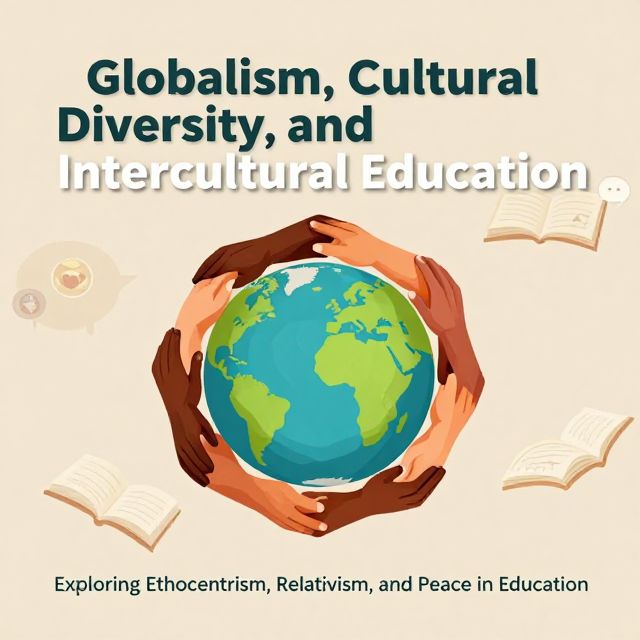
Study Material: Globalism, Cultural Diversity, and Intercultural Education
Source Information: This study material has been compiled from copy-pasted text and an audio lecture transcript.
🌐 Introduction to Globalism and Human Movement
The contemporary world is characterized by increasing global interconnectedness and significant human movement, leading to a rise in ethnic, religious, linguistic, and cultural diversity across many nations. This dynamic presents a crucial responsibility: fostering socially harmonious and cohesive societies where individuals can interact positively. Education emerges as a fundamental tool to achieve this harmony. The evolving cultural and religious demographics necessitate a re-evaluation of optimal approaches for inclusive diversity governance within the education sector.
📚 Understanding Culture and Cultural Diversity
Culture is defined as a shared system of beliefs, practices, and symbols that are learned and passed down within a group. It serves to unite people, shaping their worldview and way of life.
✅ Key Facts about Culture:
- Humans are born with the innate capacity to learn any social group's culture, both directly and indirectly.
- Culture is dynamic, changing in response to both internal and external factors.
- Humans are not entirely bound by culture; they can conform, not conform, or even initiate change.
- Culture is symbolic; individuals create and interpret the meanings of symbols within their society.
- The extent of human reliance on culture distinguishes us from other species and has profoundly influenced our evolution.
- Human culture and biology are interconnected, with culture impacting our biology, growth, and development.
⚖️ Ethnocentrism vs. Cultural Relativism
Understanding different cultural perspectives is crucial, and two contrasting concepts help frame this:
⚠️ Ethnocentrism
Ethnocentrism is the belief that one's own culture is inherently superior to others. Historically, this mindset was used to justify the subjugation of non-European societies, often based on false claims of social or biological inferiority. An ethnocentric individual views their culture as the universal standard against which all other cultures should be measured.
Examples of Ethnocentrism:
- Marriage Practices: Judging arranged marriages as "morally wrong" or "savage" because one's own culture values individual choice in marriage.
- Eating Habits: Viewing another culture's practice of eating with hands or on the floor as "savage" simply because one is accustomed to using silverware at a table.
- Problematic Outcomes: Extreme ethnocentrism can lead to dehumanization, attempts to convert others, and even devastating consequences like genocide or war.
💡 Cultural Relativism
Developed by Franz Boas as a counter to ethnocentrism, cultural relativism is the view that while cultures differ, no one culture is inherently better or worse than another. It involves understanding a culture's beliefs, values, and practices from its own internal perspective. Boas argued that physical and behavioral differences among groups are shaped by environmental and social conditions, not biology, and that human behaviors are learned and flexible, not innate.
Examples of Cultural Relativism:
- Diverse Marriage Arrangements: Observing practices like polygamy or same-sex marriage without judgment, recognizing them as culturally specific.
- Public Breastfeeding: Suspending judgment on varying cultural norms regarding public breastfeeding.
- Eating Habits: Accepting diverse dietary practices, such as eating insects, specific breakfast foods (e.g., Italian marmalades), or religious dietary codes (Kosher, Halal), without deeming one superior.
- Social Norms: Recognizing that practices like same-sex friends holding hands may be acceptable in some cultures but frowned upon in others.
🚧 Criticisms and Challenges of Cultural Relativism
While promoting understanding, cultural relativism faces significant ethical challenges:
- Moral Ambiguity: A key weakness is the difficulty in determining if a cultural practice is morally or socially right or wrong, especially when it involves harm.
- Opposition to Universal Human Rights: Some cultural relativists argue that the Universal Declaration of Human Rights imposes "Western values" and does not reflect a truly diverse world. They emphasize the community as the basic social unit, contrasting with universalism's focus on individual rights.
Difficult Cases for Cultural Relativism:
- Female Genital Mutilation (FGM): Despite being a cultural practice in some patriarchal societies (without religious mandate) that can confer social status, the World Health Organization (WHO) identifies severe health complications. Western feminist perspectives often condemn it as harmful, creating a tension between cultural acceptance and universal human rights.
- Child Labor: Widespread in the Global South, child labor is often seen as a necessity for family survival dueue to poverty. However, developed nations view it as a violation of children's rights.
🏫 Educational Approaches to Diversity
Multicultural vs. Intercultural Education
- Multicultural Education: Refers to the mere existence of cultural diversity within human society, encompassing ethnic, national, linguistic, religious, and socioeconomic differences. It acknowledges the presence of multiple cultures.
- Intercultural Education: Represents the evolution of relationships between cultural groupings. It emphasizes equitable interaction among multiple cultures and the potential to create shared cultural symbols through dialogue and mutual respect (UNESCO).
🌍 The Need for Intercultural Education
In an era of globalization, increased human movement can sometimes lead to hostility towards migrants and rising nationalism. For instance, in North Cyprus, a significant percentage of primary school students come from diverse countries with different mother tongues than the medium of instruction (Turkish). This often leads to language barriers, exclusion, and potential societal problems.
The European Commission highlights education as the primary agent for building social cohesion, with intercultural education being key. It is crucial for cultivating humanity and social justice, especially amidst rising nationalism.
✅ Inclusive Intercultural Education:
- Addresses the moral and political aims of education, curriculum, pedagogy, school culture, and policy.
- Appreciates and acknowledges cultural diversity while balancing commonality and diversity.
- Adopts a critical stance towards intersectional inequalities (e.g., based on color, ethnicity, religion, socio-economic status).
- Requires teachers to develop intercultural professionalism, including a reflective stance on immigration, diversity, and social justice, fostering agency and skills for intercultural teaching.
4️⃣ Pillars of Intercultural Education (Delors, 2000)
- Learning to Know: Develops comprehension of the world, self, and others, combating ignorance. Involves exposure to diverse languages and knowledge.
- Learning to Do: Translates knowledge into practice, fostering competencies needed for societal participation.
- Learning to Live Together: Encourages teamwork, solidarity, and cooperation with diverse individuals and groups, preventing isolation.
- Learning to Be: Harmonizes the other pillars, developing personality, autonomy, judgment, and personal responsibility.
3️⃣ Principles of Intercultural Education
- Respect for Cultural Identity:
- Builds upon learners' diverse knowledge systems and experiences.
- Incorporates their histories, knowledge, technologies, and values.
- Introduces appreciation for their cultural heritage.
- Aims to develop respect for learners' cultural identity, language, and values.
- Utilizes local resources.
- Active Participation in Society:
- Imparts knowledge about minority cultures to majority groups, and vice versa.
- Aims to eliminate prejudices.
- Involves various cultural systems through diverse perspectives.
- Develops comprehensive literacy skills for informed participation.
- Contribution to Respect, Understanding, and Solidarity:
- Fosters discovery and appreciation of cultural diversity.
- Promotes critical awareness against racism and discrimination.
- Provides knowledge of cultural heritage through various subjects.
- Cultivates understanding and respect for all peoples, cultures, and ways of life.
- Raises awareness of global interdependence, rights, duties, and international solidarity.
- Encourages reflection on one's own cultural values and respect for differing thought patterns.
🛠️ Teaching Methods for Intercultural Education
Effective methods are culturally appropriate and include:
- Integrating traditional pedagogies (e.g., storytelling, drama, poetry, songs).
- Using practical, participatory, and contextualized learning techniques.
- Collaborating with cultural institutions, organizing study trips, and engaging in community-linked activities.
🕊️ Peace Education and Forgiveness
Intercultural education is intrinsically linked to Peace Education, aligning with the Sustainable Development Goal 16 (Peaceful, Just, and Inclusive Societies) and SDG 4.7 (Education for a Culture of Peace and Non-Violence).
Understanding Forgiveness: Forgiveness is not merely about liberating a perpetrator; its primary purpose is to heal one's present self from past wounds. It involves a personal journey, even when the wrongdoing is severe or the perpetrator unrepentant.
1️⃣ Steps Towards Forgiveness:
- Understanding the perpetrator's context or motivations.
- Understanding one's own feelings and reactions.
- Recognizing that "there is neither 100% perpetrator nor 100% victim."
- Clarifying one's own good intentions and avoiding misinterpretation of others'.
💡 Practical Steps for Cultivating Forgiveness:
- Identify someone to forgive for personal well-being.
- Focus on positive thoughts to counteract negative emotions.
- Objectively analyze the incident, the perpetrator, and oneself.
- Consider if personal good intentions are being distorted, blocking forgiveness.
- Reflect on the benefits of forgiveness for oneself and others.
- Prioritize healing if not ready to forgive, then revisit the process.