Biology, Behavior, and the Nature-Nurture Interplay - kapak
Bilim#genetics#heredity#behavior#development

Biology, Behavior, and the Nature-Nurture Interplay

Explore the intricate relationship between genetics, environment, and behavior, delving into the Minnesota Study of Twins, gene expression, epigenetics, and methods to disentangle nature vs. nurture.

itekinMarch 30, 2026 ~16 dk toplam
01

Flash Kartlar

25 kart

Karta tıklayarak çevir. ← → ile gez, ⎵ ile çevir.

1 / 25
Tüm kartları metin olarak gör
  1. 1. What was the primary focus of the Minnesota Study of Twins Reared Apart?

    The Minnesota Study of Twins Reared Apart investigated the intricate relationship between biology and behavior. It examined over one hundred pairs of twins who had grown up separately to understand how genetic makeup interacts with experiences to shape individuals. This landmark study provided insights into the relative contributions of nature and nurture.

  2. 2. What crucial point did the anecdote about identical twin firemen highlight regarding genes?

    The anecdote highlighted that genes do not directly code for complex occupations or specific behaviors. Instead, genes code for proteins, which then contribute to the development and functioning of an organism. This distinction is important for understanding the indirect influence of genetics on complex traits.

  3. 3. Define epigenetics and explain its significance.

    Epigenetics is the process by which experiences actively alter gene expression. This means that environmental influences can switch genes on or off without changing the underlying DNA sequence. Its significance lies in explaining why even identical twins, despite sharing the same genetic material, can have different patterns of gene expression and thus different phenotypes due to varying life experiences.

  4. 4. What is a genotype?

    A genotype refers to the inherited genetic material an individual possesses. It represents the complete set of genes that an organism carries, passed down from its parents. This genetic blueprint provides the instructions for building and maintaining the organism.

  5. 5. What is a phenotype?

    A phenotype is the observable expression of an individual's genotype. It encompasses both physical characteristics, such as height, eye color, and hair texture, and behavioral characteristics, like temperament or certain predispositions. The phenotype is a result of the interaction between the genotype and the environment.

  6. 6. How is "environment" defined in the context of genotype, phenotype, and behavior?

    In this context, the environment includes every aspect of individuals and their surroundings other than their genes. This broad definition covers a wide range of influences, from prenatal experiences and nutrition to social interactions, cultural factors, and physical surroundings. The environment plays a crucial role in shaping how genetic predispositions are expressed.

  7. 7. How many fundamental relations are involved in understanding development, according to the text?

    There are five fundamental relations involved in understanding development. These relations describe the dynamic interplay between genotype, phenotype, and environment. They are crucial for comprehending how an individual's biological makeup and experiences interact throughout their life.

  8. 8. Describe the first fundamental relation in development.

    The first fundamental relation is the parents' genetic contribution to their children's genotypes. This involves the transmission of genetic material from parent to offspring through germ cells (gametes). Each parent contributes one chromosome from each pair, ensuring the child inherits a unique combination of genes.

  9. 9. What is a zygote and how is it formed?

    A zygote is the single cell formed when two germ cells, or gametes (one from the mother and one from the father), fuse during fertilization. This initial cell contains the complete genetic material from both parents and marks the beginning of a new organism's development.

  10. 10. What are chromosomes made of and where are they found?

    Chromosomes are molecules found within the nucleus of every cell in the body. They are made up of two twisted strands of DNA (deoxyribonucleic acid). DNA molecules carry all the biochemical instructions involved in the formation and functioning of an organism.

  11. 11. Define human heredity.

    Human heredity is the biological transmission of characteristics from one generation to the next. It refers to the process by which genetic information, encoded in DNA, is passed from parents to their offspring, influencing traits and predispositions.

  12. 12. How many chromosomes do humans typically have, and how are they organized?

    Humans typically have 46 chromosomes, which are organized into 23 pairs. Each parent contributes one chromosome from each pair to their child, resulting in the child inheriting two copies of each gene. This arrangement ensures genetic continuity while also allowing for diversity.

  13. 13. Why is genetic diversity important for a species?

    Genetic diversity is a cornerstone of evolution and individual uniqueness. It ensures that a population has a variety of traits, increasing its ability to adapt to changing environments and resist diseases. Without genetic diversity, a species would be more vulnerable to extinction.

  14. 14. Explain random assortment as a mechanism for genetic variability.

    Random assortment is a primary mechanism for genetic variability that occurs during the formation of egg and sperm cells. In this process, chromosomes inherited from the mother and father are randomly shuffled and distributed into each gamete. This random mixing creates a vast number of unique genetic combinations, making each offspring genetically distinct.

  15. 15. Describe crossing over and its role in genetic diversity.

    Crossing over is a process where, during the division of germ cells, the two members of a pair of chromosomes can sometimes swap sections of DNA. This exchange of genetic material shuffles alleles, creating new combinations on the chromosomes. It significantly increases genetic diversity by producing recombinant chromosomes that differ from those inherited from either parent.

  16. 16. What is a mutation?

    A mutation is defined as a change in a section of DNA. These changes can range from a single nucleotide alteration to larger chromosomal rearrangements. Mutations introduce new genetic variations into a population, serving as a raw material for evolution.

  17. 17. What are the common causes of mutations?

    Some mutations occur as random errors during DNA replication, which is a natural part of cell division. Other mutations can be caused by environmental factors, such as exposure to certain chemicals (mutagens) or radiation. These external agents can damage DNA, leading to changes in its sequence.

  18. 18. What is the significance of mutations occurring in germ cells?

    Mutations that occur in germ cells (egg or sperm) are significant because they can be passed on to offspring. If a mutation is present in a germ cell, every cell in the resulting organism will carry that mutation, potentially leading to inherited disorders or new traits in subsequent generations.

  19. 19. Are all mutations detrimental or harmful? Explain.

    No, not all mutations are detrimental. While many mutations are harmful or have no noticeable effect, some can provide a basis for evolution. These beneficial mutations introduce new genetic variations that, under certain environmental pressures, might confer an advantage, helping a species adapt and survive.

  20. 20. What is the second fundamental relationship in development?

    The second fundamental relationship is the contribution of a child's genotype to their own phenotype. This describes how an individual's genetic makeup influences their observable physical and behavioral characteristics. It highlights the direct link between the inherited genetic code and its expression in the individual.

  21. 21. How do we gain knowledge about an individual's genotype versus their phenotype?

    Our knowledge about an individual's genotype comes from studying their genetic material, typically through DNA sequencing or genetic testing. In contrast, our understanding of their phenotype comes from observing their body and behavior, such as measuring height, noting eye color, or assessing temperament.

  22. 22. Why do identical twins, despite sharing the exact same genotype, not have precisely identical phenotypes?

    Identical twins do not have precisely identical phenotypes because genes influence traits only if they are switched on and off at the right place and for the correct duration, a process known as gene expression. Differing environmental influences throughout their lives can lead to variations in gene expression, resulting in subtle phenotypic differences, even down to fingerprints.

  23. 23. What is gene expression?

    Gene expression is the process by which genes are switched on and off at the right place and for the correct duration. It determines which genes are active and producing proteins, thereby influencing the development and function of cells and ultimately the observable traits of an organism.

  24. 24. What is the primary role of regulator genes in gene expression?

    Regulator genes primarily control the switching on and off of other genes. They act like a complex chain activity, where the activation of one gene can cause another gene to turn on or off, which in turn affects the activation or deactivation of other genes. This intricate network orchestrates the timing and location of gene activity.

  25. 25. Do genes function in isolation? Explain.

    No, genes never function in isolation. They are part of an intricate network where their activity is interconnected. The expression of one gene can influence the expression of many others, creating a complex system of genetic regulation that contributes to the development and functioning of an organism.

02

Bilgini Test Et

15 soru

Çoktan seçmeli sorularla öğrendiklerini ölç. Cevap + açıklama.

Soru 1 / 15Skor: 0

What was the primary objective of the Minnesota Study of Twins Reared Apart, as described in the text?

03

Detaylı Özet

6 dk okuma

Tüm konuyu derinlemesine, başlık başlık.

📚 Biology and Behavior: Understanding the Interplay of Genes and Environment

Source Information: This study material is compiled from a lecture audio transcript and supplementary copy-pasted text, focusing on the Minnesota Study of Twins Reared Apart and fundamental concepts in behavioral genetics.


🧠 Introduction: The Minnesota Study of Twins Reared Apart

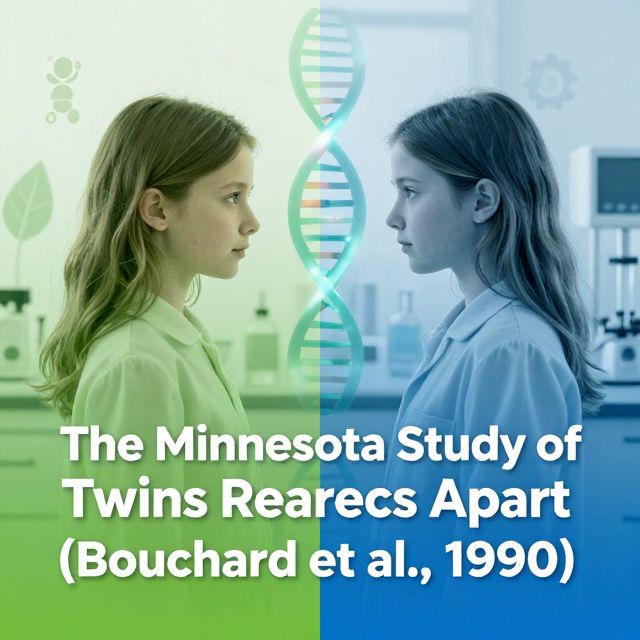
The intricate relationship between our biological makeup and our behavior is a cornerstone of developmental psychology. A landmark investigation in this field is The Minnesota Study of Twins Reared Apart (Bouchard et al., 1990). This study brought together over 100 pairs of twins who had grown up separately, examining them extensively in Minneapolis using a comprehensive battery of tests.

One fascinating, albeit coincidental, observation from this study involved identical twins, separated at birth, who both ended up becoming firemen. This anecdote highlights a crucial point: genes do not directly code for complex behaviors or occupations. Instead, they code for proteins, which then contribute to the development and functioning of an organism. Furthermore, our experiences are not passive; they actively alter gene expression, a process known as epigenetics. This means that even identical twins, despite sharing the same genetic material, will not necessarily share the exact same pattern of gene expression due to differing environmental influences throughout their lives.

To fully grasp this complex interplay, we consider three key elements:

  • 📚 Genotype: The inherited genetic material an individual possesses.
  • 📚 Phenotype: The observable expression of the genotype, encompassing both physical characteristics (e.g., height, eye color) and behavioral characteristics (e.g., temperament).
  • 📚 Environment: Every aspect of individuals and their surroundings other than their genes, including prenatal experiences.

These three elements—genotype, phenotype, and environment—are involved in five fundamental relations that are crucial for understanding development.


🧬 Five Fundamental Relations in Development

These five relations describe the dynamic interplay between an individual's genetic predispositions and their environment in shaping who they become.

1️⃣ Parents' Genetic Contribution to Children's Genotypes

This first relation involves the transmission of genetic material from parent to offspring.

  • Zygote Formation: A zygote is formed from germ cells (gametes)—one from the mother and one from the father.
  • Chromosomes and DNA: The nucleus of every cell contains chromosomes, which are molecules made up of two twisted strands of DNA. DNA carries all the biochemical instructions for an organism's formation and functioning.
  • Human Heredity: Humans typically have 46 chromosomes, organized into 23 pairs. Each parent contributes one chromosome from each pair, meaning everyone inherits two copies of each gene. This ensures both species-level similarities and individual differences.
  • Genetic Diversity Mechanisms:
    • Random Assortment: During the formation of egg and sperm, chromosomes from the mother and father are randomly shuffled and distributed. This creates vast genetic variation, explaining why even siblings (except identical twins) are genetically unique.
    • Crossing Over: During germ cell division, members of a chromosome pair can swap sections of DNA, further shuffling alleles and increasing diversity.
    • Mutation: A change in a section of DNA. Some are random errors, others caused by environmental factors. Mutations in germ cells can be passed to offspring and are the basis for evolution, though many are harmful.

2️⃣ Child's Genotype to Child's Phenotype

This relation describes how an individual's genetic makeup is expressed in their observable traits.

  • Genotype vs. Phenotype: While related, an individual's genotype and phenotype do not always perfectly coincide. Identical twins, for example, have the same genotype but never exactly identical phenotypes (even fingerprints differ).
  • Gene Expression: Genes influence traits only if they are switched on and off at the right time and place. This process is called gene expression.
    • Regulator Genes: Primarily control gene switching, acting like a chain reaction where one gene's activation affects others. Genes never function in isolation.
    • External Factors: Environmental factors can also affect gene expression (e.g., the drug thalidomide's effect on limb development).
  • Phenotypic Plasticity: The degree to which a phenotype is open to environmental influence rather than being solely determined by genotype.
    • Low Plasticity: Traits develop similarly regardless of environment (e.g., blood type).
    • High Plasticity: Traits are easily influenced by the environment (e.g., temperament).
  • Patterns of Inheritance:
    • Dominant-Recessive Pattern: The simplest form, where one allele (specific form of a gene) is dominant and expressed, while the other (recessive) is not, in heterozygous individuals.
    • Polygenic Inheritance: Most complex traits (especially social-behavioral ones like empathy or aggression) involve multiple genes contributing to the phenotype. 💡 Myth Busted: There is no "single gene" for complex human traits.

3️⃣ Child's Environment to Child's Phenotype

This relation highlights the continuous interaction between genotype and environment, where a given genotype can develop differently in various environments.

  • Genotype-Environment Interaction: Different environments can produce different phenotypes from the same genotype.
  • Example: Phenylketonuria (PKU):
    • Individuals with PKU have a defective recessive gene (on chromosome 12) preventing them from metabolizing phenylalanine.
    • If they consume a normal diet, phenylalanine accumulates, causing impaired brain development and intellectual disabilities.
    • ⚠️ However, if they follow a stringent phenylalanine-free diet, intellectual impairment can be avoided. This demonstrates how the same genotype can lead to vastly different phenotypes ("intellectual disability" vs. "typical intelligence") depending on the environment.

4️⃣ Child's Phenotype to Child's Environment

Children are active agents in their own development, influencing the environments they experience.

  • Niche Construction: An individual's behaviors, activities, and choices actively shape and modify their environments.
  • Example: An outgoing, extroverted child will likely elicit different responses and seek different social situations than a shy child, even if they grow up in the same home with the same parents. Their distinct phenotypes lead to different environmental experiences.

5️⃣ Child's Environment to Child's Genotype

This relation refers to how environmental factors can influence gene expression without altering the underlying DNA sequence.

  • Epigenetic Mechanisms: These processes change how our genes work by turning certain genes "on" or "off."
  • Environmental Influence: Diet, stress, and exposure to toxins are examples of environmental factors that can trigger epigenetic changes.
  • Heredity: These epigenetic changes can sometimes be stable and even passed on to the next generation.

⚖️ The Question of "Nature Versus Nurture"

The long-standing debate of "nature versus nurture" explores the relative contributions of inherited biological predispositions (nature) and environmental influences (nurture) on individual development.

📊 Behavioral Genetics

This field assumes that all behavioral traits are, to some extent, heritable. It aims to tease apart genetic and environmental factors by examining differences within a population.

  • Premise 1 (Nature): If genetic factors are important, individuals who are genotypically similar should be phenotypically similar.
  • Premise 2 (Nurture): If shared environmental factors are important, individuals reared together should be more similar than those reared apart.

🔬 Research Designs to Study Nature vs. Nurture

  1. Twin-Study Design:
    • Compares correlations for identical (monozygotic) twins with those for same-sex fraternal (dizygotic) twins.
    • Assumes "equal environments" for twins raised together.
    • ✅ If identical twins show higher correlation for a trait than fraternal twins, genetic factors are implicated.
  2. Adoption Study:
    • Investigates whether adopted children's traits correlate more highly with their biological parents (genetic influence) or adoptive parents (environmental influence).
  3. Adoptive Twin Study:
    • Compares identical twins raised together with identical twins separated at birth and raised apart.
    • ✅ If correlations for separated twins are similar to those raised together, environmental factors have less effect.
    • ✅ If correlations for separated twins are lower, environmental factors have a prominent effect.
  4. Family Study:
    • Compares relatives living in the same house.
    • ⚠️ Difficult to estimate genetic influence precisely, as relatives share both genes and environment.

📈 Heritability

  • Definition: A statistical estimate of how much of the measured variance in a phenotypic trait among individuals in a given population is attributable to genetic differences among those individuals.
  • Misinterpretation ⚠️: Heritability applies only to populations, not individuals. For example, if the heritability of intelligence is 50%, it means 50% of the variation in IQ scores within a population is due to genetic differences. It does not mean 50% of an individual's IQ score is genetic and 50% is environmental. It's about comparing people, not dividing an individual's score.
Kendi çalışma materyalini oluştur

PDF, YouTube videosu veya herhangi bir konuyu dakikalar içinde podcast, özet, flash kart ve quiz'e dönüştür. 1.000.000+ kullanıcı tercih ediyor.

Sıradaki Konular

Tümünü keşfet
Gene and Genome: Fundamental Concepts

Gene and Genome: Fundamental Concepts

This audio summary provides an academic overview of genes and genomes, detailing their definitions, structural components, functional aspects, and organizational differences between prokaryotic and eukaryotic systems.

6 dk Özet 25 15
Introduction to Basic Genetics

Introduction to Basic Genetics

Explore the fundamental principles of genetics, from cell theory and the nature of genetic material to heredity, cell division, and the diverse branches of genetic study.

Özet 25 15
An Introduction to Ecology and the Biosphere

An Introduction to Ecology and the Biosphere

Explore the fundamental concepts of ecology, from diverse wetlands to the intricate interactions between organisms and their environment, including abiotic and biotic factors, species interactions, and population dynamics.

Özet 15
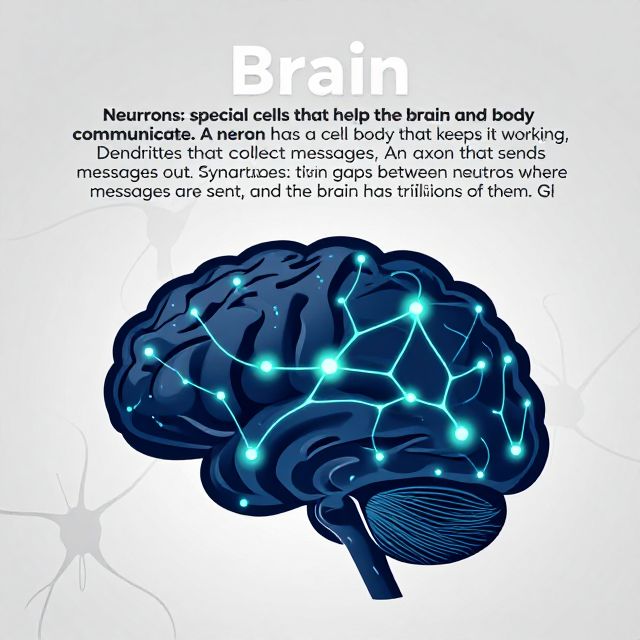
The Developing Brain: Structure, Function, and Growth

The Developing Brain: Structure, Function, and Growth

Explore the intricate structure of the brain, its cellular components, major regions, and the complex processes of brain development and physical growth from conception to adulthood.

Özet 25 15
Cell Division and Cell Cycle: Meiosis

Cell Division and Cell Cycle: Meiosis

An academic summary of cell division, focusing on sexual reproduction, the necessity of meiosis, its stages, and unique features like synapsis, homologous recombination, and reduction division.

6 dk Özet 25 15
Genetic Material: DNA and RNA

Genetic Material: DNA and RNA

This audio summary explores the discovery, structure, and function of DNA and RNA, detailing key experiments and concepts that established nucleic acids as the fundamental genetic material.

7 dk Özet 25 15
Understanding Cellular Division: The Cell Cycle, Mitosis, and Meiosis

Understanding Cellular Division: The Cell Cycle, Mitosis, and Meiosis

This podcast explores the intricate world of cellular division, detailing the cell cycle's phases and control, the process of mitosis for somatic cell reproduction, and meiosis for genetic diversity in gamete formation.

5 dk Özet 25 15
Molecular Bases of Cellular Organization: Nucleic Acids and Cytoplasmic Matrix

Molecular Bases of Cellular Organization: Nucleic Acids and Cytoplasmic Matrix

Explore the fundamental molecular bases of cellular organization, focusing on nucleic acids, the cytoplasmic matrix, and key cytoplasmic differentiations like myosin, actin, and intermediate filaments.

16 dk Özet 25 15