 Podit
Podit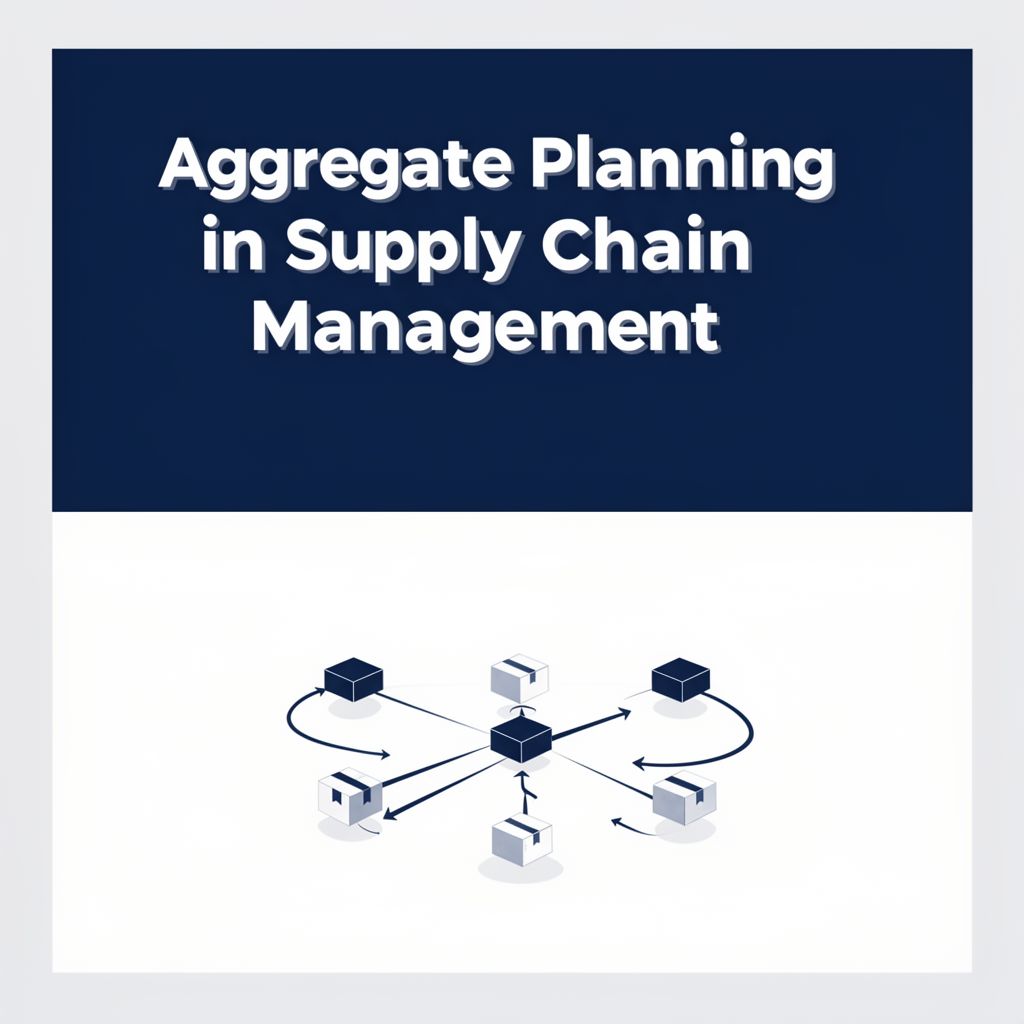
Flash Kartlar
25 kartKarta tıklayarak çevir. ← → ile gez, ⎵ ile çevir.
Tüm kartları metin olarak gör
1. What is the primary focus of aggregate planning in supply chain management?
Aggregate planning focuses on balancing demand and capacity over the medium term, typically 3 to 18 months.
2. Which level of planning does aggregate planning fall under within the broader planning hierarchy?
Aggregate planning is considered intermediate-range planning, covering a period of three to eighteen months.
3. What is the typical time horizon for long-range planning decisions?
Long-range planning spans over a year and involves strategic decisions made by top executives, such as facility location.
4. Who typically handles short-range planning and what is its time frame?
Short-range planning, up to three months, is handled by supervisors for daily job assignments and dispatching.
5. What specific decisions do operations managers make during intermediate-range planning?
Operations managers make decisions regarding workforce levels, inventory, and subcontracting during intermediate-range planning.
6. What does aggregate planning set for product families over the medium term?
Aggregate planning sets production levels, workforce size, and inventory for groups of products, not individual items.
7. Does aggregate planning focus on individual items or groups of products?
Aggregate planning focuses on groups of products, like 'all pens,' rather than individual items such as a 'blue pen.'
8. What is the core challenge that aggregate planning addresses?
The core challenge is balancing volatile demand, which changes in quantity and timing, with limited capacity, including labor and equipment.
9. Describe the main logic behind the Chase Strategy in aggregate planning.
The Chase Strategy adjusts the production rate to precisely match demand fluctuations, often by hiring or firing workers.
10. What is a primary advantage of using the Chase Strategy?
A main advantage of the Chase Strategy is low inventory levels, which helps minimize storage costs.
11. What are some significant disadvantages of the Chase Strategy?
Disadvantages include high costs for hiring, firing, and training, along with potential low employee morale due to job insecurity.
12. When would you typically recommend using a Chase Strategy?
You would typically use this strategy if inventory carrying costs are very high or if your products are perishable.
13. What characterizes the Level Strategy in aggregate planning?
The Level Strategy is characterized by a constant production rate and a stable workforce.
14. How are demand fluctuations managed in a Level Strategy?
Demand fluctuations are managed using inventory (building up or drawing down) or backorders.
15. What is a key advantage of implementing a Level Strategy?
An advantage of this strategy is a stable workforce, leading to better morale and lower training costs.
16. What are potential disadvantages of the Level Strategy?
Disadvantages include potentially high inventory carrying costs or the risk of lost sales due to backlogs.
17. In what scenarios is the Level Strategy ideal?
This strategy is ideal when hiring and firing are expensive, or if specialized labor is required.
18. What is the Hybrid Strategy in aggregate planning?
The Hybrid Strategy combines elements of both chase and level approaches, using tactics like overtime, subcontracting, and maintaining some inventory.
19. Name two capacity options (supply-side tactics) used in aggregate planning.
Changing inventory levels and varying workforce size (hiring/firing) are two common capacity options.
20. How can organizations manage demand (demand-side tactics) in aggregate planning?
Organizations can influence demand through advertising or promotions to shift sales, or by using backordering.
21. What is the process of disaggregation in aggregate planning?
Disaggregation is the process of breaking down the broad aggregate plan for product families into specific product details.
22. What is the result of disaggregation, and what does it provide?
The result is the Master Schedule (MS), which provides a precise plan showing what specific item will be produced and when.
23. What is the typical timeframe covered by a Master Schedule?
A Master Schedule typically covers a shorter timeframe of six to eight weeks.
24. Which aggregate planning strategy is recommended if a case mentions 'high training costs and skilled workers'?
If a case mentions 'high training costs and skilled workers,' a Level Strategy is often recommended to maintain workforce stability.
25. What temporary solutions are usually best for a 'short-term peak in demand we cannot meet'?
For a 'short-term peak in demand we cannot meet,' temporary solutions like subcontracting or overtime are usually the best recommendations.
Bilgini Test Et
10 soruÇoktan seçmeli sorularla öğrendiklerini ölç. Cevap + açıklama.
What is the primary focus of aggregate planning in supply chain management?